 Call (844) NO-DISPUTES

What Is the MATCH List and How Do You Get Off It?
MATCH stands for Member Alert to Control High-Risk Merchants, and it's a database maintained by Mastercard that flags merchants who have had their accounts terminated for serious violations. If your business ends up on it, the consequences are immediate and far-reaching. Most banks check this list before approving any new merchant account, which means a single entry can shut you out of the payment processing industry for years.
The frustrating part is that business owners don't even know they've been added until they're already denied. There's no warning letter, no appeal before the fact - just a rejection and a slow realization that something is wrong.
This guide breaks down what the MATCH list is, why merchants get placed on it, what it means for your business, and - most importantly - what your options are for getting removed.
How the MATCH List Actually Works
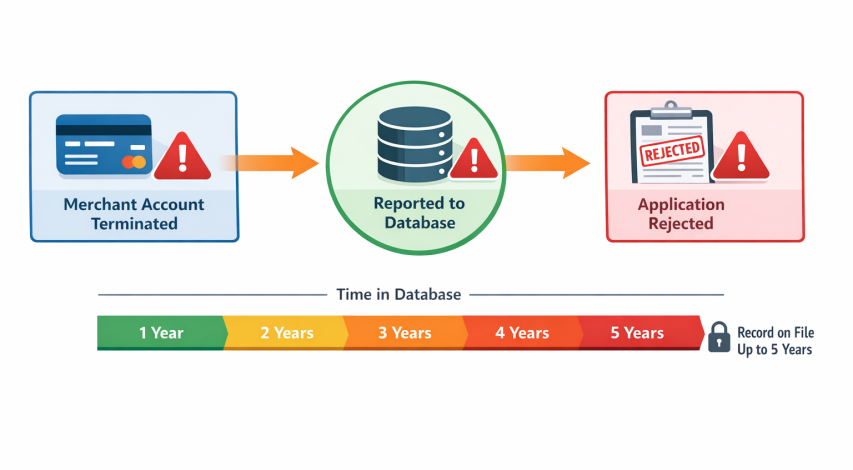
When an acquiring bank terminates a merchant relationship, Mastercard's Security Rules and Procedures give that bank five days to add the merchant to the MATCH database. This is not optional - acquirers are required to report terminated merchants, and the clock starts the second the relationship ends.
Once you're listed, any processor or acquiring bank that considers working with you can pull your record before approving a new merchant account. Most do - it's a standard part of the underwriting process, and a MATCH hit is usually enough to stop an application in its tracks.
Each listing comes with a reason code that tells the reviewing bank why you were added. There are 14 of them in total, ranging from data breaches to fraud to excessive chargebacks. The code matters because it tells processors what risk they'd be taking on.
| Code | Reason |
|---|---|
| 01 | Account Data Compromise |
| 02 | Common Point of Purchase |
| 03 | Laundering |
| 04 | Excessive Chargebacks |
| 05 | Excessive Fraud |
| 06 | Reserved for Future Use |
| 07 | Fraud Conviction |
| 08 | Mastercard Questionable Merchant Audit Program |
| 09 | Bankruptcy or Insolvency |
| 10 | Violation of Standards |
| 11 | Merchant Collusion |
| 12 | PCI Data Security Standard Noncompliance |
| 13 | Illegal Transactions |
| 14 | Identity Theft |
The listing stays on the database for five years from the date it was added. That is five years where any processor doing due diligence will see your record before they approve or decline your application.
The Chargeback Thresholds That Trigger a MATCH Listing
Mastercard flags merchants when their monthly chargeback ratio hits 1%. Visa's equivalent program sets that bar a little higher at 1.8%. These numbers look small. But they are calculated against your total transaction count for the month - not your revenue.
There is also a volume floor to know about. If you process less than $5,000 in a month, you stay off the radar even if your chargeback ratio is well above 5%. That threshold exists to filter out merchants with actual transaction activity.
| Network | Chargeback Ratio Threshold | Minimum Monthly Volume |
|---|---|---|
| Mastercard | 1% | $5,000 |
| Visa | 1.8% | $5,000 |
Low-volume sellers sometimes seem protected by that $5,000 floor, and in quiet months they probably are. But that sense of safety can become a problem the second business picks up.
A seasonal seller who does most of their business in November and December is a helpful example. Their volume crosses the $5,000 mark, disputes from earlier in the year start to land, and their ratio spikes well past the 1% mark. They were technically fine for months and then not fine at all.

The ratio is recalculated every month based on that month's numbers. There is no rolling average that softens a bad month. One rough period is all it takes to cross the line and give your acquirer grounds to add you to the MATCH list.
It is also worth knowing that these thresholds apply before reaching the point of a MATCH listing. Card networks have their own monitoring programs that kick in first, and a MATCH listing is what can follow if the problem is not resolved.
Why a MATCH Listing Follows You for Five Years
Every MATCH entry stays active for five years from the date it was added - it doesn't matter why you were listed - the clock is the same for everyone. There's no early review, no automatic reassessment, and no way to appeal the timeline itself.
Mastercard set a fixed five-year window partly to give the system consistency. A case-by-case review process would create too much room for disputes and inconsistent results across thousands of acquiring banks. A flat five-year rule makes the database predictable for every processor that relies on it.
The difficult consequence is that your listing travels with you every time you apply to a new payment processor. Most processors run a MATCH check as a standard part of their onboarding process, and a hit is usually an automatic denial. Some merchants don't find out they were ever listed until that denial lands in their inbox.
Even if a processor is willing to work with you, they're not doing it on standard terms. High-risk merchant accounts have higher processing fees, rolling reserves, and stricter contract terms. For businesses that run on thin margins, those extra costs can be hard to absorb.
E-commerce is where the knock-on effects get especially tough. Many payment platforms and gateway providers do their own screening, and a MATCH listing can block you from the tools your business depends on to take payments online.
Five years is a long time to carry a listing - especially for merchants who fixed the underlying problem faster. The system isn't designed to reward corrective action; it's designed to protect processors from taking on risk they don't know about. Your history stays visible for the full term regardless of what changed after the fact.
The One Legitimate Way to Get Removed Early
There is technically one recognized path to get off the MATCH list before the five-year period ends - it only applies to one reason code: PCI-DSS Non-Compliance, which is Reason Code 12.
If a merchant was added to the list because they failed to meet Payment Card Industry Data Security Standards, they can request early removal once they achieve full compliance. This is the only early-removal path that Mastercard formally recognizes, and it is documented in writing.
What PCI-DSS Compliance Actually Involves
PCI-DSS is a set of security standards that protect cardholder data. To become compliant, a merchant usually needs to complete a Self-Assessment Questionnaire or undergo an audit by a Qualified Security Assessor. They also need to pass a network vulnerability scan conducted by an Approved Scanning Vendor. Once that's done, the merchant receives documentation confirming their compliant status.
To request removal, the merchant takes that documentation back to the acquirer who added them to the list and formally asks for a retraction. The acquirer then has the ability to update the listing with Mastercard. The process takes coordination and paperwork, but it's a real and working path for this particular reason code.
Every Other Reason Code Is a Different Story
For fraud, excessive chargebacks, or any of the other reason codes, there's no formal early-removal process. The only way out is if the original acquirer voluntarily agrees to correct or retract the listing - and that almost never happens. Acquirers have little incentive to revisit a closed case on your behalf.
This is also a place to be direct about third-party services that advertise MATCH list removal. Some of these services charge fees and make promises they can't keep. No outside company has the authority to remove a listing - only the reporting acquirer can do that. Save your money and be skeptical of anyone who tells you otherwise.
Steps to Take If You Find Yourself on the MATCH List
Many merchants only find out they're listed when a new processor declines their application and they're already scrambling to keep the business running- it's a stressful place to be. But there are concrete steps you can take right away.
First, confirm the listing. You can contact Mastercard or work through a payment industry consultant to request your MATCH status. Knowing which reason code applies to your listing matters most at this stage because your next move depends heavily on it.
If something looks wrong, dispute it. Inaccurate entries do get corrected when merchants push back with documentation. Gather your processing history, chargeback records, and any correspondence with your previous acquirer to build a case and reach out.
If your listing falls under Reason Code 12 for PCI non-compliance, that's actually one of the more manageable situations to be in. Work with a qualified security assessor to get compliant, document the process, and then bring that evidence to the acquirer who listed you- it gives you something to present.

What to Do While You're Still Listed
You can still process payments while on the MATCH List. High-risk processors specialize in working with listed merchants and won't automatically turn you away. A legitimate high-risk processor should have the following.
- Transparent fee structures with no hidden setup costs
- Experience working with your specific industry type
- Clear terms around volume limits and rolling reserves
- No pressure to sign long-term contracts before you process a single transaction
The rates will be higher than standard processing, and some processors in this space are not reputable. Take time to research any provider before you sign anything.
Throughout this, keep records of everything. If you eventually build a case to challenge the original acquirer, a well-documented paper trail is the strongest thing you'll have going.
Getting Off the MATCH List Is Hard - Here's What to Focus On
Being listed does not have to mean being stuck. Verifying that your listing is accurate, correcting any errors through the listing acquirer, and demonstrating PCI DSS compliance are concrete steps that can improve your position. In the rare cases where early removal is possible - especially for identity theft or erroneous listings - acting faster and working directly with the listing bank has the best chance. For every other situation, honest communication with prospective acquirers, paired with a record of what changed in your business practices, remains your strongest long-term strategy.
The table below has a quick reference for how removal options meet the most common reason codes:
| Reason Code | Description | Early Removal Possible? | Best Course of Action |
|---|---|---|---|
| 01 | Account Data Compromise | No | Achieve PCI DSS compliance; disclose proactively |
| 02 | Common Point of Purchase | No | Wait out the five-year period; maintain clean records |
| 03 | Laundering | No | Legal counsel recommended; full transparency with acquirers |
| 04 | Excessive Chargebacks | No | Document dispute resolution improvements |
| 05 | Excessive Fraud | No | Show evidence of fraud prevention measures adopted |
| 07 | Fraud Conviction | No | Wait; legal record may complicate future applications |
| 08 | Bankruptcy / Insolvency | No | Wait; demonstrate financial rehabilitation over time |
| 09 | Illegal Transactions | No | Legal counsel recommended |
| 10 | Violation of Standards | No | Document corrective actions taken |
| 12 | Identity Theft | Yes | Contact listing acquirer immediately with supporting documentation |
| 15 | Merchant Collusion | No | Legal counsel strongly recommended |
FAQs
What does MATCH stand for in merchant processing?
MATCH stands for Member Alert to Control High-Risk Merchants. It is a Mastercard-maintained database that flags merchants whose accounts were terminated for serious violations, and most banks check it before approving new merchant accounts.
How long does a MATCH listing last?
A MATCH listing stays active for five years from the date it was added. There is no early review or automatic reassessment, and the timeline is the same regardless of the reason for listing.
Can you get removed from the MATCH list early?
Early removal is only formally recognized for Reason Code 12, PCI-DSS Non-Compliance. Once a merchant achieves full PCI compliance and provides documentation, they can request removal through the acquirer who originally listed them.
What chargeback ratio triggers a MATCH listing?
Mastercard flags merchants whose monthly chargeback ratio hits 1%, while Visa's threshold is 1.8%. Both networks require a minimum of $5,000 in monthly processing volume before these thresholds apply.
Can you still accept payments while on the MATCH list?
Yes, high-risk payment processors specialize in working with MATCH-listed merchants. Expect higher fees, rolling reserves, and stricter contract terms compared to standard merchant accounts.