 Call (844) NO-DISPUTES
What is an Acquiring Bank?
If you run a business that accepts card payments, you already have a relationship with an acquiring bank, whether you realize it or not. Understanding what it does and how it fits into the wider payments ecosystem helps you make better decisions about payment processors, fees, and risk management.
This guide breaks down what an acquiring bank is, how it works, and why it matters for merchants of all sizes.
The Role an Acquiring Bank Actually Plays in a Card Transaction
When a customer taps their card at checkout, a short chain of events fires off in the background. The acquiring bank is the institution that sits on the merchant's side of that chain - it's the bank that holds the merchant's account and takes the first step to get the payment approved.
The merchant's terminal sends the transaction details to the acquiring bank, which then passes that request through the relevant card network - Visa, Mastercard, or whichever one applies - and the network routes it to the customer's bank, called the issuing bank. The issuing bank checks the customer's account and sends an approval or decline back through the same path.
The whole round trip takes a few seconds. Once the approval lands back with the acquiring bank, the merchant gets the green light and the sale completes.
| Player | Who They Are | What They Do in the Transaction |
|---|---|---|
| Merchant | The business accepting payment | Initiates the transaction at point of sale |
| Acquiring Bank | The merchant's bank | Receives the request and routes it to the card network |
| Card Network | Visa, Mastercard, etc. | Connects the acquiring bank to the issuing bank |
| Issuing Bank | The customer's bank | Approves or declines the transaction |
Without an acquiring bank, a merchant has no formal connection to the card networks at all. There's no path to send the transaction, no account to receive the funds, and no institution to take responsibility if something goes wrong. The acquiring bank is the gateway that makes card acceptance possible - not a passive middleman.
How Acquiring Banks Make Money on Every Sale
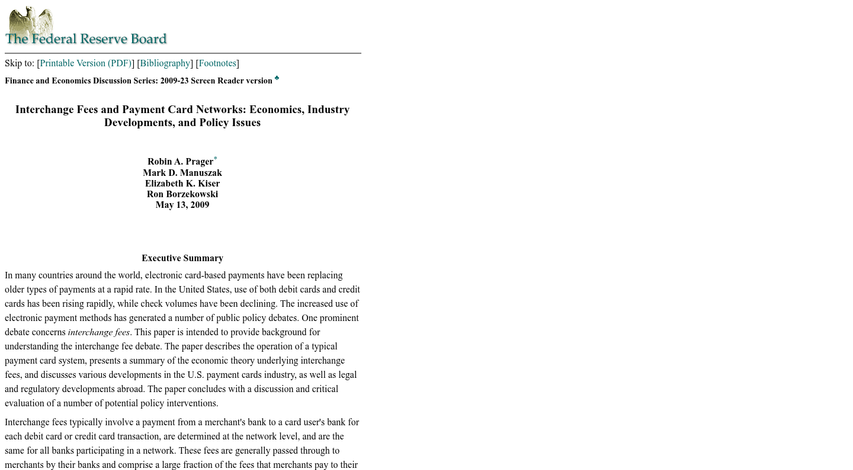
Every card transaction carries three layers of fees, and they all get bundled together into what's called the Merchant Discount Rate - the percentage a merchant pays on each sale, and it usually lands between 1% and 3% depending on the card type and business.
The biggest slice goes to interchange fees, which flow to the card-issuing bank. These run between 1.4% and 3.3% per transaction, and U.S. card issuers collect over $30 billion from interchange alone each year. Assessment fees are much smaller - charged by the card networks like Visa and Mastercard - and sit between 0.13% and 0.16%. The acquiring bank takes its own cut on top of those, usually between 0.1% and 1.5%.
| Fee Type | Who Gets Paid | Typical Range |
|---|---|---|
| Interchange Fee | Card-issuing bank | 1.4% - 3.3% |
| Assessment Fee | Card network (Visa, Mastercard, etc.) | 0.13% - 0.16% |
| Acquirer Markup | Acquiring bank | 0.1% - 1.5% |
Acquiring banks don't earn the largest share - they pass most of the money up the chain. Their markup is the fee they earn in exchange for processing transactions, taking care of the merchant account, and taking on the financial responsibility if something goes wrong.
Merchants pay a single blended rate. But that rate has all three parts built in. This overview helps explain why processing costs change based on card type - a premium rewards card carries higher interchange than a basic debit card, and that difference lands on the merchant's statement every month.
What Acquiring Banks Look at Before Approving a Merchant
Before an acquiring bank agrees to process payments for a business, it runs its own assessment, deciding how much financial exposure it's willing to take on by being connected with that merchant.
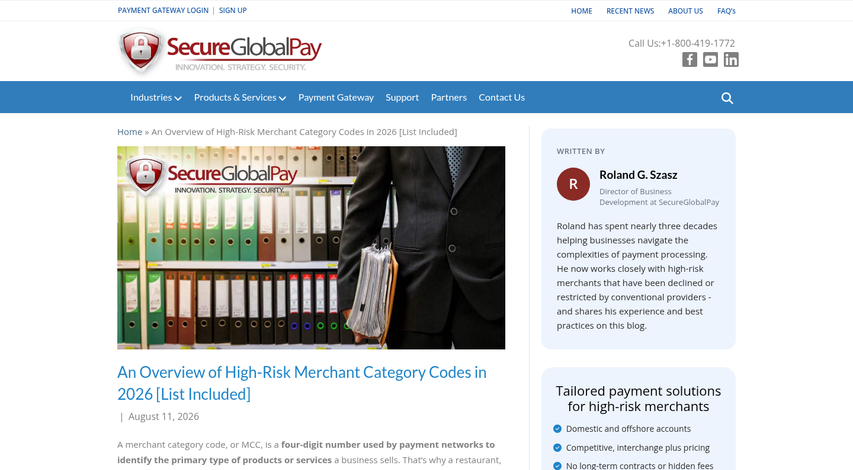
The first thing it looks at is the industry. Some business types carry a higher chance of chargebacks or fraud, and acquiring banks know this from experience. Travel bookings, dietary supplements, and adult content are examples of categories that get extra scrutiny almost automatically. A business in one of these spaces isn't automatically turned away. But it will face a harder approval process and stricter terms.
Chargeback history is another big factor. A chargeback happens when a customer disputes a charge and the bank reverses the payment. Acquiring banks watch the ratio of chargebacks to total transactions closely, and a rate above 1% is usually where things get uncomfortable. At that point, the bank might place a reserve on the account - holding back a part of funds as a buffer - or add conditions to the agreement.
For new businesses without any processing history, the bank looks at the business model itself - it wants to know how sales happen, how products get delivered, and where refund requests will probably come from. A subscription model, just to give you an example, gets a different review than a one-time retail sale.
When a merchant gets flagged or rejected, it can be an obstacle for small business owners who weren't expecting it. If you don't have an acquiring bank willing to approve the account, there's no way to accept card payments at all. Some businesses work with processors that handle higher-risk accounts, though that usually comes with higher fees.
The approval process exists to protect the bank. But what it looks for helps merchants prepare and position their business more accurately from the start.
The Difference Between Acquiring Banks, Payment Processors, and Payment Gateways
These three terms get mixed up constantly, and it's easy to see why - they all touch the same transaction. But they each do something different, and knowing which is which helps you understand what you're actually paying for.
The acquiring bank is the financial institution that holds your merchant account and takes on the liability for your transactions. The payment processor is the company that moves the data between everyone involved - your bank, the card networks, and the customer's bank. The payment gateway is the technology layer that captures card details at checkout and sends them to the processor.
The gateway collects, the processor routes, and the acquiring bank settles.
| Entity | Primary Function | Where It Sits in the Flow |
|---|---|---|
| Acquiring Bank | Holds merchant account and settles funds | End of the chain |
| Payment Processor | Routes transaction data between parties | Middle of the chain |
| Payment Gateway | Captures and encrypts card data at checkout | Start of the chain |
Some acquiring banks manage processing in-house, which bundles everything under one roof. Others partner with third-party processors, so you end up with separate relationships and separate fees for each layer. In some cases, merchants use a payment service provider that combines several of these functions into a single account.
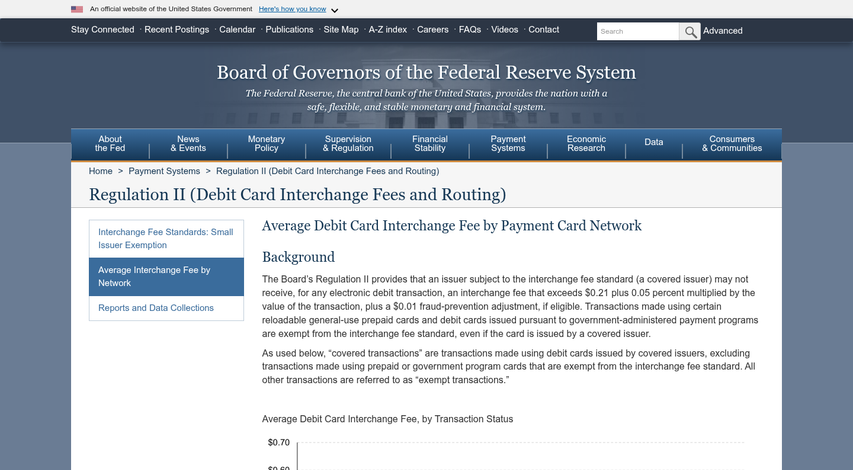
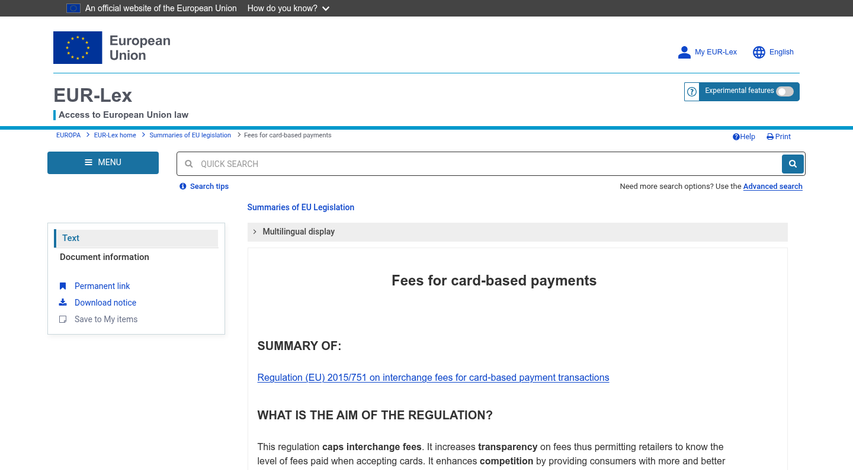
This matters more in some markets than others. In the EU, interchange fees are capped at 0.2% for debit cards and 0.3% for credit cards. Those caps have pushed European acquiring banks to build tighter in-house processing arrangements because the fee structure leaves less room to distribute margins across multiple parties.
In markets without those caps, it's more common to see the three functions split across separate providers - which is why a merchant in the US might work with a gateway, a processor, and an acquiring bank that are all different businesses. If one of those providers terminates your account, it's worth understanding what to do when a processor closes your account and how to find alternatives quickly.
When Merchants Should Pay Close Attention to Their Acquiring Bank
For merchants, the acquiring bank runs quietly in the background - it's fine, until it isn't. There are moments in a business's life where the relationship with your acquirer starts to have a financial impact, and those are the moments worth paying attention to.
If your business is growing fast, your current acquiring bank might not be built to scale with you. Higher transaction volumes can trigger extra scrutiny, and if your acquirer isn't set up to manage your category at scale, you might face account reviews or fund holds at the worst possible time. The right question is whether your acquirer is the right fit for where your business is headed - not just where it is.
International expansion is another point where this relationship matters. Not every acquiring bank supports multi-currency transactions or has strong connections to card networks in the regions you want to sell in. The fees on cross-border transactions can vary quite a bit by acquirer, so it's worth comparing markups before entering a new market.
Merchants in high-risk categories - think subscription services, travel, or adult content - should pay especially close attention. Acquirers that work with high-risk merchants tend to have stricter contract terms, higher fees, and lower tolerance for chargebacks. If your chargeback ratio starts to climb, your acquirer may freeze your account or hold a percentage of your funds as a reserve. That can do real damage to your cash flow.
On the subject of chargebacks - it's worth knowing your ratio at any given time. Most acquirers want to see it below 1%, and card networks have their own thresholds too. If you're creeping toward that line, your acquirer is already paying attention.
Your acquiring bank is worth re-evaluating any time your business model, volume, or risk profile changes in a meaningful way.
Your Acquiring Bank Isn't Just a Behind-the-Scenes Detail
That knowledge has real, helpful value. Merchants who understand what their acquirer actually does are better equipped to negotiate more favorable rates, ask the right questions before signing a contract, and avoid being caught off guard by reserves, holds, or account terminations. It also makes it easier to plan for growth - because scaling your payment volume means your hands-on relationship scales with it, for better or worse.
A good next step is to review your latest merchant agreement with fresh eyes. Look at who your acquirer is (it's sometimes different from your processor), what fees are flowing where, and what triggers exist around risk or chargebacks. The more you see the full picture, the more confidently you can build on it - including understanding what a good rate looks like for your merchant account.
FAQs
What is an acquiring bank?
An acquiring bank is the financial institution that holds a merchant's account, connects them to card networks, and settles card payment funds on their behalf.
How does an acquiring bank make money?
Acquiring banks earn a markup of 0.1% to 1.5% per transaction, on top of interchange and assessment fees, all bundled into the Merchant Discount Rate paid by merchants.
What's the difference between an acquiring bank and payment processor?
The acquiring bank holds your merchant account and settles funds, while the payment processor routes transaction data between your bank, card networks, and the customer's bank.
Can an acquiring bank reject my merchant application?
Yes. Acquiring banks assess industry type, chargeback history, and business model before approving merchants. High-risk industries face stricter scrutiny and may require special processors.
When should merchants re-evaluate their acquiring bank?
Merchants should reassess their acquiring bank during rapid growth, international expansion, or when chargeback ratios climb, as these changes directly affect account terms and cash flow.