 Call (844) NO-DISPUTES
What is a Decline Code?
On average, about 15% of recurring payments are declined, which means a large chunk of transactions never make it across the finish line. For businesses that use subscriptions or repeat billing, that's not a minor inconvenience - it's a real and standard problem.
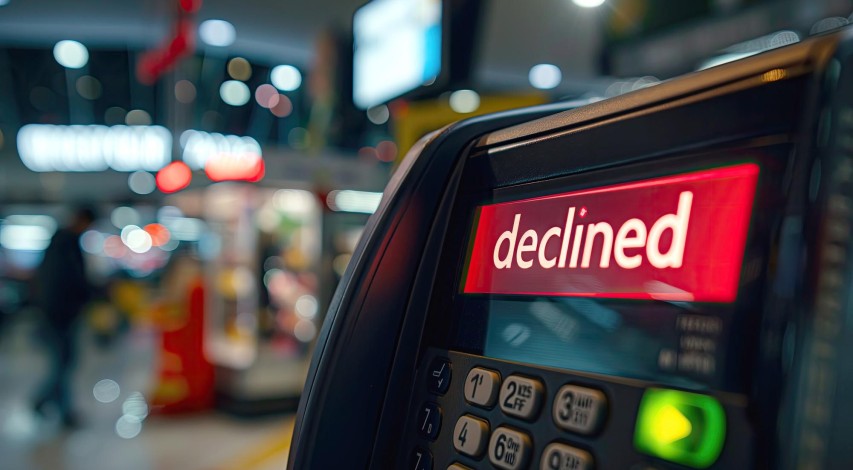
For the consumer side, a declined card is a dead end with no explanation. But there's actually structured information packed into that second of rejection, and each decline code carries a reason - whether that's an expired card, a suspected fraud flag, insufficient funds, or something happening on the bank's end that has nothing to do with you at all. The code is the payment network's way of telling merchants and processors what went wrong, even if that message doesn't make it back to the cardholder in plain language.
Understanding what these codes mean - and what to look for when you see them - turns a confusing rejection into something helpful. Let's look at how decline codes work, what the most common ones actually mean, and why they matter more than most give them credit for.
Where Decline Codes Come From and Who Sends Them
A card transaction isn't a direct line between you and a merchant - it passes through a few parties in a matter of seconds, and a decline code can come from any point in that chain.
The process starts when a cardholder swipes, taps, or enters their card details. That payment request goes to the merchant's payment processor, which is the company taking care of the technical side of accepting card payments. The processor then passes the request along to the card network - think Visa, Mastercard, or American Express - which routes it to the bank that issued the card.
The issuing bank is the one doing most of the heavy lifting - it checks the account balance, looks at the transaction details, and runs the request against its fraud detection rules. If something doesn't add up, the bank generates a decline code and sends it back through the same chain in reverse. By the time it reaches the merchant's terminal, only a fraction of a second has passed.

Card networks can also generate decline codes themselves - this happens less than bank-side declines, but networks do apply their own rules and can reject a transaction before it even reaches the issuing bank.
Knowing who sent the decline helps explain what it means. A decline from the issuing bank might relate to the cardholder's account - a low balance, a frozen card, or a flagged transaction. A decline from the network is usually more technical in nature. The merchant's processor can also return a code if something goes wrong on the infrastructure side, though this is less common.
Each party communicates a standardized set of numeric or alphanumeric codes so the message travels cleanly across different systems and institutions. These codes aren't written in plain language, but they map to reasons that merchants and processors know how to read. The cardholder usually only sees a short message like "declined" or "card not accepted" - the code stays on the merchant and processor side.
It's the structure that makes the whole system work at scale. Millions of transactions run through it every day, and the code system is what keeps the communication steady across banks, networks, and processors worldwide.
The Most Common Decline Codes and What They Mean
There are over 2,000 things that can technically trigger a decline, but in practice, most rejections come down to a small handful of codes. Two in particular - code 05 and code 51 - account for roughly 80% of all declines combined.
Code 05, labeled "Do Not Honor," is the most frustrating one to receive because it doesn't tell you much. The issuing bank has rejected the transaction but hasn't explained why - maybe a fraud flag, an account restriction, or an internal rule the bank applies automatically. Code 51, "Insufficient Funds," is simpler - the account basically doesn't have enough money or available credit to cover the purchase.
Most other decline codes fall into recognizable categories too. Expired card details, incorrect security codes, and cards that have been reported lost or stolen each have their own codes. The card networks use a two-digit numbering system for these, but American Express runs its own separate three-digit system.
Amex code 100 works as a catch-all rejection, like how code 05 functions on other networks. Code 101 is cleaner - it means the card's expiration date has passed, full stop.
| Code | Label | What It Means |
|---|---|---|
| 05 | Do Not Honor | The issuing bank rejected the transaction without a specific reason |
| 51 | Insufficient Funds | The account doesn't have enough money or credit available |
| 100 (Amex) | Generic Decline | American Express catch-all rejection code |
| 101 (Amex) | Expired Card | The card's expiration date has passed |
The code a merchant sees isn't always the full picture. Banks can apply broad codes like "Do Not Honor" to cover a variety of internal decisions they don't want to disclose publicly, so even a code that looks simple can have a few possible causes behind it. Repeated declines on the same account can also increase the risk of a credit card reversal or a dispute down the line, so it's worth paying attention to patterns in your decline data.
Soft Declines vs. Hard Declines - Why the Difference Matters
Every decline code you'll see falls into one of two categories: soft declines and hard declines. Knowing which one you're dealing with changes what you should do next.
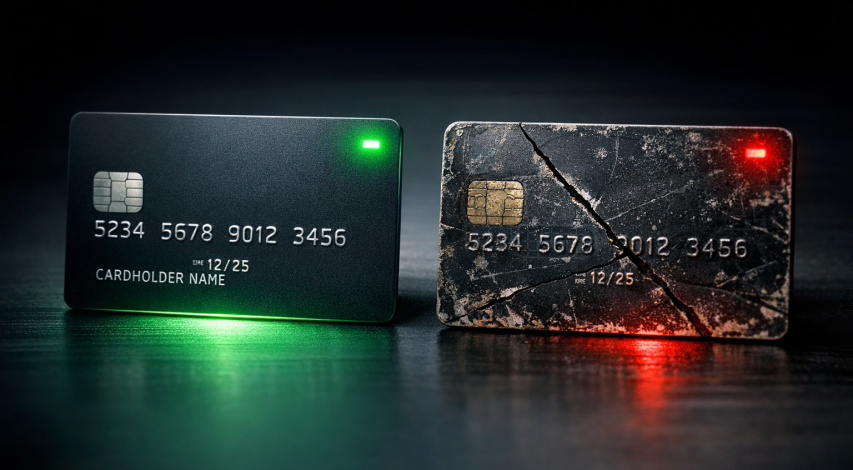
A soft decline is temporary. The card itself isn't the problem - something like insufficient funds, a bank timeout, or a fraud flag that the cardholder can resolve is usually to blame. These transactions can be retried and a second attempt will sometimes go through without any changes needed.
A hard decline means the bank has rejected the transaction outright and won't approve it no matter how many times you try. Expired cards, closed accounts, and cards reported as stolen all produce hard declines. The only path forward is a different payment method.
| Soft Decline | Hard Decline |
|---|---|
| Temporary condition | Permanent rejection |
| May resolve on retry | Retry will not help |
| Examples: insufficient funds, bank timeout | Examples: stolen card, closed account |
| Customer may need to take action first | Customer needs a different card |
This matters for merchants because retrying a hard decline repeatedly creates problems for your business. Payment networks track retry behavior, and too many attempts on a declined card can flag your account for suspicious activity.
The result can be extra scrutiny or fees from card networks. Most networks have retry rules that merchants are expected to follow, and ignoring them has actual consequences.
Customers don't always know this either. Trying again feels natural, but with a hard decline, it won't work. Letting customers know - without embarrassing them - that they need a different payment method saves everyone time and frustration.
For merchants, building this awareness into how your team or checkout flow responds to declines makes a helpful difference. A soft decline is a pause. A hard decline is a stop sign, and treating the two the same way can cost you more than just the sale.
How Card-Not-Present Transactions Get Declined More Often
Online payments and subscription charges fall into a category called card-not-present (CNP) transactions - and they get declined at a much higher rate than in-person payments. There's no chip reader to verify the card, no signature, and no face-to-face interaction. That gap creates more room for things to go wrong.
Roughly one-third of CNP declines come from mistakes on the merchant's side - not the cardholder's. The customer had a valid card with available funds and the payment still failed because something in the merchant's setup was off.
The most common culprit is outdated card details. When a customer gets a new card - because the old one expired or was replaced after fraud - their saved payment info can become stale. If a merchant tries to charge that old number, the transaction fails. Some payment processors have tools to update this automatically, but not every merchant uses them. Network tokenization is one approach that helps keep card details current without requiring customers to re-enter their information.

Billing address mismatches are another common cause. Many processors run an address verification check and if the billing info on file doesn't match what the bank has, the transaction can get flagged or declined outright. A customer may have moved, or entered an abbreviation the system doesn't recognize and that small difference is enough to block the payment.
Then there's retry logic - or the lack of it. When a recurring payment fails, some merchant systems will instantly retry the charge multiple times in a row. Banks read that pattern as suspicious and may decline every attempt after the first. A better strategy spaces out retries and changes the timing, but poorly configured billing systems don't always do that.
This connects directly to why recurring payment decline rates sit around 15%. Subscriptions depend on everything staying in sync - card details, billing info, and retry behavior all have to line up. When any one of them breaks down, the charge doesn't go through.
It's worth thinking about who actually owns that problem. The cardholder didn't do anything wrong, but they're the ones who lose access to a service or get a failed payment notice. The friction lands on the customer even when the merchant's system is what broke down.
What To Do the Next Time a Payment Gets Declined
If you're a cardholder, the best habit you can build is to contact your bank or card issuer as soon as a decline happens. They can tell you what triggered it and talk about the next steps. If you're a merchant or business owner, it's worth taking time to audit how your payment system captures and communicates decline codes. Knowing what a code means - instead of just seeing a failed transaction - puts you in a much better position to recover the sale or steer your customer toward an answer.
The next time a payment doesn't go through, resist the urge to panic or assume the worst. A decline code is information, and information is something you can act on. Approach it with a little curiosity instead of frustration, and you'll find that most payment problems are far easier to resolve than they first appear. If disputes do arise from failed transactions, understanding what happens if you never reply to a credit card dispute is just as important as resolving the decline itself.
FAQs
What is a decline code?
A decline code is a numeric or alphanumeric code generated by a bank or card network explaining why a payment transaction was rejected. It tells merchants and processors what went wrong, though cardholders typically only see a generic "declined" message.
What are the most common credit card decline codes?
Code 05 ("Do Not Honor") and Code 51 ("Insufficient Funds") account for roughly 80% of all declines. American Express uses its own system, where Code 100 is a generic rejection and Code 101 indicates an expired card.
What is the difference between a soft and hard decline?
A soft decline is temporary and may resolve on retry, often caused by insufficient funds or a bank timeout. A hard decline is a permanent rejection - such as a stolen or closed card - where retrying won't work and a different payment method is needed.
Why do online payments get declined more often?
Card-not-present transactions lack chip verification and face-to-face confirmation, making them higher risk. Common causes include outdated card details, billing address mismatches, and poorly configured retry logic in merchant billing systems.
What should you do when a payment is declined?
Cardholders should contact their bank immediately to identify the cause. Merchants should audit their payment systems to properly capture and interpret decline codes, enabling faster recovery of failed transactions.