 Call (844) NO-DISPUTES
What is a Reserve Account in Payment Processing?
A reserve account is a risk management tool used by payment processors and acquiring banks to protect themselves against potential financial losses. Think chargebacks, fraud, or a business that suddenly shuts down with undelivered orders. The reserve acts as a financial buffer - a pool of funds set aside from your sales that the processor can draw from if something goes wrong.
Whether you're a new merchant trying to understand why your cash flow looks different than expected, or an established business owner who's just been told a reserve is being applied to your account, knowing how these accounts work puts you in a much stronger position - this post breaks down the types of reserve accounts, why processors need them, and what you can do about it.
Why Payment Processors Hold a Portion of Your Revenue
When a processor approves you to accept card payments, they take on financial responsibility for your account. If a customer disputes a charge and wins, or if fraud happens, the processor may be liable for that money - sometimes before they can recover it from you.
That exposure is the core reason reserve accounts are out there. A reserve gives the processor a funded cushion to draw from if something goes wrong - it's not a penalty and it's not distrust - it's a financial safety net that protects both sides of the relationship.
Chargebacks are the biggest factor here. A chargeback happens when a cardholder disputes a transaction through their bank and the funds get pulled back. Processors have to absorb that cost immediately, and if a merchant's account runs dry or gets closed, there's no easy way to recover it. A reserve account means the money is already set aside and accessible.
Fraud exposure works the same way. If a merchant processes a large volume of fraudulent transactions - even accidentally - the financial fallout can be big. A portion of revenue held in reserve gives processors a buffer while disputes get resolved.
Not every merchant will run into this. Reserve accounts are most common for businesses in high-risk industries like travel, supplements, or subscription services. New merchants without a processing history are also more likely to have one, as there's no track record for the processor to look at. And merchants who have had elevated chargeback rates in the past will usually be asked to maintain a reserve.
The size of the reserve and how it's structured can vary depending on the processor's assessment of your account. Some merchants hold reserves for a few months and then have them released. Others carry them as a standard part of their agreement. The setup can depend on what type of reserve account the processor assigns - which is what the next section covers.
The Three Types of Reserve Accounts and How Each One Works
Payment processors don't use a one-size-fits-all strategy when it comes to reserve accounts. There are three types of reserve accounts, and the type you get can depend on your business profile, your processing history, and how much danger a processor thinks you carry.
The most common type is a rolling reserve. Your processor holds back a percentage of your transactions - usually between 5% and 20% - and releases that money on a rolling basis after a set period, usually 30 to 180 days. Funds you process might not be available to you for a few months.
An upfront reserve works differently. Instead of pulling small amounts over time, the processor asks for a lump sum immediately - usually equal to 50% to 100% of your expected monthly processing volume - it's less common. But you'll see it with new merchants that have no track record or businesses in especially high-danger categories. High-risk payment processors are more likely to require this type of reserve upfront.
The third type is a capped reserve. It works in the same way as a rolling reserve, with a percentage held from each transaction. But the withholding stops once the reserve balance hits a set cap. That cap is usually 50% to 100% of one month's processing volume. Once you hit it, your full transaction amounts start coming through as normal. If you want to understand how rates factor into the overall cost, it helps to know what a credit card processing discount rate is.
| Type | How It's Calculated | Typical Hold Period | Best For |
|---|---|---|---|
| Rolling Reserve | 5-20% of daily transactions | 30 to 180 days | Established merchants with ongoing volume |
| Upfront Reserve | Lump sum of 50-100% of monthly volume | Varies by agreement | New or high-risk merchants |
| Capped Reserve | % held per transaction until a cap is reached | Until cap is met | Merchants with predictable monthly volume |
How Reserve Amounts and Hold Periods Are Calculated
Processors don't pick reserve percentages out of thin air. They look at a combination of things to choose how much to hold and for how long.
Your chargeback ratio is one of the biggest inputs. A high ratio tells a processor that an actual share of your transactions are being disputed, which means financial exposure for them. Your processing history matters too - a business with years of clean transaction records is a much safer bet than one that's brand new or recently flagged.
Industry type plays a role here as well. Some categories, like travel, supplements, or subscription services, carry a higher baseline level of danger in the eyes of most processors. That means businesses in those spaces can expect tighter reserve terms than, say, a retail shop with easy in-person sales. Transaction volume also factors in, because bigger volumes mean bigger possible losses if something goes wrong.
When a rolling reserve is applied, a common setup is 10% of credit card sales withheld for a period of 90 to 180 days. So if you process $10,000 in a day, $1,000 goes into the reserve. That held amount is then released on a rolling schedule once the hold period passes.
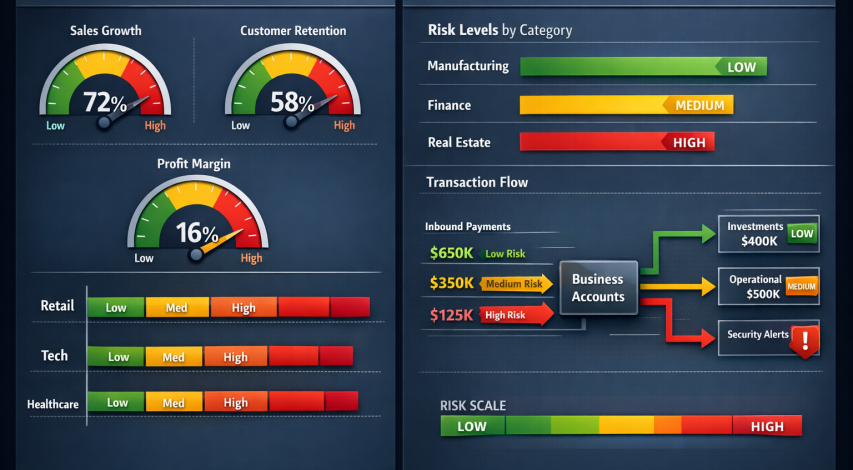
The full reserve balance is usually released after six months to a year of what processors call "healthy processing." It's worth understanding what that actually means to them. Healthy processing means your chargeback ratio stays low, your refund rate is reasonable, your transaction patterns are consistent, and you're not triggering fraud alerts.
There's no universal chargeback threshold. But processors watch for chargeback ratios above 1% as a warning sign. Keeping that ratio below 1% and maintaining steady, predictable sales volume is the clearest way to show that you're a low-exposure merchant. That track record is what eventually moves the needle on your reserve terms.
What Happens to Your Cash Flow During a Reserve Hold
When 5-10% of your gross sales gets held for as long as 180 days, the effect on your day-to-day finances can be immediate. That money is technically yours. But you can't touch it. For a business doing $50,000 a month in sales, that's $2,500 to $5,000 sitting locked away every month.
The pressure tends to build over time. In the first month, you might not feel it much. But by month three or four, you could have $10,000-$20,000 in held funds with none of it released yet. That gap has to come from somewhere.
Most merchants feel the squeeze in three places: payroll, inventory, and growth. You still have to pay your staff on time. You still need to restock to keep selling. And if you were planning to expand or run a marketing push, that plan may need to wait. None of these things pause just because your processor is holding a part of your revenue.

The table below shows what a rolling reserve hold might look like over six months for a business with $30,000 in monthly sales and a 10% reserve rate.
| Month | Amount Added to Reserve | Amount Released | Total Held |
|---|---|---|---|
| 1 | $3,000 | $0 | $3,000 |
| 2 | $3,000 | $0 | $6,000 |
| 3 | $3,000 | $0 | $9,000 |
| 4 | $3,000 | $0 | $12,000 |
| 5 | $3,000 | $0 | $15,000 |
| 6 | $3,000 | $3,000 | $15,000 |
It takes a full six months before a single dollar comes back to you. Then releases happen on a rolling basis - but the hold never disappears as long as you're processing.
Some merchants try short-term credit lines or dip into savings just to stay operational; it's a structural cash flow gap created by the reserve itself - not poor planning. If your processor has restricted your account entirely, it's worth understanding what to do when a processor closes your credit card processing.
How to Reduce Your Reserve or Negotiate Better Terms
Reserve accounts are not necessarily permanent, and that's worth remembering. Many merchants assume the terms they started with are fixed. But processors can and do revisit reserve requirements once merchants have built a track record with them.
The most direct way to get a reserve lowered is to lower your chargeback rate. Processors set reserves largely because of risk, so a low chargeback rate tells them that risk has gone down. Most processors look for a chargeback ratio below 1%, and staying well under that threshold over a few months makes a difference.
Steady, predictable processing volume also helps. Sudden spikes or irregular sales patterns can make processors nervous, so steady month-to-month activity works in your favor. Responsive communication matters too. Merchants who reply faster to processor requests and flag problems in advance get more flexibility than the ones who go quiet.
Here are some helpful steps to work toward better terms.

- Keep chargebacks low by using fraud prevention tools and clear billing descriptors.
- Process consistently each month to build a reliable history.
- Respond to any processor requests or queries without delay.
- Ask your processor directly what benchmarks you need to hit for a review.
- Get any agreed changes to reserve terms in writing.
That last point is one that matters. Some processors will informally agree to cut back on a reserve but not update the contract. Always get it documented.
It is also worth knowing that not every processor will budge, and timelines can vary. Six to twelve months of clean processing history is a basic starting point to request a formal review. Some merchants wait longer. The process is gradual by design, and setting realistic expectations now will save you frustration later.
If your current processor is unwilling to renegotiate after a solid track record, it may be worth shopping around for better terms. Not all reserve policies are the same across processors.
Reserve Accounts Don't Have to Be a Mystery
The key takeaways are straightforward: reserves come in different structures, the amount held is tied directly to your processing volume and risk profile, and the cash flow impact can be significant if you're not accounting for it. Reserve requirements aren't permanent, either. Merchants who show low chargeback rates, stable volume, and a solid business history have grounds to renegotiate - and successfully do.
If you're currently subject to a reserve account, the most productive next step is to review your agreement, track your chargeback win rate closely, and open a dialogue with your processor about the conditions for reducing or releasing the hold. Staying well-educated and proactive helps you manage reserves better and positions you to negotiate stronger terms as your business grows.
FAQs
What is a reserve account in payment processing?
A reserve account is a risk management tool where payment processors hold back a portion of your sales revenue as a financial buffer against potential losses from chargebacks, fraud, or business closure.
What are the three types of reserve accounts?
The three types are rolling reserves (a percentage held per transaction, released after a set period), upfront reserves (a lump sum held immediately), and capped reserves (percentage held until a set balance cap is reached).
How does a reserve account affect my cash flow?
A reserve hold can lock away thousands of dollars for months. For example, a 10% reserve on $30,000 monthly sales means $3,000 held each month, with no funds released until month six under a rolling structure.
Why do processors require reserve accounts?
Processors hold reserves because they are financially liable for chargebacks and fraud. A reserve ensures accessible funds are available to cover losses if a merchant's account runs dry or closes unexpectedly.
Can I negotiate or reduce my reserve account terms?
Yes. Keeping your chargeback ratio below 1%, maintaining consistent processing volume, and responding promptly to processor requests can support a formal review. Six to twelve months of clean processing history is typically the starting point for negotiation.