 Call (844) NO-DISPUTES
What is a Credit Card Floor?
A credit card floor is essentially a minimum interest rate that a lender sets on a variable-rate credit card. Even if the benchmark rate your card is tied to drops, the floor guarantees that your interest rate never falls below a certain point. For borrowers hoping to benefit from a low-rate environment, that distinction matters.
Understanding how a credit card floor works - and how to find one in your card agreement - helps you make better decisions about which cards you carry and how you manage your debt. This post breaks it all down.
How Authorization Thresholds Actually Work
A floor limit is a dollar amount set for a merchant. Any transaction that falls below it can be approved without the merchant checking in with the card issuer first. Go above it and the terminal has to reach out for a real-time authorization before the sale goes through.
Think of it as a built-in permission level. Below the threshold, the merchant carries the risk and approves the transaction on their own. Above it, the card network or issuing bank gets to weigh in and either approve or decline the charge.
Here is roughly how the flow works. A customer presents their card. The terminal checks the transaction amount against the floor limit. If the amount is below it, the sale proceeds without authorization. If it's above it, an authorization request goes out immediately.
A zero floor limit means every transaction needs authorization, no matter how small. Many merchants work this way by default, and some are required to by their payment processor or card network agreement.
Card-not-present transactions always work under a zero floor limit. This covers anything processed online or over the phone, where the card itself is not physically in front of the merchant. Because the fraud risk is higher without a physical card to look at, authorization is an absolute requirement on every purchase.
In-person transactions at physical terminals are where floor limits have historically had more flexibility. But even then, the limit is not something the merchant gets to set freely on their own. It comes from a combination of the card network rules and the merchant's category, which is what the next section gets into.
Why Your Merchant Category Code Sets the Limit
Every business that accepts credit cards is assigned a four-digit Merchant Category Code, or MCC. This code tells the payment network what type of business it is, and that classification has a direct result on where the floor limit gets set.
The logic behind this is pretty easy. Different business types carry different levels of transaction risk and have different average sale amounts. A gas station usually processes dozens of small, fast transactions per hour. But a hotel might process one large charge that covers a few nights. Those two businesses have very different needs, so it makes sense that their floor limits would reflect that.
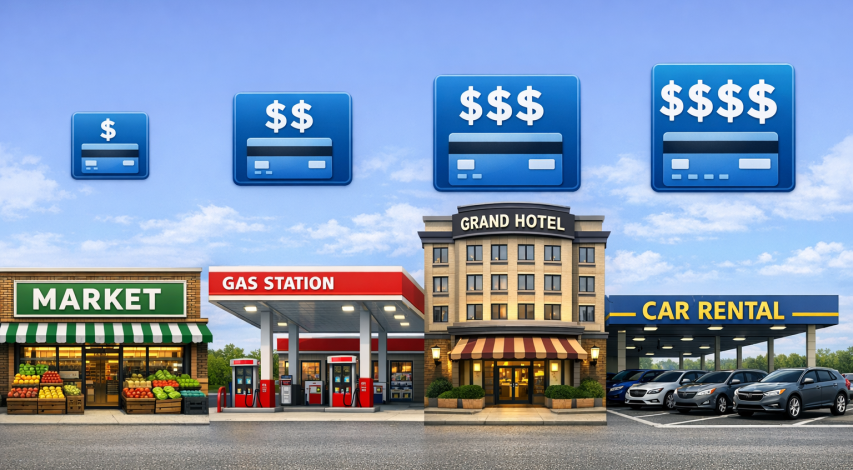
A grocery store, just to give you an example, tends to have a lower floor limit because transactions are standard and pretty low in value. Hotels and car rental businesses, on the other hand, usually have higher thresholds to accommodate the bigger amounts involved in those purchases. The floor limit is basically calibrated to match what a normal transaction looks like for that category.
Here is a rough idea of how that can look across a few merchant types.
| Merchant Type | Example MCC Range | Typical Floor Limit Range |
|---|---|---|
| Grocery Stores | 5411 | $0 - $50 |
| Gas Stations | 5541 | $50 - $100 |
| Hotels and Lodging | 7011 | $200 - $500 |
| Car Rental Companies | 7512 | $200 - $400 |
These ranges are not set in stone and can vary based on the card network, the merchant's processing history, and agreements with their payment processor. The MCC is the starting point, not the final word.
The $10 Minimum Purchase Rule and What It Means for Shoppers
Federal law gives merchants the right to set a minimum buy amount for credit card transactions, and that cap is set at $10. A shop owner can legally tell you that they won't run a credit card for anything under, say, $5 or $8. They just can't set the bar higher than $10.
There's one condition attached to this rule. The minimum has to apply equally across all credit card networks and issuers. A merchant can't accept small Visa charges but turn away small Mastercard ones - the rule has to be consistent no matter whose logo is on your card.
This rule only applies to credit cards. Visa and Mastercard explicitly ban merchants from setting buy minimums on debit card transactions. If you tap your debit card, the merchant has to process it regardless of the amount. But swap that for a credit card and they're within their rights to decline a $3 buy at the register.
Most don't think about which type of card they're handing over until the cashier says something. That distinction between credit and debit laws isn't printed on a sign at the door.
Merchants set these minimums because of processing fees. Every credit card transaction costs the merchant a small percentage of the sale, or a flat fee in some cases. On a $2 buy, that fee can eat up most of the margin. A minimum buy threshold keeps small transactions from becoming a net loss.
It's a helpful business choice and it's legal. But it does create friction for shoppers who aren't sure why their card was just turned away for a coffee and a snack.
When Floor Limits Create Risk for Merchants and Cardholders
Floor limits made sense in a world without instant connectivity. But they have a downside worth noting. When a transaction falls below the floor limit, it skips the authorization step. That gap is where fraud can slip through.
A stolen card used for small purchases illustrates the problem. If those transactions are under the floor limit at a given terminal, they may never get checked against the card network in time. The theft can go undetected for longer, and the cardholder and the merchant share the fallout.
Here are some scenarios where floor limits create problems.
- A stolen card is used repeatedly for low-value purchases that stay under the floor threshold and never trigger a real-time check.
- A merchant processes a transaction offline without authorization, and the card turns out to be declined or fraudulent - leaving the merchant to absorb the loss.
- A chargeback is filed by a cardholder, and because the merchant skipped authorization, they have a much weaker case to dispute it.
That last point is why it matters. Skipping authorization exposes merchants to fraud and weakens their position in a dispute. Card networks usually side with the cardholder when the merchant can't show an authorization record.
This is why online transactions work under a zero floor limit. There's no offline scenario on the internet, so every transaction gets authorized in time without exception. The norm for in-person retail has moved the same direction as terminals have become cheaper and connectivity more reliable.
Floor limits still exist in offline environments like airplane cabins or remote locations. But even there, the dangers are managed through other controls. The wider takeaway is that an unauthorized transaction is a liability - and whoever skipped that step usually carries the weight of it.
What Visa and Mastercard's Network Rules Say About Floor Limits
Both Visa and Mastercard set their own floor limit rules for merchants on their networks. These aren't loose recommendations - they're part of the operating rules merchants agree to when they sign up with a payment processor.
The standard floor limit for most card-present environments lands between $25 and $50. The exact number can depend on the merchant category and the network in question. Visa and Mastercard have slightly different approaches to how they define and apply these limits.
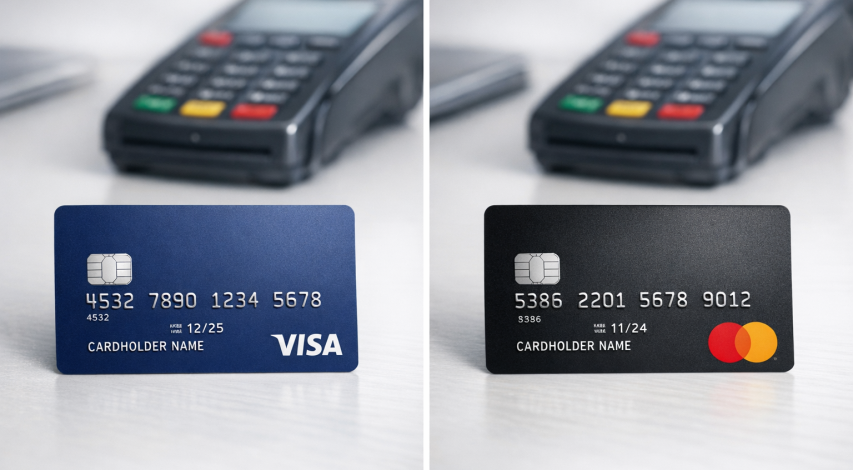
| Network | Typical Floor Limit | Who Sets It | Merchant Agreement Required |
|---|---|---|---|
| Visa | $0 to $50 depending on merchant type | Visa network rules via processor | Yes |
| Mastercard | $25 to $50 depending on merchant type | Mastercard network rules via processor | Yes |
For most in-person retail settings, networks push for a $0 floor limit where possible - it means merchants are expected to get real-time authorization on every transaction instead of using offline approval. The $25 to $50 range comes into play mostly for merchant categories like transit or low-value retail environments.
Merchants don't negotiate these limits directly with Visa or Mastercard. The rules flow down through the acquiring bank and payment processor, and merchants take them on as part of their merchant agreement; it's why reading the fine print on a processing contract actually matters.
Neither network publishes an easy public document that spells this out in plain language. The rules live inside network operating rules that processors interpret on behalf of merchants. To know what applies to your business, your processor is the right place to start.
Floor Limits Demystified - Here's What to Take Away
The next time you tap your card for a small purchase and the terminal approves it almost instantly, there's a chance a floor limit played a quiet role in that moment. Knowing that these thresholds are out there - that they shape the invisible architecture of every card transaction - gives you a sharper picture of how the payment system works beneath the surface.
FAQs
What is a credit card floor limit?
A credit card floor is a minimum interest rate set by a lender on a variable-rate card, ensuring your rate never drops below a certain point even if benchmark rates fall.
What happens when a transaction falls below the floor limit?
Transactions below the floor limit are approved without real-time authorization from the card issuer, meaning the merchant assumes the risk for that sale.
Do floor limits differ by merchant type?
Yes. Merchant Category Codes determine floor limits, so grocery stores typically have lower thresholds while hotels and car rentals have higher ones to accommodate larger transactions.
Can merchants set minimum purchase amounts for credit cards?
Yes. Federal law allows merchants to set a minimum credit card purchase amount, but it cannot exceed $10 and must apply equally across all card networks.
Why do floor limits create fraud risks?
When transactions skip authorization, stolen cards used for small purchases may go undetected longer. Merchants who skip authorization also face weaker chargeback dispute positions.