 Call (844) NO-DISPUTES
What is a Payment Service Provider (PSP)?
A PSP is a company that handles the technical and financial heavy lifting of accepting payments on your behalf. Instead of building direct relationships with banks and card networks yourself - which would be enormously tough and expensive - you connect to a PSP and they take care of it. For small businesses, startups and even bigger businesses, this is the helpful reality of how online payments work.
But the term gets thrown around loosely and it's easy to confuse a PSP with related concepts like payment gateways, merchant accounts, or payment processors. They're not the same thing and the differences actually matter when you're picking how to get paid.
I'll break it all down in plain language. I'll talk about what a PSP is, how it moves money silently, what it works with on your behalf and what to look for when picking one for your business. Whether you're just starting out or rethinking your current setup, this is the foundation you need.
The Role a PSP Plays in Getting You Paid
A Payment Service Provider is a company that works with the technical and financial side of accepting payments. Instead of building direct connections to banks and card networks yourself, you plug into a PSP and let it do the heavy lifting. That is the whole point of one.
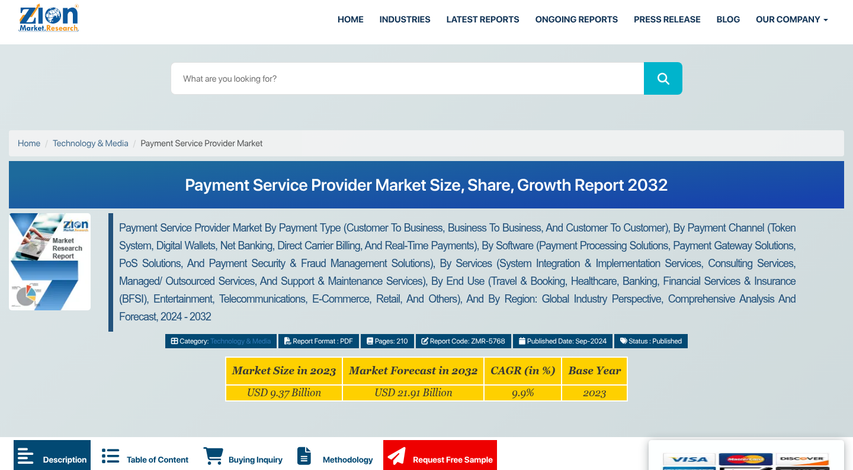
The worldwide PSP market was valued at USD 9.37 billion in 2023 and it's expected to reach USD 21.91 billion by 2032, according to Zion Market Research. That growth tells you businesses of every size are leaning on PSPs to manage their payment infrastructure, and it's not hard to see why.
The core problem a PSP solves is the difference between a customer clicking "buy" and the money actually landing in your account. That gap means banks, card networks, fraud checks, currency conversions, and compliance - none of which you want to manage on your own. A PSP sits in the middle to manage it.
What a PSP brings to the table goes well past processing a card number. Most PSPs bundle together a number of services so you have everything you need in one location.
A payment gateway securely captures and transmits card data at the point of sale. Fraud detection tools run in the background to flag or block suspicious transactions before they go through. Multi-currency support lets you accept payments from customers in different countries without creating separate accounts for each one. Reporting dashboards give you a live view of your transactions, settlements, and chargebacks. Some PSPs also manage recurring billing, which is helpful if you run a subscription-based business.
Not every PSP includes these, and the depth of each feature can vary from one provider to the next. But the underlying job is the same - to get money from your customer to you, reliably and securely.
How a Payment Transaction Actually Moves Through a PSP
Every payment you accept passes through a few hands in a matter of seconds- it feels instant from your end. But there's a full chain of decisions happening in the background before that approval comes through.
Let's talk about how a single card transaction moves from start to finish.

- Customer enters their card details. This happens at checkout, whether that's a physical terminal or an online payment form. The PSP captures that data and encrypts it immediately.
- The PSP routes the transaction to the card network. Networks like Visa or Mastercard act as the go-between that connects your bank (the acquiring bank) to the customer's bank (the issuing bank).
- The issuing bank checks the details. It looks at whether the account is valid, the funds are there, and nothing looks suspicious. This whole check takes under two seconds.
- An approval or decline is sent back. That response travels back through the same chain - network to PSP to you - and the customer sees the result almost instantly.
- Settlement happens later. Authorization just reserves the funds. The actual money moves to your account within one to three business days, depending on your PSP and your plan.
It's worth learning about which payment types are driving the most volume through this process. Credit and debit cards still lead the way at over 45% of PSP transactions globally. That said, online wallets like Apple Pay and Google Pay are closing the gap fast and are expected to account for 54% of widespread eCommerce transactions by 2026.
The acquiring bank is your bank - the one that receives funds on your behalf. The issuing bank belongs to your customer. The card network is the infrastructure that lets those two banks talk to each other, and the PSP manages your side of that whole exchange. If you want to understand exactly how funds get reserved before they move, the difference between a pre-authorization hold and capture is worth a closer look.
What PSPs Handle Behind the Scenes (That Most Merchants Never See)
While a transaction clears in seconds, work runs underneath that you never directly see. PSPs manage fraud screening, compliance, dispute tracking, and currency conversion - all without asking you to lift a finger.
Fraud screening happens on every transaction. The PSP runs checks in real time to flag payments that look suspicious before money moves anywhere. You don't see this process. But it's one of the most important things standing between your business and fraudulent purchases.
PCI DSS compliance is another area PSPs absorb on your behalf. These are the security standards that govern how card data gets stored and transmitted. Handling that infrastructure yourself would take time and technical resources, so having a PSP manage it is helpful for most merchants.
| Function | What It Does | Why It Matters to You |
|---|---|---|
| Fraud Screening | Flags suspicious transactions before they process | Reduces losses from fraudulent purchases |
| PCI DSS Compliance | Manages card data security standards | Keeps you from having to build secure infrastructure yourself |
| Chargeback Management | Tracks and responds to customer disputes | Protects your dispute ratio from climbing too high |
| Currency Conversion | Converts foreign payments into your settlement currency | Lets you accept international payments without extra setup |
Chargeback management deserves extra attention here. When a customer disputes a charge, it goes on your record as a merchant. Visa and Mastercard set a ceiling for dispute ratios under their monitoring programs - breach that threshold and you can get flagged or lose access to the payment network entirely.
Your PSP watches your chargeback ratio on your behalf and can alert you when things trend in the wrong direction. That monitoring is quiet. But the consequences of ignoring it are not.
PSP Pricing Models and What You're Actually Agreeing To
Before you sign up with a PSP, it's worth understanding how they make money from you. There are three common pricing structures, and each one works differently depending on your sales volume and transaction size.
Flat-rate pricing charges a fixed percentage on every transaction - it's easy to know and predict, which makes it popular with new merchants. Interchange-plus pricing is more transparent - it passes the card network cost to you and can add a small markup on top. Subscription or membership pricing charges a monthly fee in exchange for lower per-transaction rates, which can save money if you process a high volume of payments.
| Pricing Model | Cost Predictability | Best Fit | Potential Downside |
|---|---|---|---|
| Flat-Rate | High | Small or new businesses | Can be expensive at scale |
| Interchange-Plus | Medium | Growing businesses | Harder to read your statements |
| Subscription | Medium-High | High-volume merchants | Monthly fee adds cost if volume drops |
The pricing model is one part of the agreement. Rolling reserves are worth close attention - some PSPs hold back a percentage of your funds for weeks or months as a risk buffer, which can affect your cash flow, and that's especially true early on.
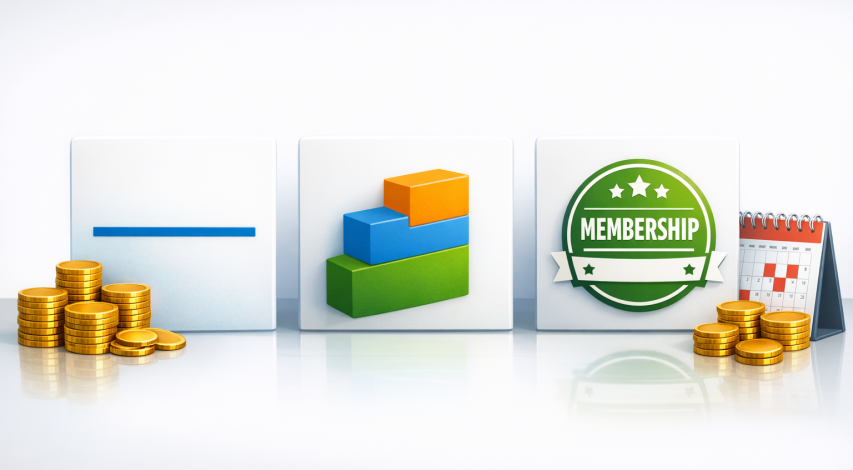
Contract length is another thing to read carefully. Some PSPs lock you in for one or two years with early termination fees attached. Others run month-to-month with no penalty to leave.
A first-time merchant should ask a few direct questions before signing anything. What fees apply beyond the transaction rate? How long are funds held before settlement? Are there volume minimums or inactivity fees? Clear answers to these put you in a much better position to compare your options.
Choosing a PSP That Fits Your Business Type and Volume
Not every PSP is built for every business, and the wrong fit can cost you more than just money. The type of products you sell matters quite a bit here. A business selling online downloads has different needs than one running a subscription model or shipping physical goods across borders.
Transaction volume is one of the biggest things to get right. At low volumes, a flat-rate aggregator like Stripe or Square is usually the most helpful starting point. But as your volume grows, those flat rates can become expensive compared to interchange-plus pricing through a dedicated merchant account.
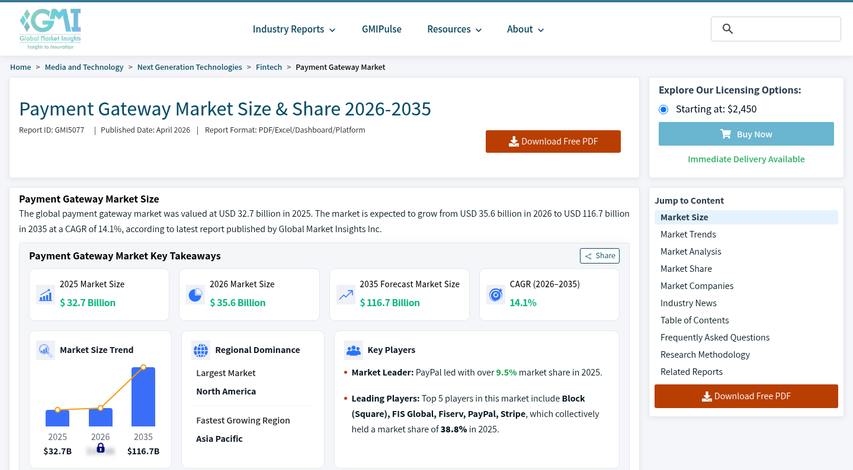
Geography is another factor worth considering. North America accounts for over 35% of the global PSP market, so providers tend to be well-optimized for that region. If you're looking to sell to customers in Europe, Asia, or Latin America, then you'll want a PSP with genuine multi-region support and local payment method coverage - not just card processing.
Integration options matter too, and that's especially true if you already have a tech stack in place. Some PSPs connect with platforms like Shopify, WooCommerce, or Salesforce, and others are built for custom API setups. Check what works with what you already have before you commit.
The cheapest option isn't always the best fit at scale. Low fees can come with limited support, restricted product categories, or weaker fraud tools - and those gaps become more painful as your business grows. If your account gets flagged or shut down, understanding what to do when a processor closes your account can save you a lot of scrambling.
Before signing up with any PSP, it helps to work through a few key questions.
- Does this PSP support the currencies and countries my customers are in?
- Can it handle the payment methods my customers prefer, like digital wallets or bank transfers?
- What happens if my account is flagged or frozen - is there a real support process?
- Does the pricing model still make sense at twice my current volume? It's worth comparing what a good rate looks like for your business type before you commit.
- Is my product category fully supported, or are there restrictions buried in the terms and conditions?
Finding the Right PSP Is a Business Decision, Not a Tech One
Before signing with any provider, it pays to ask harder questions than the sales page answers. How does the fee structure behave at your volume? What happens to your funds during a dispute? And how fast is support when something breaks on a Friday night? The facts buried in a merchant agreement matter more than the headline rate.

If you already have a PSP in place, treat this as a prompt to audit it. Check if your latest setup still fits your transaction combination, your markets, and where you want to be in two years. The right provider is not just a payment button - it's infrastructure. Choose it like one. If you're still evaluating options, understanding merchant processing fast approval options can help you move quickly without sacrificing fit.
FAQs
What is a Payment Service Provider (PSP)?
A PSP is a company that handles the technical and financial side of accepting payments on your behalf, connecting you to banks and card networks without requiring you to build those relationships yourself.
How does money move through a PSP during a transaction?
When a customer pays, the PSP encrypts their card data, routes it through the card network to the issuing bank for approval, and settles the funds into your account within one to three business days.
What does a PSP handle behind the scenes?
PSPs quietly manage fraud screening, PCI DSS compliance, chargeback monitoring, and currency conversion on your behalf, without requiring any direct involvement from you.
What PSP pricing models should merchants know about?
The three main models are flat-rate, interchange-plus, and subscription pricing. Flat-rate suits small businesses, interchange-plus suits growing ones, and subscription pricing works best for high-volume merchants.
How do I choose the right PSP for my business?
Consider your transaction volume, the countries and currencies you sell in, supported payment methods, integration compatibility, and whether your product category is fully supported before committing to a provider.