 Call (844) NO-DISPUTES
What is a Pre-Dispute Resolution Program?
Pre-dispute resolution programs are becoming increasingly common across industries, from employment agreements to consumer contracts. Yet a lot of people see the term without completely understanding what it means, what it is going to require, or how it can affect their rights.
I'll break down what a Pre-Dispute Resolution Program actually is, how it works in practice, and what you'll need to know before agreeing to one.
How Pre-Dispute Resolution Programs Actually Work
The process starts before anyone files a formal complaint. When an employee has a concern - say, a feeling that they were treated unfairly at work - they first go through what's called the pre-complaint stage. That's the window where a pre-dispute resolution program comes into play.
During this stage, the agency or employer will usually reach out to let the person know they can use an Alternative Dispute Resolution process instead of going straight to a formal complaint. That choice matters more than it might feel. If someone elects to use ADR, the pre-complaint window can stretch from 30 days all the way to 90 days; it's extra time to work things out without the whole process becoming an official dispute on record.
The most commonly used form of ADR at this stage is mediation. More than 87% of federal agencies use mediation as their preferred strategy. In a mediation session, a neutral third party helps both sides talk through the problem and try to reach an agreement that works for everyone. The mediator doesn't take sides or make a ruling - they help move the conversation forward.
Participation in ADR is usually voluntary. Nobody can be forced to sit down at a mediation table. But when both sides do agree to take part, resolutions tend to happen faster and with less friction than they would through a formal complaint process.

If ADR doesn't produce a resolution - or if the person never elects ADR - the pre-complaint stage closes and a formal complaint can be filed. At that point, the process moves into a more structured and legally governed phase. The pre-dispute program's job is to create an actual opportunity to resolve things before that happens. Understanding what happens if you never respond to a dispute helps illustrate why engaging early in the process is so important.
This whole structure didn't develop on its own. Federal laws and legal frameworks set the expectations for how these programs run and what agencies are supposed to do; it's where understanding the foundation of these programs becomes important.
The Federal Rules Behind These Programs
The legal obligation for these programs didn't come from agency goodwill - it came from a federal rule that took effect on January 1, 2000.
That rule, found at 29 C.F.R. 1614.102(b)(2), requires every U.S. federal agency to make alternative dispute resolution available at two points in the EEO process. The first is the pre-complaint stage, which is what a pre-dispute resolution program addresses. The second is during the formal complaint stage, after the employee has already filed.
Before this rule, access to mediation or other informal resolution tools was inconsistent across the federal government. Some agencies had strong programs, and others had almost nothing in place. The 2000 rule was designed to fix that gap by setting a baseline expectation for all agencies, regardless of size or structure.
The wider goal was to cut back on the number of cases that snowball into long formal complaints and federal litigation. Congress and the Equal Employment Opportunity Commission recognized that disputes resolved early cost less time and money for everyone involved - the agency and the employee alike.
It's also worth noting that the rule requires agencies to treat ADR as a real part of their equal employment opportunity programs. Agencies are expected to designate an ADR coordinator, train staff, and track participation data - this isn't a suggestion buried in a policy memo. Some card networks have introduced similar early-resolution mechanisms, like Rapid Dispute Resolution (RDR), which aims to resolve disputes before they escalate.

That said, the rule sets a floor - not a ceiling. Agencies have flexibility in how they design and run their programs, which means two agencies can be in technical compliance while delivering very different experiences to employees. One program may have dedicated mediators and a well-communicated process. Another might technically have ADR available but make it difficult to access in practice.
The federal mandate created the foundation, but it didn't automatically create good programs. That distinction matters quite a bit if you're an employee trying to resolve a workplace dispute without going through a full formal complaint process. The rule guarantees you have access to something - but not necessarily access to something that works well.
That difference between what's required and what's actually delivered is worth a look.
Why So Many Agency Programs Fall Short
The laws set a framework, but having a framework and following it are two different things. The EEOC reviewed a sample of 24 federal agencies and found that roughly 40% of their ADR policies were incomplete; that's nearly half of the agencies reviewed failing to meet the baseline on paper, let alone in practice.
A lot of it will depend on resources and training. Some agencies have dedicated dispute resolution specialists who know the process well. Others use staff who manage ADR as just one part of a much bigger job, and that shows in the quality of what gets communicated to employees.
Vague internal policies make this worse. When an agency's written policy doesn't spell out who qualifies to participate, what the timeline looks like, or how a neutral mediator gets selected, the program can become inconsistent. One employee might get a smooth, well-supported process while another in a different office or department gets little more than a phone call and a form.
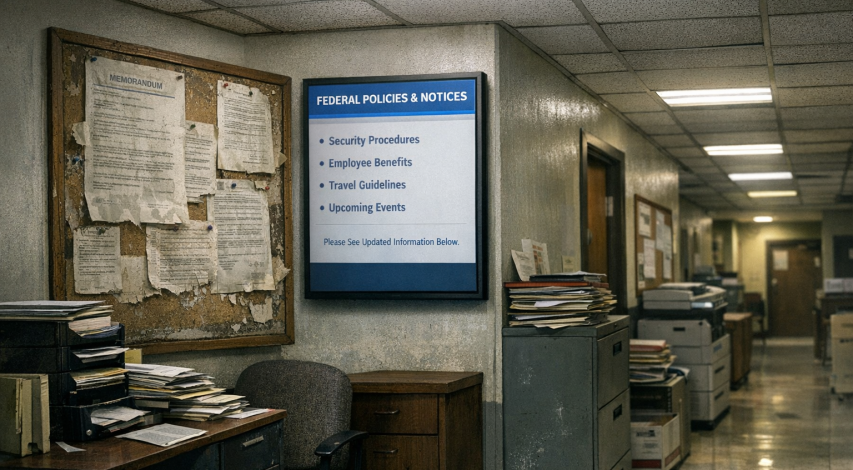
This inconsistency matters because most employees go into these programs with a basic assumption that the agency has done its homework and the process will be fair. That assumption isn't always wrong, but it can lead to participating without asking the right questions first.
It's worth learning about what to look for before you engage. Does your agency's policy name a point of contact for ADR? Does it explain your right to have a representative present? Does it describe what happens if no resolution is reached? If those answers are hard to find, that tells you something about how the program has been set up.
The difference between policy and practice isn't always intentional - it's frequently the result of programs that were designed to check a compliance box instead of to work well under actual conditions. Budget constraints, staff turnover, and limited leadership buy-in all give you programs that are out there on paper but underdeliver in practice.
None of that means the program at your agency is broken. But it does mean you shouldn't assume it's completely built out just because it exists.
What Participation Actually Looks Like for Employees
Once you file an EEO complaint, the agency is supposed to talk about your options. In fiscal year 2021, the EEOC recorded 33,496 completed counselings across federal agencies. ADR was offered in 87.8% of the cases, but only 55.5% of employees accepted it.
That gap is worth mentioning. Nearly half of employees said no to a process that was handed to them for free.
A lot of that can depend on distrust. When the agency controls the mediator, the location, and the framing of the process, it can seem less like a neutral conversation and more like a managed one. Employees worry that what they say will be used against them later if the case moves to a formal complaint.
Power imbalance is another real concern. A frontline worker might sit across from a senior HR official and an agency attorney. Even with a mediator in the room, that does not disappear because the setting is informal. Some employees feel they have no actual leverage to push back on a low settlement.

There is also a knowledge gap. Many employees go into ADR without fully understanding what they are agreeing to or what they'd be giving up. That is not a personal failure - it's a gap that programs should do more to help with before the session even starts.
A side-by-side look at paths can help put the choice in perspective.
| Factor | ADR | Formal Complaint |
|---|---|---|
| Timeline | Weeks to a few months | Months to several years |
| Out-of-pocket cost | Low to none | Can be substantial |
| Emotional toll | Generally lower | Often much higher |
| Control over outcome | Both parties shape the resolution | Decision rests with a judge or agency |
ADR does give employees more say in how things end. That only holds true when the program is run well and the employee goes in with enough information to participate on their own terms. How helpful this path is depends heavily on what program you are actually walking into.
Is a Pre-Dispute Resolution Program Right for You?
Before choosing whether to go after ADR or take the formal path, it helps to run through a few honest questions:

- Do I understand what I'm agreeing to? Some programs are voluntary; others are binding by contract.
- Who selects the mediator or arbitrator, and who pays for it?
- Will participating affect my right to file a complaint later?
- Is the other party required to participate, or can they opt out?
- Do I have access to the documents and information I need to make my case?
- Would a lawyer's opinion help me evaluate this decision?
Disputes - whether they involve your employer, a contractor, or a government agency - are stressful, and it's easy to feel like the process was built to overwhelm you. But taking the time to know what a pre-dispute resolution program actually has authority over, where it comes from, and what gaps might work against you is already a real step forward. If your situation involves a financial transaction, understanding what credit card pre-arbitration means can also clarify your options. You don't have to have all the answers right away. You just have to know the right questions to ask.
FAQs
What is a Pre-Dispute Resolution Program?
A Pre-Dispute Resolution Program is a structured process allowing parties to resolve conflicts through Alternative Dispute Resolution (ADR) before filing a formal complaint. It typically involves voluntary mediation, giving both sides a chance to reach an agreement without entering lengthy legal proceedings.
Is participation in ADR mandatory?
No, participation in ADR is generally voluntary. However, some contracts may include binding ADR clauses, so it's important to review any agreements carefully before deciding whether to participate.
How long does the pre-complaint ADR window last?
If an employee elects to use ADR, the pre-complaint window can extend from 30 up to 90 days, providing additional time to resolve the dispute informally before a formal complaint is filed.
What federal rule governs agency ADR programs?
The federal rule at 29 C.F.R. 1614.102(b)(2), effective January 1, 2000, requires all U.S. federal agencies to make ADR available at both the pre-complaint and formal complaint stages of the EEO process.
Why do some employees decline ADR participation?
Many employees decline due to distrust of agency-controlled processes, concerns about power imbalances, and lack of understanding about their rights. Nearly half of eligible employees rejected ADR when offered, according to 2021 EEOC data.