 Call (844) NO-DISPUTES
What is a Card Scheme?
Card schemes are the networks and rule-sets that make it possible for a card issued by one bank to be accepted by a completely different bank's merchant terminal. Without them, the easy payment experience consumers expect basically wouldn't exist.
I'll break down what card schemes actually are, how they work, and why they matter - if you're building a payments product, running a business, or just trying to understand how money moves electronically.
The Basic Mechanics of a Card Scheme
A card scheme is a network that connects banks, merchants and cardholders so payments can move between them - it sets the rules that everyone in the system has to follow and it routes payment data from one place to another. If you don't have it, your bank and a merchant's bank would have no shared language to work with.
Kind of like a postal network. The postal service doesn't write the letters or pay for what's inside the envelope - it just makes sure everything gets to the right address, in the right order, under the right rules. Card schemes work in a similar way. They don't hold your money. But they make the movement of it possible.
There are four key players in every card transaction. The first is the cardholder - it's the person making the payment. The second is the merchant - the business receiving it. Then you have the issuing bank, which is the bank that gave the cardholder their card. Finally, there's the acquiring bank, which is the bank that holds the merchant's account and processes payments on their behalf.
When you tap your card at a checkout, the card scheme sits in the middle of all four of these players - it picks up the transaction data from the acquiring bank and checks it against the issuing bank to confirm the funds are there. The issuing bank sends back an approval or a decline and the scheme routes that response back to the merchant in a matter of seconds.
The scheme also sets the standards that keep this process steady. Things like data formatting, fraud checks and dispute rules are all defined at the scheme level. Every bank and merchant that wants to participate has to agree to those terms; it's what keeps the whole system from falling apart when billions of transactions happen every day.
Open-Loop vs. Closed-Loop Schemes: What's the Difference?
Not all card programs are built the same way. The two main structural models - open-loop and closed-loop - can vary in who controls each part of the payment chain, and that difference has consequences for merchants, banks, and cardholders.
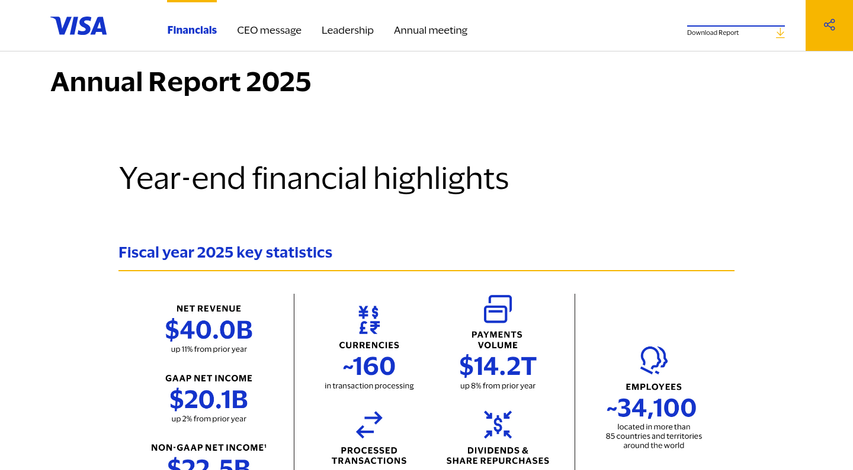
In an open-loop scheme, the scheme itself (think Visa or Mastercard) sets the rules and runs the network. But it doesn't issue cards directly to consumers. That job belongs to third-party banks and financial institutions. When you get a Visa card from your bank, Visa never actually holds your account - your bank does. This separation is what makes open-loop networks so large. Visa processed 257.5 billion transactions in FY2025, and together Visa and Mastercard hold over 80% of U.S. credit card volume. That reach comes from having thousands of issuing banks on board.
A closed-loop scheme works differently. One company controls the whole chain - issuing the card, running the network, and taking care of the customer relationship. American Express is the most well-known example. Because Amex sits in every seat at the table, it keeps more of the revenue from each transaction instead of splitting it with an issuing bank.
| Feature | Open-Loop | Closed-Loop |
|---|---|---|
| Who issues the card? | Third-party banks | The scheme itself |
| Revenue model | Interchange + scheme fees | Full transaction margin |
| Merchant reach | Very wide | More limited |
For merchants, this distinction can affect acceptance rates and cost. Closed-loop programs charge higher fees per transaction because the scheme captures the full margin. Open-loop programs spread revenue across multiple parties, which shapes how interchange fees get structured - something the next section gets into in detail.
Control is the trade-off here. Closed-loop programs have tighter oversight of the customer experience but a smaller network footprint. Open-loop programs trade some control for much wider reach.
How Interchange Fees and Scheme Fees Actually Work
Every card transaction involves two types of fees that most merchants know are out there but don't like paying. Interchange fees flow from the merchant's bank to the cardholder's bank as compensation for taking on credit risk and funding rewards programs. Scheme fees go directly to the card network itself - Visa, Mastercard, or whoever runs the rails.
These two fee types get bundled together in what merchants see on their statements, which makes it hard to tell who's taking what. In practice, interchange is the bigger slice. Visa and Mastercard's combined average interchange rate reached 2.36% in 2025, which adds up faster for any business processing a high volume of card payments.
That's where the frustration comes in. For a merchant selling low-margin products, handing over more than two cents on every dollar to move money from one bank to another is a pain point. The cost itself compounds the fact that merchants have very little room to negotiate, because the rates are set by the networks - not by their own bank. This is worth understanding if you're evaluating what a good rate looks like for your merchant account.
This has pushed regulators in a few regions to step in. The European Union capped interchange fees for consumer cards at 0.3% for credit and 0.2% for debit back in 2015. The UK has kept similar caps in place post-Brexit. These laws apply to open-loop networks and are designed to take some pressure off merchants, though scheme fees themselves are largely exempt from those caps.
Scheme fees have actually grown over time as networks add new services, fraud scoring tools, and compliance layers. Merchants and their banks absorb those costs without much transparency into what's driving the increases - it's a tension that has no clean resolution at the moment, and it shapes the conversations happening around payment regulation and compliance right now.
Domestic Card Schemes and Why They Exist
Not every country is happy to use Visa or Mastercard to move its money around. Over 90 domestic-only card businesses work worldwide, and in 2024, around 12% of all payment cards were branded only with a domestic scheme; it's an actual chunk of the widespread market running entirely outside the two networks that assume they are universal.
The reasons countries build their own networks come down to control. When a foreign company runs your payment infrastructure, transaction data flows through systems you don't own, fees get paid to organizations headquartered elsewhere, and your financial system develops a dependency that's hard to reverse. For governments, that's not a trade-off they want to make.
Data sovereignty is a big part of this conversation. Some countries have strict laws about where financial data can be stored and who can access it. A domestic scheme makes it far easier to enforce those laws. Keeping interchange and scheme fees circulating within the domestic economy is another draw - money that would otherwise leave the country stays in it.
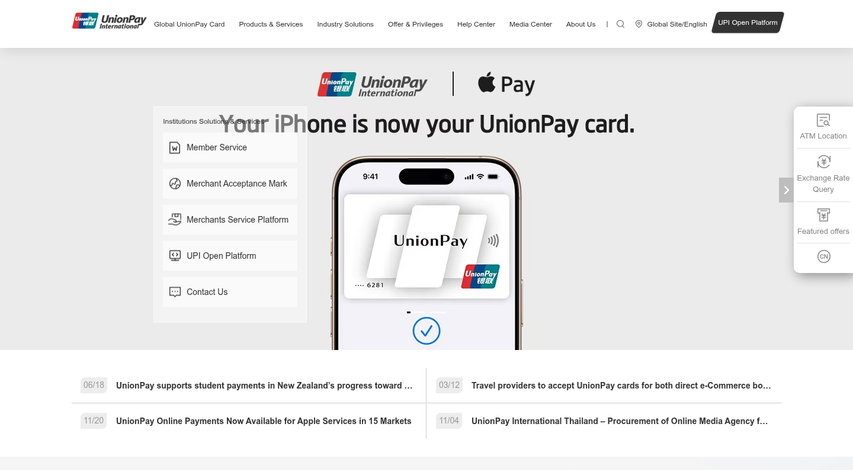
China's UnionPay is the most striking example of what a domestic scheme can become - it now accounts for roughly 35% of global card transaction volume, which puts it ahead of Visa and Mastercard by that measure. It started as a state-backed project to give China independence from foreign networks and grew into one of the largest payment systems on the planet.
Europe has its own examples too. Cartes Bancaires in France and Girocard in Germany manage the bulk of domestic card payments in their respective countries. These networks process local transactions efficiently and keep the economics of payments closer to home.
Handing payment rails to a foreign company carries consequences for national financial infrastructure. Domestic schemes are one response to that reality - and for governments that want full oversight of their systems, working with a high-risk payment processor or foreign network carries trade-offs that building one has been a deliberate act of financial infrastructure policy rather than a reaction to any single event.
What Card Scheme Rules Mean for Merchants and Banks
Card scheme rules directly shape how merchants and banks work day to day. These rules cover everything from how a payment dispute gets resolved to what cardholder data needs to be stored and for how long.
Take surcharging as a helpful example. A merchant who wants to pass card processing fees on to customers can't just do it how they like. Visa and Mastercard each have their own rules about when surcharging is allowed, how much can be charged, and how it has to be disclosed. A small business owner who assumes the rules are the same across all programs can be in breach without realizing it.
Dispute handling is another area where the rulebook matters. When a customer disputes a transaction, the chargeback process follows a strict timeline and set of steps defined by the card scheme. Banks and merchants have windows to respond and evidence to submit. Miss the deadline and you lose the case.
There's also the matter of data security. Card programs mandate compliance with PCI DSS, which sets out how payment data has to be handled and protected. Merchants who fall short face fines from their acquiring bank, and those fines trace back to penalties the scheme itself can apply. This connects directly to the network power that makes programs so central to the payments industry - they set the standards, and everyone downstream follows them.
For banks, non-compliance can mean higher fees, restricted access to the network, or in severe cases, losing the right to issue or accept cards on that scheme altogether. The financial and operational consequences are significant.
Understanding these rules is the foundation for well-educated decisions about pricing, risk, and how to structure relationships with card networks. Merchants with elevated dispute rates may also find themselves subject to programs like the Mastercard Excessive Chargeback Program, which carries its own penalties and requirements.
The Network Behind Every Tap
Card networks are more complex than they appear on the surface. The difference between open and closed loop networks, the way interchange and scheme fees flow between banks and processors, and the growing role of domestic programs in shaping local payment ecosystems - card programs are far more than a logo on a piece of plastic. They're the infrastructure that gives modern payments their shape.
For anyone working in payments - building a product, running a business, or trying to understand why your costs look the way they do - card programs are a helpful foundation. The rules these networks set don't just govern transactions. They quietly shape which payment methods thrive, which markets are easy to enter, and how money moves around the world.
FAQs
What is a card scheme?
A card scheme is a network that connects banks, merchants, and cardholders so payments can move between them. It sets the rules everyone must follow and routes payment data between the issuing and acquiring banks.
What is the difference between open-loop and closed-loop schemes?
Open-loop schemes like Visa let third-party banks issue cards, while closed-loop schemes like American Express control the entire payment chain themselves. Closed-loop programs capture more revenue but have a smaller merchant network.
What are interchange fees and scheme fees?
Interchange fees flow from the merchant's bank to the cardholder's bank to cover credit risk and rewards programs. Scheme fees go directly to the card network itself, such as Visa or Mastercard.
Why do some countries build their own card schemes?
Countries build domestic schemes to maintain control over financial data, keep fees within their economy, and avoid dependency on foreign networks. China's UnionPay is a major example, handling around 35% of global card transaction volume.
How do card scheme rules affect merchants?
Card scheme rules govern surcharging, dispute timelines, and data security compliance. Merchants who don't follow these rules risk fines, lost chargeback cases, or penalties passed down from their acquiring bank.