 Call (844) NO-DISPUTES

Chargeback Prevention Tools Compared: Which Is Worth It in 2026

The market has responded with a crowded field of prevention tools, each promising to reduce dispute rates, flag fraudulent transactions before they post, and automate the tedious work of fighting illegitimate claims. Some deliver. Others add difficulty without results. The difference between them matters, and that's especially true when you're paying monthly subscription fees on top of per-transaction costs.
This comparison breaks down the leading chargeback prevention tools available - what they actually do, where they fall short, and which types of businesses are likely to get the most value from each. The goal isn't to hand you a single winner - it's to give you a clear enough picture that you can make a confident choice based on your transaction volume, dispute profile, and budget.
What Each Type of Chargeback Prevention Tool Actually Does
There are four main categories of tools merchants use to stay away from chargebacks, and each one works at a different point in the transaction lifecycle. Where each tool comes in is the most helpful thing you can take from this section.
Pre-chargeback alert services like Ethoca and Verifi CDRN contact the merchant before a dispute can become a formal chargeback. The issuing bank sends an alert, and the merchant has a short window to refund the customer and close the case - this keeps the chargeback off your record entirely, which matters quite a bit for merchants watching their dispute ratios.
RDR, or Rapid Dispute Resolution, works slightly later in the process - it kicks in at the second a dispute is initiated and automatically resolves it according to rules the merchant sets in advance. It's a Visa-only program, so Mastercard transactions aren't covered - it's a detail worth keeping in mind as you plan your stack.
3-D Secure authentication works at the transaction level before the payment is approved - it can add a verification step that shifts liability to the card issuer if fraud happens. That change is a big deal because it means merchants can recover losses they'd otherwise absorb.
AI-based fraud detection sits even earlier in the process - it screens transactions before they go through by looking at behavioral tells and patterns to flag high-risk payments. Tools like device fingerprinting don't resolve disputes, but they do cut back on the volume of fraudulent transactions that generate them.
| Tool Type | Intervention Stage | Network Coverage |
|---|---|---|
| Pre-chargeback alerts | Before dispute filed | Visa + Mastercard |
| RDR | At dispute initiation | Visa |
| 3-D Secure | At transaction | Both |
| AI fraud detection | Pre-transaction | Both |
Most merchants don't use just one of these. The Chargebacks911 2026 Field Report found that layered tool combinations are now the most widely adopted strategy across mid-to-large volume merchants.
The Real Cost of Prevention vs. the Cost of Doing Nothing
The price difference between stopping a chargeback early and letting it reach the dispute stage is significant. Prevention alerts run roughly $20 to $30 per resolved case. But a chargeback that makes it through to formal dispute can cost anywhere from $110 to $450 in fees, lost merchandise, and processing penalties; it's a 4x to 15x gap depending on your average order value and your bank's fee structure.
Those numbers make a strong case for prevention tools. But the math only works in your favor if you're picking the right pricing model for your volume.
Per-alert pricing is easy and works for merchants with a manageable chargeback rate. You pay when a dispute is intercepted and the cost is predictable. But high-volume merchants can rack up alert fees quickly, and at a point the per-alert model starts to feel expensive compared to alternatives.
Guarantee-based platforms like Signifyd use a percentage-of-GMV model, usually between 0.6% and 1.5% of the revenue they cover; it's a flat standard cost regardless of how disputes actually happen. For merchants processing millions in transactions with elevated fraud exposure, that model gives you better value than paying per alert. For smaller operations, it might mean paying quite a bit to protect against problems that don't happen.

| Pricing Model | Typical Cost | Best Fit |
|---|---|---|
| Per-alert (Verifi, Ethoca) | $20-$30 per resolved alert | Low-to-mid dispute volume |
| Chargeback guarantee (Signifyd) | 0.6%-1.5% of covered GMV | High volume, high fraud exposure |
| Unmanaged disputes | $110-$450 per chargeback | No one |
The honest question to ask yourself is whether, at your current transaction volume, paying a percentage of revenue makes more financial sense than paying per incident. That answer changes depending on your dispute rate, your average order value, and how aggressively fraud hits your product category.
The cheapest-looking option is not necessarily the cheapest option once disputes start to accumulate.
Alert-Based Tools Head-to-Head: Verifi, Ethoca, and RDR
Verifi CDRN runs on Visa's network and gives merchants a window to refund a transaction before a dispute can become a formal chargeback. Ethoca Alerts do the same thing but on the Mastercard side. Both tools put the merchant in control - you get the alert, you choose whether to refund, and then the dispute gets stopped.
RDR works differently. Instead of notifying you and waiting, RDR automatically processes a refund based on rules you set in advance. There's no manual step. That speed is helpful. But it also means you don't get to review each case before money goes out the door.
| Tool | Network | Resolution Type | Est. Coverage |
|---|---|---|---|
| Verifi CDRN | Visa | Merchant-initiated | ~40-50% |
| Ethoca Alerts | Mastercard | Merchant-initiated | ~30-40% |
| RDR | Visa | Automated refund | Visa disputes only |
The part worth mentioning is that running Verifi and Ethoca together can push your dispute coverage to between 70% and 80%. Case studies have shown chargeback reductions of 78% and 89% when merchants deploy tools in combination. Neither one gets you there alone.
The coverage gap is real. Verifi works with roughly 40-50% of disputes on its own, and Ethoca covers around 30-40%, and each tool is tied to its own card network, so gaps are built into the structure. A Mastercard dispute won't be touched by Verifi, and vice versa.
It's worth thinking about whether partial coverage fits your business model. If most of your transactions run through one card network, a single tool could be enough. But if your volume is mixed, that uncovered percentage represents disputes that will still land on your plate. Understanding how to choose the right chargeback mitigation service can help you decide which combination of tools makes sense for your situation.
Where AI Fraud Detection and 3-D Secure Fit Into Your Stack
These two tools sit on the prevention side of the chargeback problem instead of the resolution side. They're built to stop fraud before a transaction goes wrong - which sounds like a clear win - but neither one is an easy addition for every business.
According to the Chargebacks911 2026 Field Report, AI fraud detection has a 27% adoption rate among merchants and 3-D Secure sits at 33%. That means most businesses aren't using either yet - which makes sense given the trade-offs involved.
The False Positive Problem With AI Fraud Tools
AI fraud detection works by scoring transactions in real time and flagging ones that look suspicious. The model learns from your transaction history and gets better over time. The catch is that early on, it can flag legitimate purchases too. A declined order from a customer is lost revenue - and that customer might not come back.
False positives are a genuine business cost that doesn't always get factored in when merchants review these tools. If your fraud rate is low, the math might not work in your favor.
3-D Secure's Friction Trade-Off
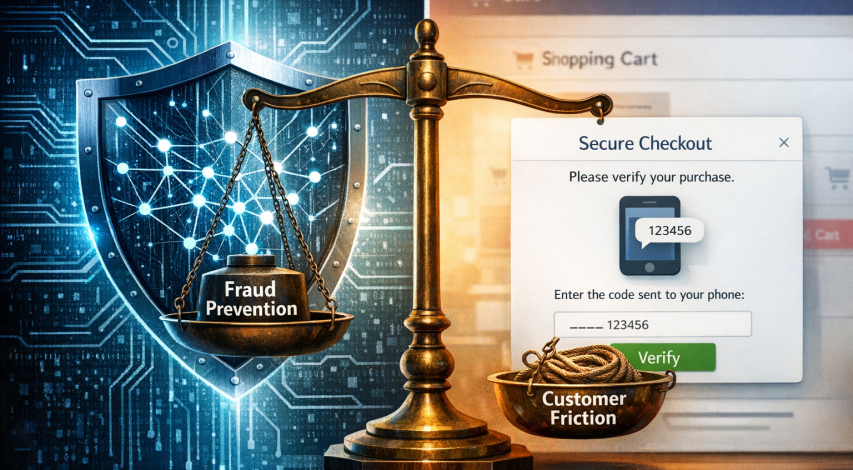
3-D Secure adds an authentication step at checkout - usually a prompt from the cardholder's bank - and it shifts liability away from you on fraud chargebacks, which is a benefit. But that extra step can push customers to abandon their cart before they buy.
The revenue lost to chargebacks versus the revenue lost to checkout drop-off is what determines if 3-D Secure is worth it. If your fraud chargeback rate is modest, adding friction to every transaction may cost more than it saves. For high-ticket or high-fraud product categories, the calculation looks different.
Neither tool earns its place automatically. They work best when the problem they solve is large enough to justify the friction or difficulty they introduce.
Matching the Right Tool Combination to Your Business Type
The right stack depends heavily on your transaction profile. A high-volume, low-ticket merchant - think a subscription box or an online content platform - is looking at a different chargeback pattern than a low-volume, high-ticket seller like a jewelry retailer or a B2B software vendor.
For high-volume, low-ticket businesses, automated fraud scoring and real-time blocking are an absolute must. You need tools that make fast decisions at scale without adding friction that kills conversions. Chargeback alert networks also tend to pay off here because even a small drop in dispute rates protects revenue across thousands of transactions.
Low-volume, high-ticket merchants can afford a more manual approach to review but need stronger authentication at checkout. 3-D Secure makes more sense here, and the extra step is easier to justify to a customer who is spending a few hundred dollars or more. A dispute management tool alongside it gives you coverage on both ends.
Subscription billing can add another layer to remember. Recurring billing disputes tend to spike when customers forget a charge or feel trapped by a cancellation process. A clear billing descriptor and cancellation flow will do more work than any paid tool in that scenario.

If your customer base runs mostly through Visa, you also need to be aware of Visa's own dispute monitoring programs and make sure any tool you use is aligned with those thresholds.
One thing worth taking seriously with any vendor: do your homework on who you are buying from. The 2023 FTC settlement with Chargebacks911 was a reminder that not every company in this space has operated cleanly. That is not a reason to write off third-party vendors. But it's a reason to ask direct questions about how a tool works, what data it uses, and what guarantees actually mean in practice.
Push vendors for specifics and get answers in writing before you commit.
Your 2026 Chargeback Stack Doesn't Have to Be a Guessing Game
Before you follow any platform or bundle, run the numbers on your own operation. A tool that pays for itself at a 1.2% chargeback rate and a $180 AOV might bleed money for a merchant with a $30 AOV and half the volume. Most providers will share enough pricing detail for a back-of-napkin ROI estimate - if they won't, that tells you something too.

If chargebacks have cratered a processing account or eaten into a month's margin, that feeling of having no control is real. The tools covered here are out there because the problem is solvable. The hard part is being honest about how your business actually runs, where your disputes are coming from, and what you can operationally sustain. Get that part figured out first and the right chargeback management stack tends to become obvious.
FAQs
What are the main types of chargeback prevention tools?
There are four main categories: pre-chargeback alert services, RDR (Rapid Dispute Resolution), 3-D Secure authentication, and AI-based fraud detection. Each tool intervenes at a different stage of the transaction lifecycle, from pre-transaction screening to dispute resolution.
How much does a chargeback cost compared to prevention?
Prevention alerts cost roughly $20-$30 per resolved case, while a chargeback reaching formal dispute can cost $110-$450 in fees, lost merchandise, and penalties. That represents a 4x to 15x cost gap depending on your order value and bank fee structure.
What is the difference between Verifi, Ethoca, and RDR?
Verifi CDRN covers Visa disputes and Ethoca covers Mastercard, both notifying merchants before a dispute becomes a formal chargeback. RDR is Visa-only and automatically processes refunds based on preset rules without requiring manual merchant review.
Does 3-D Secure always make sense for merchants?
Not always. While 3-D Secure shifts fraud liability to card issuers, it adds checkout friction that can increase cart abandonment. It makes the most sense for high-ticket or high-fraud product categories where chargeback losses outweigh potential conversion drops.
Should merchants use multiple chargeback prevention tools?
Yes, in most cases. Running Verifi and Ethoca together can push dispute coverage to 70-80%, compared to 30-50% using either alone. The 2026 Chargebacks911 Field Report found layered tool combinations are now the most widely adopted strategy among mid-to-large merchants.