 Call (844) NO-DISPUTES

Chargeback911 Review: Is It Still the Best Option in 2026?

Chargebacks aren't just erasing individual sales - they're changing how merchants think about pricing. When dispute rates creep up, businesses start baking losses into their margins, which means loyal customers paying more for the sins of bad actors. The financial damage ripples outward in ways that a simple chargeback-to-transaction ratio doesn't capture.
Chargeback911 has been one of the most recognized names in chargeback management for years. But the landscape has shifted. New competitors have entered the space, card network rules have evolved, and merchants have more data at their disposal than ever before. So the question isn't if Chargeback911 was a strong choice in the past - it's whether it still earns its place in a merchant's toolkit today.
This review takes a close look at what Chargeback911 actually delivers in 2026: how its dispute resolution process works, where it performs well, where it falls short, and how it stacks up against the alternatives. If you're trying to decide whether to sign on, stay on, or move on, this overview will give you what you need to make that call with confidence.
What Chargeback911 Actually Does (And Who It's Built For)
Chargeback911 is a third-party dispute management platform - it helps merchants fight chargebacks, track fraud patterns, and recover revenue that would otherwise be written off as a loss.
The core service is chargeback representment, which is the process of formally contesting a dispute with the card networks. Beyond that, the platform includes fraud detection tools to flag suspicious transactions before they become disputes, and analytics dashboards that give merchants a clearer picture of where their chargebacks are coming from and why.
The merchants who use this platform tend to share a common trait: volume. High-volume e-commerce retailers, subscription businesses, and travel businesses are the most common users. These are businesses that process thousands of transactions a month and can't realistically dedicate an in-house team to monitor and respond to every dispute that comes in.
That's the core pain point worth addressing here. A single chargeback isn't just a lost sale - it triggers a fee from the payment processor, can damage your merchant account standing, and takes time to respond to. When you're dealing with dozens or hundreds of them each month, the administrative load alone can become a problem. A dedicated service takes that work off the merchant's plate.

There's also the expertise gap to consider. Chargeback laws can vary by card network, dispute reason code, and transaction type. A representment response needs to include the correct evidence and formatting, which takes knowledge that most in-house teams don't have readily available. Chargeback911 positions itself as a way to close that gap without the merchant needing to build that expertise internally.
The platform isn't designed for small businesses facing the occasional dispute - it's built for merchants where chargebacks are a persistent, operational-level problem. If that describes your business, choosing the right chargeback mitigation service is worth thinking through carefully. If you're processing a few hundred transactions a month, the cost-to-benefit picture looks very different.
I'll get into how well Chargeback911's features hold up in 2026 - including where the platform performs well and where it has limitations.
How Chargeback911's Core Features Hold Up in 2026
The numbers behind chargeback representment are worth learning about before reviewing any platform. Merchants who fight disputes win about 44.6% of the time. But the net recovery rate drops to just 10.7%, according to the 2026 Chargeback Field Report. That gap matters because it grows with fees, labor costs, and lost time - not just win rates.
Chargeback911 builds its representment process around automated evidence collecting and proprietary deflection technology. The platform pulls transaction data, compiles strong evidence packages, and submits replies on your behalf. For merchants with high dispute volumes, this removes manual work from the equation.
Where things get tough is in the difference between winning a chargeback and actually recovering revenue. Chargeback911 can improve your win rate. But it can't close the spread between representment wins and net recovery on its own. Processing fees, bank timelines, and fraud patterns all eat into that margin regardless of the tool you use.
Fragmentation Is a Real Problem
About 23.5% of merchants use five or more separate tools to investigate and manage disputes. That level of fragmentation means data sits in different places and teams lose time context-switching between them - it also means gaps in your fraud data can produce incomplete evidence packages, which can directly affect representment results.
Chargeback911 does integrate with a number of payment processors and platforms, which helps cut back on some of that tool sprawl. The integration experience is not necessarily easy, though, and merchants with more complex tech stacks sometimes find setup to be slower than expected.
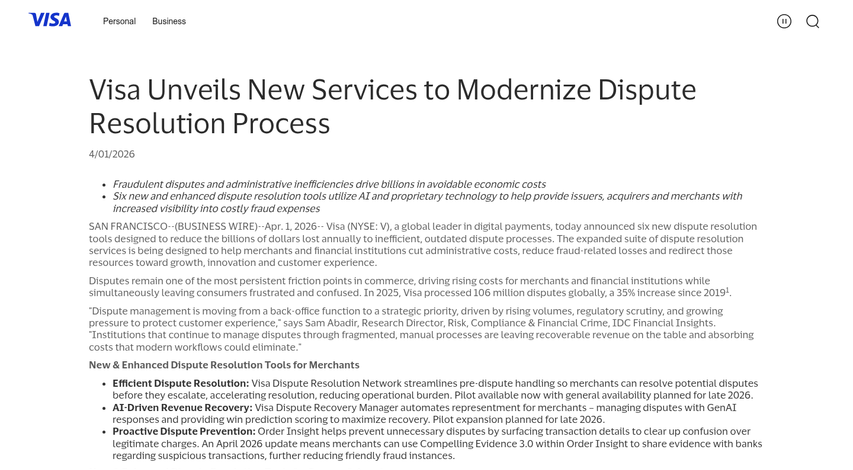
If your business already runs multiple fraud prevention or analytics tools, it's worth mapping out how Chargeback911 connects to each of them before you commit. A weak integration means you might still need manual steps to pull data together for each dispute.
What the Platform Does Well
Chargeback911's deflection tools - which work to resolve disputes before they become formal chargebacks - are one of its stronger features in 2026. Deflection cuts back on the volume of disputes that reach representment and helps protect your chargeback ratio. That is helpful for merchants who sit close to processor thresholds.
The platform also gives merchants visibility into dispute patterns over time. That data helps you find patterns and adjust upstream - in your fulfillment process, customer service, or fraud screening.
Pricing, Transparency, and What Merchants Say
Chargeback911 does not publish its pricing publicly. To get a number, you have to go through a sales call, which is standard practice for business SaaS but still frustrating if you just want to compare options before committing time to a demo.
That lack of transparency matters more in this space than in others. Chargeback-related costs are already hard to predict, and merchants who have been burned by hidden fees in the past like to be careful. Going into a vendor relationship without a sense of what you'll pay each month makes it harder to plan and harder to hold a provider accountable if results fall short.
There's also the question of how other merchants feel about the platform. The review data available is thin, and that's worth mentioning.
| Platform | Rating | Review Count |
|---|---|---|
| G2 | 4.3 | 12 |
| Capterra | 3.5 | 4 |
| Trustpilot | 4.2 | 11 |
| RFP.wiki | 3.5 | N/A |
The ratings themselves are mixed but not alarming. What is harder to ignore is how few reviews back them up. Twelve reviews on G2 and four on Capterra is not quite enough to go on for a platform that has been in the market for over a decade. A small review pool can swing in either direction with just one or two new submissions, so it gives you less to use when making a choice.
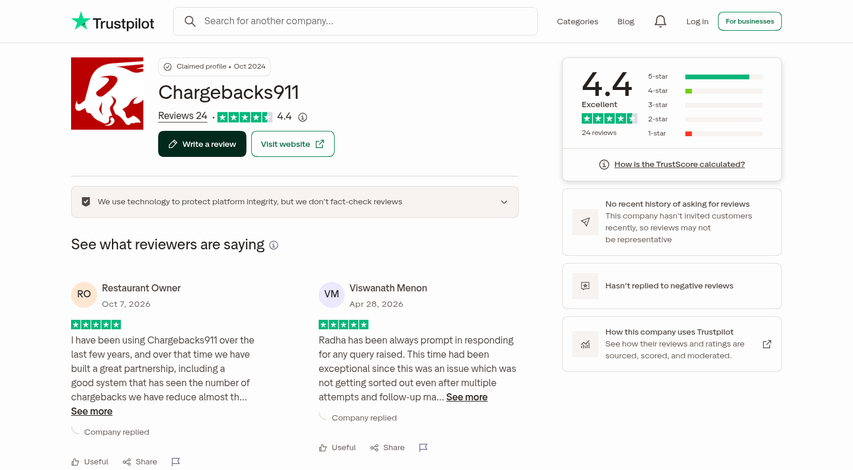
That said, low review volume is not automatically a sign of a bad product. Enterprise tools in niche industries draw fewer public reviews because buyers sign NDAs or just don't bother to post. It does mean you'll want to ask for references directly instead of leaning on third-party sites for that work.
The honest takeaway is that pricing opacity combined with limited public feedback puts more pressure on the sales process itself. You have to ask the right questions and push for specifics because the publicly available information will not do it.
The Hidden Costs of Chargebacks That No Tool Fully Solves
No chargeback management platform - not Chargeback911 or any other - can fix what is fundamentally a business model problem. A recent study found that 38% of merchants say chargeback costs have influenced how they price their products, up from 32.5% previously. That number tells you something important: chargebacks are not just an operational headache - they are starting to change the economics of entire businesses.
Some things sit outside the reach of any tool. Chargeback thresholds, for one. If your dispute rate climbs past the limits set by card networks like Visa or Mastercard, you risk losing your ability to process payments altogether. A platform helps you win disputes. But it can't reset a damaged relationship with your payment processor or remove you from a monitoring program if you are already in one.
Processor relationships matter more than most merchants realise. Processors see your chargeback rate as a signal of risk, and that perception can affect your contract terms, your reserve requirements, and sometimes your ability to stay on the platform at all. Winning individual disputes is helpful. But it does not automatically repair that reputation.

There is also an emotional and operational cost that doesn't get talked about. Small teams handling disputes manually work through repetitive admin work, tight response deadlines, and the mental load of tracking cases across multiple channels. A tool cuts back on that burden without removing it entirely, and that's especially true for merchants with tough or high-volume dispute profiles.
The more helpful question to ask yourself is this: is your goal to win disputes, or to avoid them? Those are two different strategies that call for different investments. Winning disputes is reactive - it recovers revenue after the damage is done. Prevention means looking at your refund policies, your customer communication, and your fulfilment process to stop disputes from being filed at all.
The most effective merchants use tools like Chargeback911 as one part of a wider strategy - not as an answer on their own. Dispute management software handles the response side well. But the upstream work - the part that actually cuts back on your rate over time - still depends on decisions made at the business level.
So, Is Chargeback911 Worth It in 2026?
If you are thinking about signing up, go into those early conversations with pointed questions. Specifically, ask about:

- Contract flexibility: What are the minimum commitment terms, and what does exit look like if results do not meet expectations?
- Integration support: How much technical lift falls on your team, and what ongoing support is included versus billed separately?
- Measurable outcomes: What specific metrics will they be held to, and how frequently will performance be reported in a format your team can actually act on?
The chargeback landscape is not standing still. Card network rules are tightening, consumer dispute behavior is evolving, and the line between legitimate fraud and abuse continues to blur. The right chargeback management partner matters - but a partner is only as helpful as the strategy you bring to the table. Whatever tool you choose, treat it as one layer of a wider risk management strategy - not a plug-and-play fix. The merchants who win this fight are the ones who stay proactive, not reactive.
FAQs
What does Chargeback911 actually do for merchants?
Chargeback911 is a dispute management platform that helps merchants contest chargebacks, detect fraud, and recover lost revenue through automated representment and analytics tools.
What types of businesses benefit most from Chargeback911?
High-volume e-commerce retailers, subscription businesses, and travel companies benefit most, as they process thousands of transactions monthly and face persistent, operational-level chargeback problems.
How much does Chargeback911 cost?
Chargeback911 does not publish pricing publicly. Merchants must go through a sales call to receive a quote, making upfront cost comparisons difficult without committing to a demo.
What are Chargeback911's biggest limitations in 2026?
The platform cannot fully close the gap between representment wins and net revenue recovery, and complex tech stack integrations can be slow. It also won't repair damaged processor relationships.
Is Chargeback911 a complete solution for chargeback problems?
No. It handles dispute responses well but doesn't replace upstream prevention strategies. Merchants should treat it as one layer of a broader risk management approach, not a standalone fix.