 Call (844) NO-DISPUTES

Verifi vs Ethoca: Chargeback Prevention Comparison 2026

Choosing between them - or deciding whether you need both - is one of the more consequential decisions a payments team can make. Get it right and you can dramatically cut back on dispute rates, protect your merchant account standing, and recover revenue that would otherwise disappear. Get it wrong and you're either overpaying for redundant coverage or leaving gaps in your defense.
This comparison breaks down how Verifi and Ethoca actually work in 2026, what each one does well, what they cost, and how they compare across the metrics that matter most to merchants. Whether you're looking at these tools for the first time or reconsidering your current setup, you'll come away with a clear picture of which solution fits your operation.
How Verifi and Ethoca Actually Work (And Why They're Not the Same Thing)
Both networks are designed to stop chargebacks before they become formal disputes. But they take meaningfully different strategies. Understanding the difference helps you figure out which one fits how your business operates.
Ethoca runs on an alert model. When a cardholder contacts their bank to dispute a transaction, the bank sends an alert through Ethoca's network to the merchant. The merchant then has 24 hours to respond by issuing a refund. If a refund goes through in time, the bank withdraws the dispute and no chargeback is filed - it's the whole process: fast, manual, and time-sensitive.
Verifi has two tools, and they work differently from each other. The first is CDRN, which stands for Cardholder Dispute Resolution Network. Like Ethoca, CDRN sends an alert when a dispute is flagged. But merchants get 72 hours to respond instead of 24. That extra time makes a difference when your team needs to pull transaction records or loop in customer service.
The second Verifi tool is RDR - Rapid Dispute Resolution - and it doesn't mean manual review at all. Merchants set rules in advance to tell the system how to manage disputes automatically, and refunds are issued without anyone on your team having to act. RDR resolves the dispute at the network level before it can become a chargeback on your account.
So "prevention" means something slightly different depending on which tool you're talking about. Ethoca and Verifi's CDRN give merchants a window to act. Verifi's RDR removes the merchant from the process entirely for qualifying transactions.
Ethoca has no automation equivalent to RDR - it's purely an alert and response system. That's not a criticism - it works pretty well - but it does mean your team needs to be ready to act faster and every time an alert comes in.
Network Reach and Card Brand Coverage: Who Has the Edge
Ethoca connects to over 5,000 issuing banks worldwide, while Verifi works with closer to 1,000. It's a difference on paper, but the number that actually matters is how well each network covers the cards your customers use.
Verifi is a Visa-owned product, so it has deep roots in the Visa ecosystem. Around 75% of Verifi alerts involve Visa disputes. If your customer base leans heavily toward Visa cardholders, that concentration works in your favor. Ethoca, on the other hand, is owned by Mastercard and roughly 60% of its alerts involve Mastercard disputes. The ownership structure shapes the coverage, which is worth keeping in mind.
The question is which network lines up with your card mix, not which network is bigger.
A merchant that processes mostly Visa transactions in North America will get more value out of Verifi's focused coverage than out of Ethoca's wider but Mastercard-weighted network. The reverse is true for merchants with a strong European or Mastercard-heavy customer base; Ethoca's issuer depth can become more relevant. The Mastercard Excessive Chargeback Program is one reason merchants in those regions pay close attention to which alert network they use.
| Feature | Verifi | Ethoca |
|---|---|---|
| Issuer Network Size | 1,000+ issuers | 5,000+ issuers |
| Primary Card Brand | Visa | Mastercard |
| Alert Concentration | ~75% Visa disputes | ~60% Mastercard disputes |
| Best Fit | Visa-heavy merchants | Mastercard-heavy or global merchants |
Many merchants run both tools together to get coverage across networks; it's not an unusual setup, and it's worth learning how to evaluate chargeback mitigation options before you assume you have to choose one or the other.
Prevention Rates by Transaction Type: Where Each Tool Performs
The numbers tell a pretty different story depending on what you sell. Ethoca's published prevention rates break down by transaction type, and the difference between categories is wide enough to matter for your bottom line.
| Transaction Type | Ethoca Prevention Rate | Verifi RDR (Visa) |
|---|---|---|
| Physical Goods | 32% | Up to 71% (Visa disputes) |
| Digital Goods | 64% | Up to 71% (Visa disputes) |
| Digital Services | 53% | Up to 71% (Visa disputes) |
| Subscriptions | 61% | Up to 71% (Visa disputes) |
Ethoca's weakest find is physical goods at just 32%. That makes sense because physical shipments introduce fulfillment delays and room for genuine disputes. Digital goods and subscriptions perform much better, hitting 64% and 61% in that order.
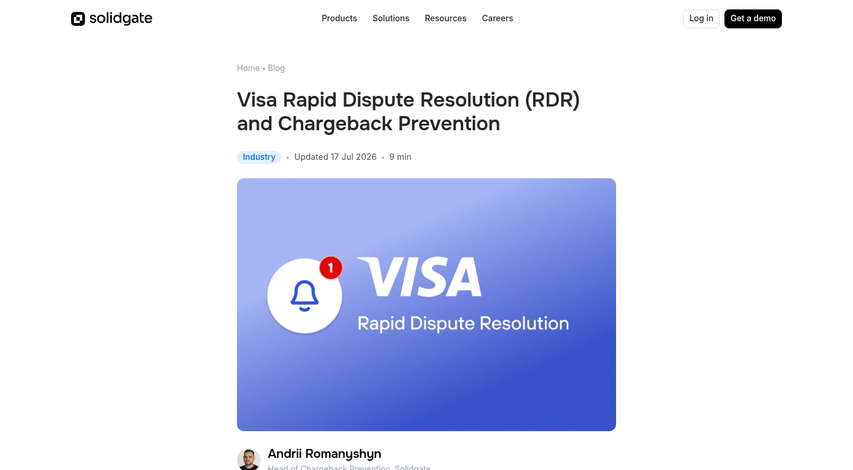
Verifi RDR reports as high as 71% resolution of Visa disputes automatically across all transaction types. That headline number looks strong. But it applies only to Visa. If a significant share of your transactions run on Mastercard, that rate doesn't help you there.
The more helpful question is what your transaction combination actually looks like. A subscription box business shipping physical products every month is looking at a very different situation than a SaaS platform billing online. Ethoca closes ground fast in online categories. But Verifi RDR covers Visa disputes more broadly regardless of what is being sold.
If you sell primarily physical goods and your dispute volume skews toward Visa, Verifi RDR's automated resolution has an actual edge. If online transactions make up the bulk of your volume and you are processing across multiple card networks, Ethoca's category-level performance can become quite a bit more relevant to your numbers. A chargeback management platform can help you track these metrics across networks in one place.
Alert Costs, Response Windows, and the Operational Reality
Both Verifi and Ethoca charge roughly $20 to $40 per alert. That cost can seem manageable until you're processing a few thousand transactions a day and even a small percentage trigger alerts, leaving you with thousands of dollars in chargeback fees each month before a single chargeback is stopped.
At 100 alerts a month at $30 each, that's $3,000 in alert costs alone. Scale that to 500 alerts and you're at $15,000. The math matters, and it's worth running your own numbers against your latest chargeback volume to see if the cost pencils out.
The bigger operational difference is the response window. Ethoca gives merchants 24 hours to act on an alert, which means your support or ops team needs to refund or cancel the transaction fast. If your team works business hours and an alert lands Friday evening, you might miss the window entirely.
Verifi's 72-hour window is more forgiving and works way better for teams without round-the-clock coverage - it gives you time to pull up the order, verify the details, and process the refund without scrambling.

Ethoca has prevented over 110 million chargebacks since 2011 and stopped over $1 billion in fraud in 2025 alone. That track record is impressive. But scale doesn't translate to results if your internal processes can't keep up with the response timeline.
One thing merchants underestimate is alert volume. Alerts can trickle in slowly during normal periods. But during a fraud spike or a high-volume sales period, they can arrive faster than a small team is able to manage. Having automation - or at least an internal process - in place before you go live with either service is worth the effort. If you're running a Shopify store, it's also worth understanding how chargeback alerts work with Shopify specifically before committing to a service.
| Feature | Verifi | Ethoca |
|---|---|---|
| Alert cost (approx.) | $20-$40 | $20-$40 |
| Response window | 72 hours | 24 hours |
| Best for team coverage | Standard business hours | 24/7 or automated workflows |
Which Merchants Should Use Verifi, Ethoca, or Both
At this point you have enough information to make a call. The choice mostly depends on where your transaction volume lives and how much automation you want on your side.
If Visa cards make up the bulk of your sales, Verifi RDR is hard to pass up - it resolves disputes before they become chargebacks and does so automatically, which removes the scramble to respond in time. That automation also helps you stay under Visa's VAMP threshold of 0.3%, the point where Visa starts to scrutinize your account. Staying under that number is worth building a process around.
If your customers pay more with Mastercard, or your business runs across multiple countries, Ethoca tends to offer better coverage. Its issuer network reaches more widespread banks, so alerts fire more for non-Visa transactions. That wider reach matters quite a bit for merchants who sell to international customers.
Digital goods sellers and subscription businesses are in a separate category. They work with high transaction counts, fast dispute timelines, and customers who forget what they signed up for. Running both tools together makes sense here because the two networks complement each other rather than overlap in any meaningful way.
| Merchant Profile | Best Fit |
|---|---|
| Mostly Visa transactions, wants automation | Verifi RDR |
| Mastercard-heavy or global customer base | Ethoca |
| High volume digital goods or subscriptions | Both |
| Small merchant with limited dispute volume | Ethoca alerts as a starting point |
Smaller merchants with lower dispute volume might not need both from day one. Ethoca alerts give you a manageable entry point without committing to the full cost and operational load of two platforms at once. Merchants in high-risk categories may want to consider a chargeback threshold strategy before choosing which services to stack.
Stop Guessing - Here's How to Choose Before Your Next Chargeback Hits
The sharpest differentiators remain steady: Ethoca's wider merchant network and faster alert windows give it a benefit in high-volume, low-ticket environments where speed is everything. But Verifi's direct Visa integration and Order Insight capabilities perform better for businesses carrying a Visa-heavy card mix or tough dispute profiles. Factor in prevention rates by category and cost per alert before assuming either solution justifies its price at your current volume.
Before committing to either platform, audit your own chargeback data. Break down disputes by card brand, reason code, and transaction type. That audit will tell you more than any vendor comparison can - and it will make your choice defensible. Revisit it next year.
The tools are mature, the performance data is available, and the cost of a preventable chargeback is not getting smaller. Waiting for a more convenient moment to choose is itself a choice - just an expensive one.
FAQs
What is the main difference between Verifi and Ethoca?
Ethoca uses a manual alert system requiring merchant response within 24 hours, while Verifi offers both manual alerts (CDRN) with a 72-hour window and automated dispute resolution (RDR) that requires no merchant action.
Which card networks do Verifi and Ethoca specialize in?
Verifi is Visa-owned, with roughly 75% of its alerts covering Visa disputes. Ethoca is Mastercard-owned, with about 60% of alerts involving Mastercard disputes.
How much do Verifi and Ethoca alerts cost?
Both services charge approximately $20 to $40 per alert. At high dispute volumes, these costs can add up to thousands of dollars monthly before any chargebacks are actually prevented.
Should merchants use both Verifi and Ethoca together?
High-volume digital goods sellers and subscription businesses benefit most from using both, as the two networks complement each other across different card brands with minimal overlap.
Which service is better for small merchants?
Ethoca alerts are recommended as a starting point for smaller merchants with lower dispute volumes, offering manageable costs and entry-level chargeback prevention without committing to two platforms simultaneously.