 Call (844) NO-DISPUTES
What is a Credit Card Interchange Fee?
Interchange fees are charges that your business's bank pays to the customer's card-issuing bank each time a credit card transaction is processed. They're set by the card networks - think Visa and Mastercard - and they can vary depending on things like the type of card used, the industry your business operates in, and how the transaction is completed.
For business owners, understanding interchange fees isn't just a financial exercise - it's a helpful step toward taking better care of costs. Whether you're trying to make sense of your monthly processing statement or looking at ways to cut back on what you pay, learning about how these fees work gives you an advantage.
This guide breaks down what interchange fees are, how they're calculated, who collects them, and what you can do to keep them as low as possible.
Who Actually Pays the Interchange Fee and Why
Four parties are involved every time you swipe a card. There's you (the cardholder), the merchant, the merchant's bank (called the acquiring bank), and your card-issuing bank. The fee moves between these parties in a direction, and understanding that direction changes how you see the whole system.
Technically, the merchant pays the interchange fee. When you buy something for $100, the merchant doesn't receive the full $100. Their acquiring bank collects the transaction amount and passes a cut - the interchange fee - to your issuing bank before settling the rest with the merchant. Your issuing bank keeps that fee as compensation for processing the transaction and carrying the risk that you won't pay your bill.
As a cardholder, you never see this fee on a statement - it's invisible to you at the point of sale.
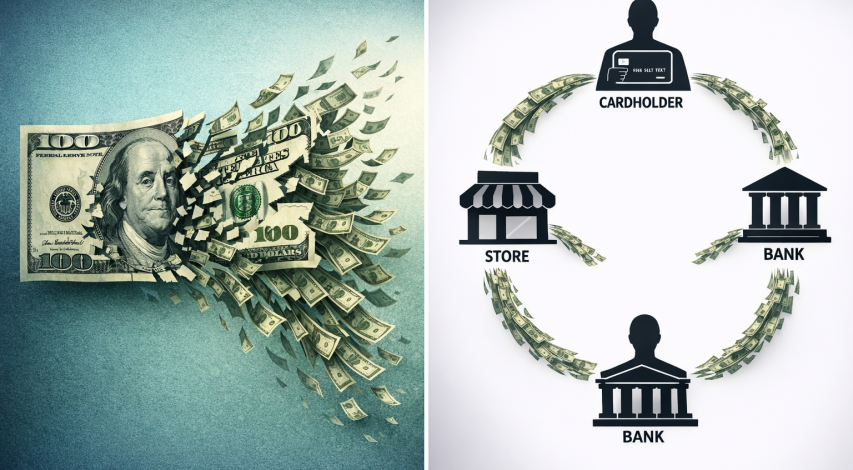
Many economists argue that merchants don't quietly absorb this cost. To protect their margins, merchants build it into the prices they charge for goods and services. If that's true - and there's a strong case for it - then consumers do pay, just indirectly through the price tag instead of a separate line item. Understanding how credit card processing rates work helps clarify why merchants make this choice.
This creates a tension. Cash-paying customers end up subsidizing rewards for credit card users because they pay the same higher prices without any points or cashback in return. The interchange fee is framed as a business cost. But the way it ripples through pricing means it functions more like a fee spread across everyone.
Merchants have pushed back on this for years, and it's caused legal battles and regulatory debates in multiple countries. Some places now let merchants add a surcharge for card payments to make the cost more transparent; it's one way to put the fee back in front of the person whose card choice triggers it. For merchants operating in categories with elevated risk profiles, a high-risk merchant account can mean these interchange dynamics play out quite differently.
How Interchange Rates Are Set and What Moves Them
Visa and Mastercard set interchange rates, and they revisit them twice a year - every April and October. These networks publish rate schedules that run to dozens of pages, covering hundreds of different transaction categories. The issuing bank receives the fee. But it has no power to set the rate itself.
Several variables work together to determine what rate applies to any given transaction. The card type is one of the biggest factors. A basic debit card carries a much lower rate than a premium travel rewards card, and a consumer card is priced differently from a business card.
How the transaction happens also matters. A card that's physically tapped or swiped at a terminal is considered lower risk than a card number typed into a website. Lower risk usually means a lower rate, which is why in-person purchases at brick-and-mortar stores are cheaper to process than online orders.
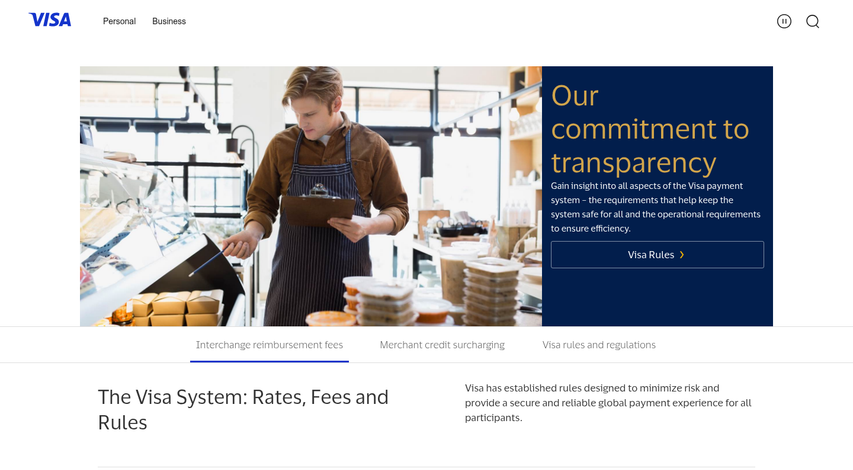
The merchant's industry factors in too. Supermarkets, utility companies, and government agencies tend to get more favorable rates because they process high volumes at low average ticket sizes. A luxury retailer or a travel agency sits in a different category entirely - and merchants in certain sectors may need a high-risk payment processor to get set up at all.
The table below shows a few Visa interchange rates to give you a concrete sense of the range.
| Card Type | Transaction Type | Interchange Rate |
|---|---|---|
| Visa Rewards Traditional | In-person | 1.650% + $0.10 |
| Visa Signature Preferred | In-person | 2.100% + $0.10 |
| Visa Business | In-person | 2.200% + $0.10 |
| Visa Debit | In-person | 0.800% + $0.15 |
The difference between a basic debit card and a premium business card is significant. That difference exists because premium cards cost more to fund - the rewards, the perks, and the protections attached to those cards have to be paid for somewhere. The merchant discount rate you ultimately pay is built on top of these underlying interchange costs.
The Hidden Cost Buried in Reward Points and Premium Cards
Premium credit cards have taken over the market at a striking pace. Back in 2006, premium cards made up about 15% of credit card transaction volume. By 2022, that number had climbed to 60%. That growth has consequences for how interchange fees flow through the economy.
Rewards cards carry higher interchange rates than standard cards. When you swipe a cashback card or a travel rewards card, the merchant pays more to process that transaction than they would for a basic card. That extra cost doesn't disappear - it gets built into the price of goods and services that everyone pays, including those who don't use rewards cards at all.
A working paper from the National Bureau of Economic Research (Working Paper No. 35067) puts some numbers to this. The research estimates that interchange fees move roughly $30 billion each year, with around $9.2 billion of that moving from lower-income households to higher earners. That's because lower-income consumers are less likely to hold premium rewards cards but still pay the higher retail prices that merchants set to recover their processing costs.
Those who actually benefit from cashback programs are mostly those who already have access to premium cards - with strong credit histories and higher incomes. They earn the rewards. But the cost of funding those rewards gets spread across all consumers through higher prices at checkout.
This isn't a reason to feel guilty about a rewards card. But it does reframe what cashback and points programs actually are. They're not free money from the bank. They're a transfer of value that runs through the interchange system, funded in part by the wider consumer base.
The growth of premium cards has made this bigger in scale than it was two decades ago, and it's a big reason why merchants and regulators have pushed back hard against the interchange system. For merchants feeling the squeeze, understanding fast approval options for merchant processing can be a useful starting point when evaluating alternatives.
Interchange Fees for Debit Cards vs. Credit Cards
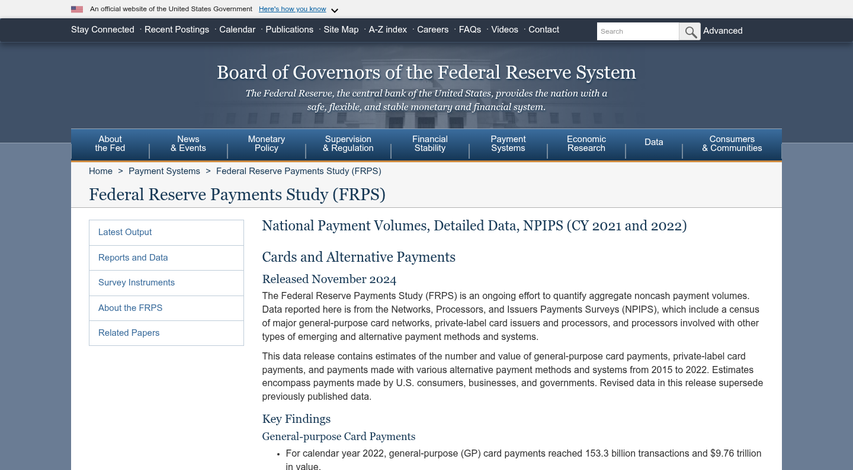
Debit card transactions work differently from credit cards when it comes to interchange, and the difference between the two is worth understanding. Credit card interchange is set by the card networks and can run anywhere from around 1.5% to over 3% depending on the card type. Debit cards are subject to a federal cap for bigger banks.
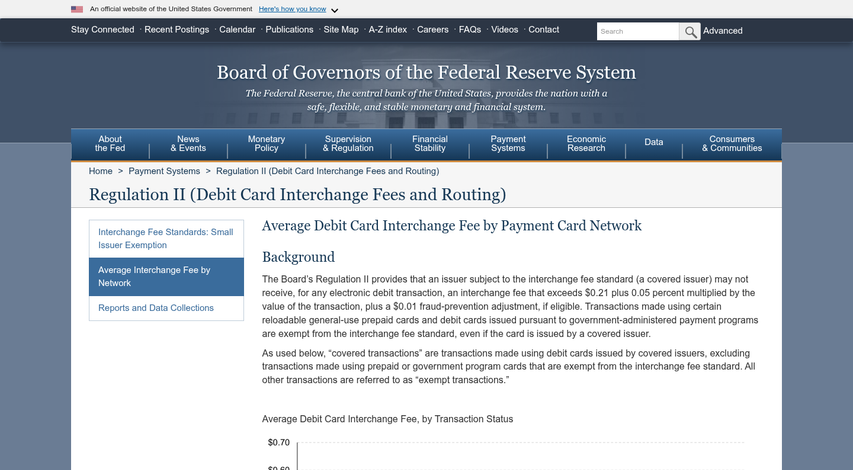
That cap comes from the Federal Reserve's Regulation II, which applies to any card issuer with $10 billion or more in assets. Under this rule, those covered issuers can't charge more than $0.21 per transaction plus 0.05% of the transaction amount. There is also a $0.01 fraud-prevention adjustment that can be added on top of that.
On a $50 debit buy, the max fee from a covered issuer would be around $0.235 before the fraud adjustment - a fraction of what a rewards credit card might generate on the same sale. Smaller banks and credit unions are exempt from Regulation II, so their debit interchange rates can be higher.
| Feature | Debit Card (Covered Issuer) | Credit Card |
|---|---|---|
| Fee structure | Flat cap: $0.21 + 0.05% + $0.01 | Percentage-based, set by networks |
| Typical range | Under $0.25 on most purchases | 1.5% - 3%+ |
| Federal regulation | Yes, Regulation II applies | No federal cap |
| Rewards card impact | Not a factor | Higher fees for premium cards |
Congress introduced Regulation II through the Dodd-Frank Act with the intent to cut back on costs for merchants, and that's especially the case for retailers processing large volumes of lower-dollar transactions. Grocery stores and gas stations, just to give you an example, benefit the most from the debit cap because they run high transaction counts where even small per-sale savings add up across thousands of purchases.
Credit cards have no equivalent federal limit, which is a big reason the interchange conversation is so much tougher on that side of the equation. If you're evaluating what your business is actually paying overall, it helps to understand what a good rate percentage looks like for your account type.
Ways Merchants Can Reduce What They Pay in Interchange
Interchange rates range from around 1.15% to 3.25% on average, so the difference between a low-rate and a high-rate transaction is money. For businesses that process high volumes, even a small rate difference adds up across thousands of transactions.
There are a few helpful angles worth looking at. These won't remove interchange entirely. But they can move you toward the lower end of the range.
- Encourage PIN debit over signature debit. PIN debit transactions tend to fall under lower interchange rates than signature debit, and you can nudge customers toward this by prompting PIN entry at checkout.
- Look into interchange optimization. Some payment processors use a strategy called interchange optimization to route transactions in a way that qualifies them for lower-tier rates. It's worth asking your acquirer whether this is available to you.
- Make sure your transactions qualify correctly. Incomplete or missing transaction data can push a payment into a higher interchange category. Submitting clean, complete data at settlement helps keep transactions in the right tier.
- Negotiate with your acquirer. You can't change what the card networks set, but the markup your acquirer charges on top of interchange is sometimes negotiable - especially if you have strong processing volume.
- Review your pricing model. Interchange-plus pricing shows you exactly what the base interchange rate is and what your processor is adding on top. This makes it easier to see where costs are coming from and where there's room to push back.
It also helps to look at your transaction mix periodically. If a large share of your sales are going through premium rewards cards, that's pulling your average rate up. Knowing what card types your customers use gives you better context for any conversation with your payment processor.
None of this is going to require an overhaul of how you work. Small changes to how you manage transactions can make a measurable difference over time.
Your Interchange Fee Isn't Just a Line Item
For merchants, interchange is the first step toward making better decisions about which payment methods to accept, how to structure pricing, and if a surcharge or cash discount program makes sense for their business. For consumers, it's worth recognizing that a "free" rewards card isn't free in any sense - someone down the chain, usually a small business owner with thin margins, is absorbing an actual share of the airline miles and cashback benefits.
Understanding how the interchange system works puts you in quite a bit better position when negotiating processing rates, picking a card for spending, or trying to know where your money goes when you tap, swipe, or insert. And the interchange system is not going away. Merchants dealing with elevated dispute rates should also be aware of programs like the Mastercard Excessive Chargeback Program, which can add significant costs on top of interchange.
FAQs
What is a credit card interchange fee?
An interchange fee is a charge paid by a merchant's bank to the customer's card-issuing bank each time a credit card transaction is processed. These fees are set by card networks like Visa and Mastercard and vary based on card type, industry, and transaction method.
Who actually pays the interchange fee?
Merchants technically pay the interchange fee. When a customer makes a purchase, the merchant's acquiring bank passes a portion of the transaction to the card-issuing bank as an interchange fee, meaning merchants receive less than the full purchase amount.
How are interchange rates determined?
Visa and Mastercard set interchange rates, reviewing them every April and October. Rates vary based on card type, transaction method (in-person vs. online), and the merchant's industry. Premium rewards cards carry higher rates than basic debit cards.
Are debit card interchange fees different from credit cards?
Yes. Debit card interchange fees for large bank issuers are federally capped under Regulation II at $0.21 plus 0.05% per transaction. Credit cards have no federal cap, with rates typically ranging from 1.5% to over 3% depending on card type.
How can merchants reduce their interchange fees?
Merchants can lower interchange costs by encouraging PIN debit payments, submitting complete transaction data, exploring interchange-plus pricing models, and negotiating processor markups. Asking your acquirer about interchange optimization routing can also help qualify transactions for lower rates.