 Call (844) NO-DISPUTES
What is a Credit Card Holdback?
A credit card holdback is when a payment processor withholds a percentage of your daily credit card sales as a financial safety net. Instead of depositing 100% of your transactions into your bank account, they hold a part in reserve. That reserve protects the processor against possible losses from chargebacks, refunds, or fraud - basically, it's their insurance policy on your account.
For some businesses, holdbacks are a temporary hurdle during the early stages of a merchant relationship. For others - especially those in high-risk industries - they can become a standard part of doing business. In either case, learning about what triggers a holdback, how much processors usually withhold, and how to get funds released puts you in a much stronger position when negotiating with payment providers.
How a Credit Card Holdback Actually Works
A holdback is a collection rate - a fixed percentage taken from your incoming revenue each business day until your merchant cash advance is paid back in full. Unlike a monthly loan payment, the money is pulled automatically, so there's nothing to manage and no payment to miss.
There are two main ways a lender can collect that percentage, and which one applies to you can depend on how your advance is structured.
Split-Funded MCAs
With a split-funded arrangement, the holdback is taken directly at the payment processor level. Before your card sales revenue ever lands in your bank account, a part - usually between 8% and 20% - is split off and sent to the lender. Your processor handles this automatically, so you only ever see the remaining balance deposited into your account.
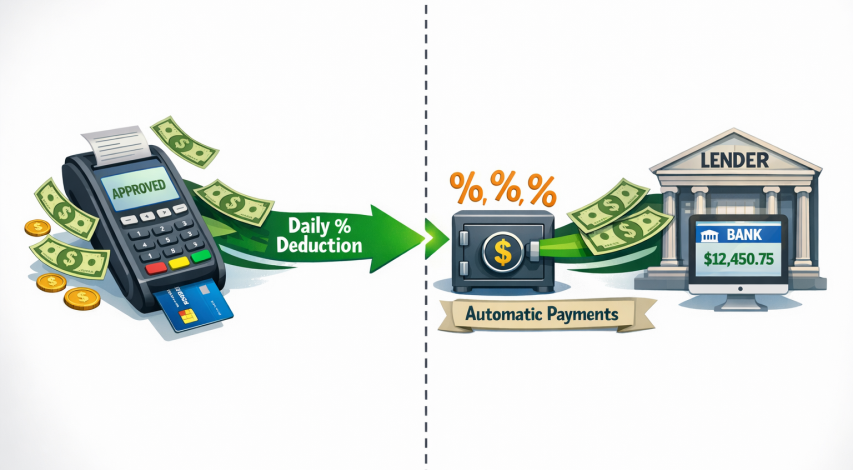
This type tends to work well for businesses with high card sales volume because collections slow down on slower days and speed up on busier ones.
ACH-Debit MCAs
With an ACH-debit structure, the lender doesn't work through your processor at all. Instead, they debit a percentage - usually 1% to 4% - directly from your bank account each day based on your total deposits - this covers all revenue, not just card sales.
The debit hits your account automatically each business day, so the math is easy: more deposits mean a bigger dollar amount pulled that day, and less deposits mean a smaller one.
The Key Difference
Split-funded MCAs are tied specifically to card processing, but ACH-debit MCAs pull from your full deposit activity. The holdback percentage range also differs between the two - 8-20% for split-funded and 1-4% for ACH-debit - because the base they draw from is very different in size. The ACH debit system is governed by rules that affect how these daily pulls are processed and when funds clear.
What Determines Your Holdback Percentage
Not every business gets the same holdback rate, and that gap can be wider than you'd expect. Lenders look at a few key things to decide how much of your sales to hold back and for how long.
Your credit risk profile is one of the biggest factors - this includes your personal and business credit history, how long you've been in business, and if you have any defaults or delinquencies on record. A clean file signals lower risk, and lenders reward that with better terms.
Your monthly credit card processing volume matters too. Lenders want to see steady, predictable revenue because that's what repays the advance. Thin or uneven sales history can push your holdback rate up because the lender has less confidence in the pace of repayment.
Industry type also factors in. Some industries have higher return rates or seasonal revenue swings, which lenders factor into the rate they set. A restaurant and a law firm might qualify for funding but walk away with very different holdback percentages. Businesses labeled high-risk often face the steepest holdback terms.
Here is an easy example of how this plays out in practice.
| Scenario | Factor Rate | Holdback Percentage | File Strength |
|---|---|---|---|
| Business A | 1.22 | 9% | Strong credit, consistent volume |
| Business B | 1.42 | 15% | Weaker credit, uneven sales history |
The difference between a 9% and 15% holdback is not just a number on paper - it changes how much cash you actually keep each day while repaying the advance. If you ever dispute charges related to a merchant cash advance, having documentation of your agreed holdback terms is essential.
The strength of your full file - credit, revenue, industry, and time in business - all work together to determine the final rate a lender puts in front of you.
The Real Cost of a Holdback on Your Cash Flow
A 15% holdback might not sound like much on paper. But run that number against a business with 20% gross margins and you're left with just 5% to cover payroll, rent, inventory, and taxes.
That 5% has to stretch across everything. For most businesses, it doesn't.
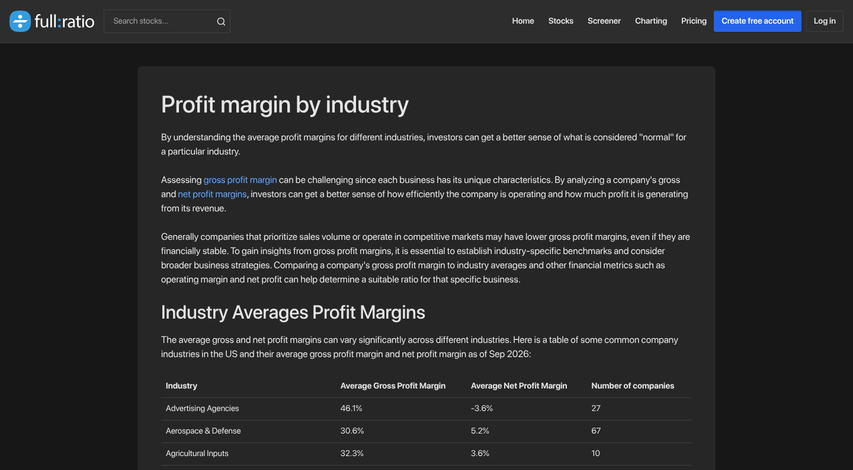
Thin-margin industries feel this the hardest. Restaurants, grocery stores, and retail shops routinely work on margins between 2% and 10%, which means a 15% holdback doesn't just put pressure on the budget - it can take the entire margin before a single bill gets paid.
It's worth thinking about where your own numbers sit. A gross margin of 18% leaves almost nothing after a holdback of that size. At 12%, you're already underwater before the month begins.
The timing makes this harder too. Holdback deductions happen continuously, pulled from every transaction as it processes. Your revenue doesn't arrive in full at the end of the week and then get reduced - it gets reduced on the way in, every day.
That changes how you can plan. You can't look at yesterday's sales and know what hit your account. You get a portion, and the rest goes toward repayment before you ever see it.
For businesses that rely on a predictable deposit to cover recurring costs, this creates a gap. A restaurant that does $4,000 in card sales on a busy Saturday might only see $3,400 land in their account. Over a full week, that can add up to a real shortfall against fixed costs that don't flex. Understanding how a reserve account works in payment processing can help clarify why processors structure holdbacks this way.
Businesses with variable sales volume have an added layer of pressure. A slow week means a smaller repayment amount, which provides some relief. But it also means less cash in the door - and fixed costs don't go down with sales.
Split Funding vs. ACH Debit - Which Should You Watch Out For
There are two ways a lender can take their holdback cut and the difference matters more than you might know. Knowing which one you're signed up for tells you quite a bit about how much control you still have over your own money.
Split funding happens at the processor level. When a customer pays you, the payment processor splits the transaction before it ever reaches your bank account. The lender's percentage goes directly to them and only the remainder lands in your account. You never touch that portion of the money.
ACH debit works differently. The full payment hits your bank account first and then the lender pulls their share out on a scheduled basis - it can add a layer of danger because the deduction can depend on your account having enough funds at the right time.
| Factor | Split Funding | ACH Debit |
|---|---|---|
| Who controls the deduction | Payment processor | Lender via bank pull |
| When it happens | At the point of sale | On a set schedule |
| Predictability | Varies with sales volume | Fixed and scheduled |
| Risk to business | Lower - no overdraft risk | Higher - account must have funds |
The key difference can depend on a simple psychological reality. Money you never see is easier to plan around than money that lands in your account and then disappears two days later. ACH debit can create problems if your balance is low when the pull goes through - like overdraft fees on top of everything else.
Split funding is the more common structure for merchant cash advances with card sales. ACH debit shows up more in short-term business loans where repayment is fixed instead of revenue-based.
Questions to Ask Before Agreeing to a Holdback
Before you sign anything, get answers in writing. A funding company should be able to answer these questions without hesitation, and if they can't, that tells you something that matters.
Start with the holdback percentage itself. Ask what percentage of your daily or weekly sales will be withheld, and confirm if that number is fixed or adjustable. Many holdback rates are fixed, which means your repayment pace is the same even when your revenue drops - it's worth confirming.
Next, ask how the funds will be collected. Split funding goes directly through your payment processor. But ACH pulls payments from your bank account. The method changes how much control you have over your cash flow, so it's not a small detail.

It's also worth asking what happens during a slow period. Some agreements include a reconciliation process that lets you request a temporary adjustment if sales fall below a threshold. Others don't. Know which one you're agreeing to.
Then look at the factor rate - the number that determines your total repayment amount, and it's not the same as an interest rate. A factor rate of 1.4 on a $50,000 advance means you repay $70,000 total, regardless of how fast you pay it back.
A few more questions worth putting to your lender before you sign:
- Is there a prepayment discount if you repay early?
- What fees are attached beyond the factor rate?
- What happens if your payment processor changes or closes your account?
- Is the holdback rate renegotiable after a set period?
- Who do you contact if there's a dispute over a withheld amount?
Getting these answers in writing protects you later. A lender who discourages questions or rushes you past the facts is a lender worth being careful about.
Before You Sign, Know Where Your Money Goes
Before signing anything, do the work: know your gross margins, model out what the daily or weekly withholding will actually look like across a slow month, and double-check that what remains is enough to cover payroll, inventory, and overhead. Get every term in writing - the holdback percentage, the total amount to be repaid, and any fees or conditions that could change the cost of the arrangement.
If the numbers check out and the terms are transparent, a credit card holdback can be a helpful bridge to your next stage of growth. If they don't, it's worth looking at other options before committing. In either case, going in well-educated puts you in a far stronger position than going in fast.
FAQs
What is a credit card holdback?
A credit card holdback is when a payment processor withholds a percentage of your daily credit card sales as a financial reserve, protecting against losses from chargebacks, refunds, or fraud.
What is the difference between split-funded and ACH-debit holdbacks?
Split-funded holdbacks are deducted at the processor level before funds reach your bank, while ACH-debit holdbacks pull directly from your bank account on a scheduled basis, creating potential overdraft risks.
What percentage is typically withheld in a holdback?
Split-funded MCAs typically withhold 8-20% of card sales, while ACH-debit MCAs deduct 1-4% of total daily deposits.
What factors determine my holdback percentage?
Lenders consider your credit history, monthly processing volume, industry type, and time in business. Stronger profiles receive lower holdback rates, while high-risk businesses typically face steeper terms.
How do holdbacks impact business cash flow?
Holdbacks reduce incoming revenue daily, which can severely strain thin-margin businesses. A 15% holdback on a business with 20% gross margins leaves only 5% to cover all operating expenses.