 Call (844) NO-DISPUTES

4840: Fraudulent Processing of Transactions
That situation has its own reason code in the Mastercard dispute system: 4840 - Fraudulent Processing of Transactions - it's the code that gets filed when a cardholder believes a merchant processed a transaction - or multiple transactions - without authorization. The customer acknowledges some level of interaction with the merchant, but something about what actually got charged doesn't line up with what they agreed to.
For merchants, this chargeback can seem especially frustrating. You have a record of a legitimate sale. The customer was there. The card was present, or the order came through. So what went wrong is what this post is here to help you figure out - what reason code 4840 actually means, how these disputes come about, what your rights are as a merchant, and how to build a stronger process so you're not caught off guard.
What Mastercard Reason Code 4840 Actually Means
Mastercard organizes its chargeback system into four-digit codes that all start with 48, and each code represents a type of dispute. They fall into wider categories like Fraud, Authorization, and Point-of-Interaction Error. Code 4840 sits in the Fraud category, which signals that the cardholder is claiming something was done without their knowledge.
The core claim behind 4840 is simple. A cardholder walked up to a terminal and made a legitimate card-present purchase. Then, within a short window after that transaction, one or more extra transactions went through on the same card - and the cardholder says they never authorized those extra charges.
A customer taps their card at a restaurant to pay a $45 bill; that's the transaction they agreed to. But then a second charge of $120 appears on their statement from the same merchant, and they have no idea where it came from. That second transaction is what triggers a 4840 dispute.
The implication is that the point of sale processed extra transactions against the cardholder's card data without their consent - which is why Mastercard categorizes it under Fraud instead of a simple processing error. The cardholder isn't saying the first transaction was wrong - they're saying something happened after it that they didn't approve.
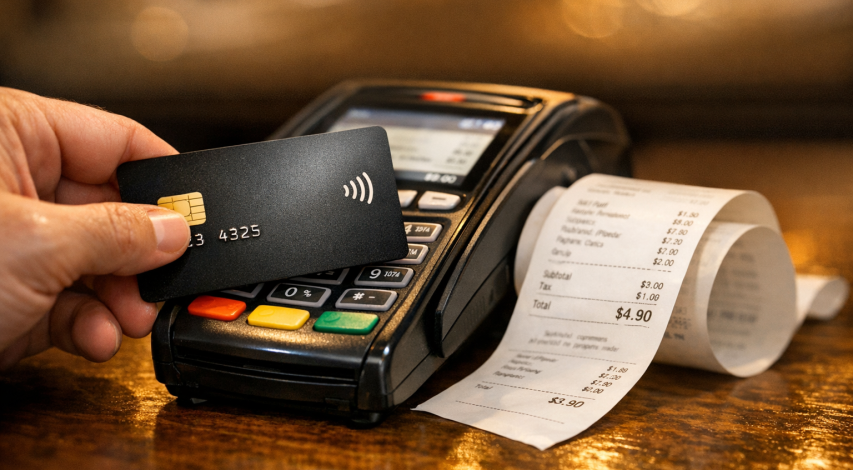
4840 is specific to card-present environments. The cardholder had to have physically been present for the original transaction for this reason code to apply. That detail matters because it shapes what evidence gets examined when a dispute comes through.
Understanding the structure of this code helps merchants and payment pros read these disputes more accurately. Knowing what the cardholder is claiming - and what they are not claiming - is the starting point for everything that follows.
The 15-Minute Window That Triggers This Chargeback
Mastercard draws a firm line at 15 minutes. If the same card gets charged more than once for the same transaction within that window, it qualifies as fraudulent processing under this reason code.
In practice, this usually looks like a single buy going through two or more times in quick succession. A terminal freezes, the cashier retries, and the card has been charged twice before anyone notices. The cardholder sees duplicate charges on their statement and disputes.
It's worth mentioning that it can happen without any bad intent on the merchant's part. A slow connection at the point of sale is probably the most common cause. The payment seems to hang, so the cashier or customer hits the button again - and the original transaction was processing the whole time.
That said, the 15-minute rule doesn't distinguish between accidental and deliberate. Mastercard treats the outcome the same way regardless of the cause, which is why the technical setup on your end matters. If your chargeback rate starts climbing as a result, it's worth understanding what happens when your chargeback ratio hits 1%.

Intentional cases do exist. A bad actor with access to a terminal could run a card multiple times to inflate the total charged. Mastercard built this rule to catch that behavior, so the threshold is tight by design.
The scenarios below show how different situations can cause the same dispute outcome.
| Scenario | How It Happens | Intent |
|---|---|---|
| Terminal timeout retry | Cashier resubmits a transaction that appeared to fail | Accidental |
| Software processing error | Payment platform submits the same authorization twice | Accidental |
| Manual re-entry | Card is run again without voiding the first charge | Accidental or deliberate |
| Unauthorized repeat charge | Terminal operator charges the card multiple times on purpose | Deliberate |
Key Deadlines Every Merchant Needs to Know
Two deadlines control the entire lifecycle of a 4840 chargeback. Miss either one and your options shrink fast.
The cardholder or their issuing bank has 120 calendar days from the transaction processing date to file the chargeback. That window starts from when the transaction was processed- not when the customer saw it. Once the chargeback lands in your lap, the clock changes to you. You and your acquirer have 45 days to respond.
| Party | Deadline | What It Means |
|---|---|---|
| Cardholder or Issuer | 120 calendar days from processing date | The last day they can file the chargeback dispute |
| Merchant or Acquirer | 45 days from chargeback filing date | The last day to submit a rebuttal and supporting evidence |
The 45-day response window is the one that trips merchants up the most- it's plenty, but pulling transaction records, receipts and a written rebuttal together takes longer than expected. Your acquirer also needs time to review and submit everything on their end, so it's worth building in a buffer.
If you miss the 45-day window, the dispute is closed and the chargeback stands. There is no extension and no appeal path once that deadline passes. The funds are gone.
One helpful tip: check with your acquirer about their internal submission deadlines. Some processors want your documentation a few days before the official cutoff to give themselves time to process and file it with Mastercard. Their internal deadline could be 30 days or less- even though the official window is 45.
Knowing these dates ahead means you can act faster instead of scrambling when a dispute shows up.
How Merchants Can Fight a 4840 Chargeback
When a 4840 dispute lands in your queue, the burden of proof sits firmly on your side. You need to show that each transaction was legitimate. That the cardholder actually authorized it.
The strongest evidence you can pull together is documentation that ties each charge to a separate authorization. Transaction logs with timestamps are a foundation. Terminal data, signed receipts, and any cardholder confirmation records all help reinforce that each charge went through an approval process on its own.
If multiple charges hit on the same day, that's where the documentation needs to do heavy lifting. You want to show that the transactions were different - different amounts, different timestamps, or different items. That each one had its own authorization instead of being a duplicate or a re-run of the same charge.

Your written rebuttal letter also matters more than you give it credit for. Walk through the evidence point by point and explain why each transaction was valid. Keep it factual and direct - a well-organized response is easier for a reviewer to follow and likely to work in your favor.
Incomplete documentation is one of the most common reasons merchants lose disputes they'd have won. Submitting only part of the picture - like a receipt without the authorization record - leaves gaps that work against you. Pull everything together before you respond, not after.
You also already know the 45-day window from the previous section, so use that time deliberately. Don't wait until the last few days to collect records, because rushed submissions tend to be incomplete ones.
You want to build a response where every charge has a paper trail that stands on its own. If even one transaction looks thin on documentation, it can weaken the credibility of the rest of your case.
Common Mistakes That Make 4840 Disputes Worse
A lot of 4840 chargebacks don't have fraud - they get a processing error. A terminal that wasn't configured, a staff member who ran a card twice after a declined response, or a system glitch that posted the same transaction more than once. These are honest mistakes, but they land in the same category as intentional fraud, so the outcome is the same for your dispute rate.
The good news is that most of these problems are fixable if you know where to look. Staff training is a big part of it. Employees need to know to wait for a decline or approval before attempting to reprocess a card, and they should never run a card multiple times to push through a payment.
On the back end, your payment terminal and payment gateway need to be set up correctly. Duplicate transaction filters are available in most modern systems and it's worth checking that yours are turned on. A quick review with your payment processor can catch configuration problems before they become chargebacks.

Then there's the mistakes merchants make after a chargeback arrives. An unanswered chargeback is an automatic loss, and it still counts against your dispute ratio. A missed response deadline carries the same consequence - even if you had a strong case.
Not having records is another common problem. If you can't pull up the original transaction data, authorization logs, or a signed receipt, your rebuttal won't hold up. Keep transaction records for at least 18 months so you have something to work with if a dispute comes in late.
Submitting a response without evidence is also a common misstep. A quick letter without supporting documentation won't win. Build a response package - that's the difference between a recoverable situation and a permanent loss.
Keeping 4840 Chargebacks From Becoming a Pattern
Merchants who stay organized are well-positioned to fight back. Clean transaction records, a clear understanding of what triggered the dispute, and a quick response are the foundation of a strong rebuttal. Missing the response window or coming up short on documentation can cause even a legitimate case to slip away.

Every 4840 dispute is helpful information and an opportunity to tighten up your processes, confirm your systems are working as intended, and show your payment partners that you take transaction integrity seriously. If you're seeing a pattern of incorrect transaction amount disputes, reviewing your billing workflow is a good place to start. With the right habits in place, you can move from reacting to chargebacks to preventing them - and keep your chargeback ratio from becoming a problem.
FAQs
What is Mastercard reason code 4840?
Mastercard reason code 4840 is a fraud dispute filed when a cardholder claims a merchant processed one or more transactions without their authorization, despite the cardholder having a legitimate original interaction with the merchant.
What triggers a 4840 chargeback dispute?
A 4840 chargeback is triggered when the same card is charged more than once within a 15-minute window, whether from a terminal retry, software error, or intentional duplicate charge.
How long do merchants have to respond?
Merchants have 45 days from the chargeback filing date to submit a rebuttal and supporting evidence. Missing this deadline results in an automatic loss with no appeal option.
What evidence helps fight a 4840 dispute?
Transaction logs with timestamps, signed receipts, terminal data, and authorization records for each charge are the strongest evidence. Each transaction should have its own documented approval to demonstrate it was independently authorized.
How can merchants prevent 4840 chargebacks?
Merchants can prevent 4840 chargebacks by training staff to wait for clear approval or decline responses before reprocessing, enabling duplicate transaction filters, and keeping transaction records for at least 18 months.