 Call (844) NO-DISPUTES

C14: Paid by Other Means
C14, formally labeled "Paid by Other Means," is filed when a cardholder claims they already settled a transaction through a different payment method - cash, a check, store credit, a gift card, or another card - but their American Express account got charged anyway. From the customer's perspective, they've paid twice for the same thing. From the merchant's perspective, an unexpected debit just appeared and the clock to respond is already ticking.
This chargeback doesn't always signal fraud or bad intent. Honest processing errors happen - a terminal glitch, a distracted cashier, a system that ran the wrong card. But it can also point to a genuine dispute that is going to need documentation and a paper trail to resolve. In either case, the outcome depends very much on how well a merchant understands what happened and how fast they act.
I'll break down what C14 means, what triggers it, how to fight it when the charge was legitimate, and how to avoid it from showing up again. If you're here because a chargeback just landed on your account, you're in the right place.
What "Paid by Other Means" Actually Means for Your Transaction
A C14 dispute starts with one situation: a cardholder paid for something through another means but still saw a charge land on their Amex account. That second charge is the trigger. The cardholder didn't get double the goods or services - they just got billed twice.
The "other means" part covers more ground than most merchants expect. A customer might hand over cash at the register and then find the transaction also processed against their card. A store credit might get entered incorrectly, leaving the card charged in full. A check payment could be recorded late and the card gets hit before the system catches up. In each case, the cardholder paid - just not with the card that ended up with the charge.
It's the cardholder who files the claim and they do it directly with American Express. They're not disputing that they owe the money or that the transaction happened. They're disputing that their card was used to collect it.
The Fair Credit Billing Act of 1974 gives cardholders the legal standing for this. That federal law lets consumers challenge charges on their billing statements that don't align with what they actually agreed to pay. A duplicate charge or a charge that should have been offset by another payment method falls squarely into that category. Amex is required to investigate and provisionally credit the cardholder's account while that process plays out.

From the merchant's side, it will seem like an accusation, but it's worth keeping in mind that most C14 disputes come down to a processing error somewhere in the transaction chain. The card was charged when it shouldn't have been and the cardholder noticed. What matters now is whether you can show that the charge was valid, or double-check that a refund is already in motion.
One thing that trips merchants up here is the difference between a C14 and a simple credit card dispute. C14 is specifically about payment through a different method - not a second swipe of the same card. That distinction matters when you go to respond, because the evidence you'll need to pull together looks different depending on which situation you're actually dealing with.
The Filing Windows Merchants Need to Know
Two timeframes define how a C14 chargeback plays out, and they are not equal. The cardholder and their issuing bank have 120 days to file a dispute. You have 20 days to respond once it reaches you.
| Party | Action | Time Limit |
|---|---|---|
| Cardholder/Issuer | File the dispute | 120 days |
| Merchant/Acquirer | Respond to chargeback | 20 days |
That gap matters more than it looks. A cardholder has months to build their case and choose when to file. You get less than three weeks to collect documentation, build a rebuttal, and submit everything through your acquirer. That is not much runway when the notification arrives on a Friday or during a busy period.
Missing the 20-day window is not a minor inconvenience. If you don't respond in time, the chargeback is automatically decided in the cardholder's favor. You lose the disputed funds without any review of your evidence, and in most cases there's no path to re-open the case.
The 120-day cardholder window runs from the transaction date or from the date the cardholder expected to receive goods or services - that means a dispute can land long after the original sale, sometimes when the transaction is no longer fresh in anyone's memory. Records that felt easy to find at the time of sale can be harder to pull together months later.
Internal monitoring earns its place here. Merchants who track chargeback notifications as soon as they arrive - instead of in weekly batches - give themselves more usable time within that 20-day window. Twenty days sounds manageable until you subtract weekends, internal approval steps, and the time it takes to find the right documentation.
Your acquirer should notify you promptly, but the responsibility to respond sits with you. Familiarity with how your payment processor delivers chargeback alerts means you won't lose days on a notification you did not know had arrived. The clock starts whether you see it or not.
Common Scenarios Where C14 Chargebacks Slip Through
Most C14 disputes don't come from fraud or bad intent. They come from everyday moments in a busy business day where something goes wrong at the register and no one catches it in time.
Rushed checkouts are one of the most common culprits. When a customer pays with a gift card but the terminal defaults to a linked credit card, the charge goes to the wrong place. The customer walks away with their purchase and no one flags the error until a dispute lands in the merchant's account weeks later.
Refunds processed to the wrong payment method cause a similar problem. A cashier voids a transaction but accidentally credits a card instead of returning cash, or applies the refund to a card the customer no longer uses. The original payment method never gets its money back, and that gap is what triggers a C14 claim.
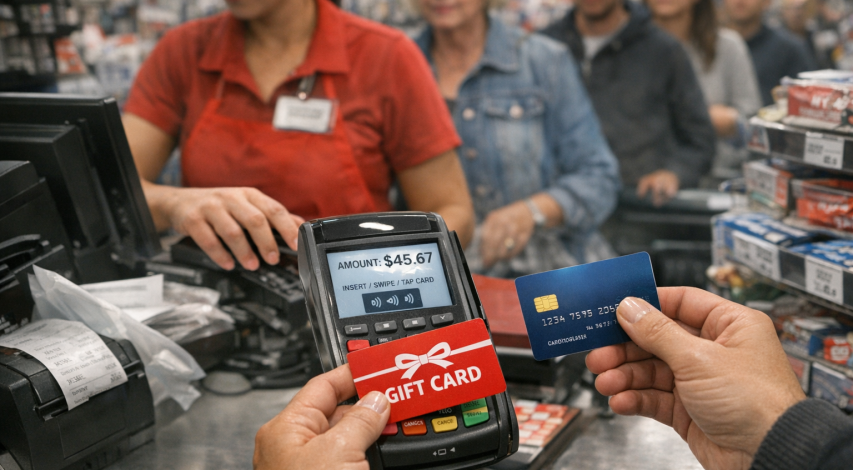
Duplicate transactions are another pattern worth watching. A terminal glitch, a slow network connection, or a double-tap on the payment screen can charge a customer twice. If one of the charges hits a different payment method than the customer intended, the dispute that follows will almost always be coded as C14.
The most common triggering scenarios include:
- Terminal defaults to a stored card instead of the presented payment method
- Split-tender transactions where one payment leg fails silently
- Refunds applied to an expired or incorrect card
- Duplicate charges caused by processing errors or network timeouts
- Manual entry mistakes during high-volume periods
High-traffic environments like retail stores, restaurants, and event venues see these errors more than others. When staff are moving fast and queues are long, it's easy to skip a confirmation step or miss a terminal prompt asking which payment method to use.
Many merchants have no real-time visibility into these errors. The transaction looks correct on their end, the customer leaves satisfied, and the first sign of an issue is the chargeback notification itself. That gap between the error and the dispute is part of what makes C14 cases legitimately tough to manage after the fact. Merchants who've already issued a partial refund before the dispute arrives often find themselves in an even more complicated position.
Building a Response That Actually Holds Up
When a C14 chargeback lands, the clock starts moving. Most card networks give merchants around 20 days to respond, and that window goes fast when you're also trying to run a business. Getting your evidence together early is what separates a winnable dispute from one that falls apart before it's even reviewed.
The issuer looking over your case isn't on your side or against you - they just need to see proof. If your response leaves gaps, they'll rule in the cardholder's favor because that's the path of least resistance. Think about what a skeptical reviewer would want to see before they'd believe the transaction was already paid another way.
The strongest replies combine multiple pieces of evidence that tell the same story. One document on its own usually isn't enough. Let's talk about what to pull together.

Evidence Worth Gathering
Start with the signed receipt or authorization record from the original transaction. Then add proof of the alternate payment - a gift card redemption log, a store credit record, or a loyalty points statement all work here. Transaction logs that show the payment strategy applied at checkout are also helpful because they come directly from your system instead of from the customer.
Any communication you had with the customer about the payment is worth including too. An email confirming how the balance was covered, or a message where they acknowledged the store credit, can do heavy lifting in a dispute.
| Evidence Type | Why It Helps |
|---|---|
| Signed receipt or authorization | Confirms the customer approved the transaction |
| Alternate payment record | Shows how the remaining balance was actually covered |
| Transaction log from your system | Provides an internal record of the payment method used |
| Customer communication | Demonstrates the customer was aware of and agreed to the payment split |
A weak submission usually fails because it proves the sale happened but doesn't prove how it was paid. That distinction is what the C14 reason code is built around. An incomplete response answers the wrong question.
Whatever you collect, get it together and submit it together. A disorganized response with good evidence can still lose if the reviewer can't follow it. How your credit card descriptor appears on statements can also affect whether a cardholder recognizes a charge in the first place.
Keeping C14 From Becoming a Recurring Headache
It's also worth keeping perspective. Not every C14 claim is a customer trying to pull a fast one. Payment terminals glitch, receipts get confusing, and a customer who legitimately doesn't recognize a charge will reach for the dispute button before they reach for the phone. When your records are clean and your response is simple, those honest mix-ups resolve faster and cleanly - and the customer walks away with their trust in you intact.

The actual cost of chargebacks isn't any single lost transaction - it's the compounding effect of a chargeback ratio that creeps upward, the time spent scrambling for documentation, and the disputes you lose because the paper trail wasn't there. Proactive verification, documentation, and training before a dispute lands is usually cheaper and easier than reacting after the fact. Treat C14 prevention as part of your standard close-of-sale process, and most of these disputes won't have a reason to happen at all.
FAQs
What is a C14 chargeback?
A C14 chargeback occurs when a cardholder claims they already paid through another method - such as cash, check, or gift card - but their American Express account was still charged, resulting in an unintended double payment.
How long do merchants have to respond to C14?
Merchants have only 20 days to respond to a C14 chargeback. Missing this deadline results in an automatic ruling in the cardholder's favor, with no opportunity to reopen the case.
What causes C14 chargebacks to occur?
Common causes include terminal glitches defaulting to a stored card, duplicate charges from processing errors, refunds applied to the wrong payment method, and manual entry mistakes during busy checkout periods.
What evidence should merchants submit for C14 disputes?
Merchants should submit signed receipts, alternate payment records, internal transaction logs showing the payment method used, and any customer communications confirming how the balance was covered.
How can merchants prevent C14 chargebacks?
Merchants can reduce C14 disputes by monitoring transactions in real time, training staff on payment verification steps, and maintaining clean documentation practices at the point of sale.