 Call (844) NO-DISPUTES

4834: Point-of-Interaction Error
What triggers this error, and more importantly how you respond to it, can separate a recovered sale from a lost customer - this post breaks down the mechanics behind error 4834, walks through the most common causes, and gives you a path toward resolution - whether you're a merchant troubleshooting at the counter or a developer diagnosing an integration issue.
The good news is that point-of-interaction errors aren't mysterious once you know what to look for. Let's get into it.
What "Point-of-Interaction Error" Actually Means
A point-of-interaction error refers to a technical failure that happens at the exact second a card transaction is tried - the quick window where a card reader, terminal, or credit card payment processor tries to communicate with the network - and something goes wrong in that process.
The "point of interaction" is basically wherever the card meets the payment system. That could be a physical terminal in a store, a tap-to-pay reader, or an online checkout that processes card data. The error code 4834 gets triggered when that exchange produces a result that doesn't match what the network expects.
This error is specifically about how the transaction data was captured and transmitted - not about the cardholder's account balance or spending limits. The dispute code exists in a separate category from things like fraud or item-not-received claims because the root cause is technical instead of behavioral.
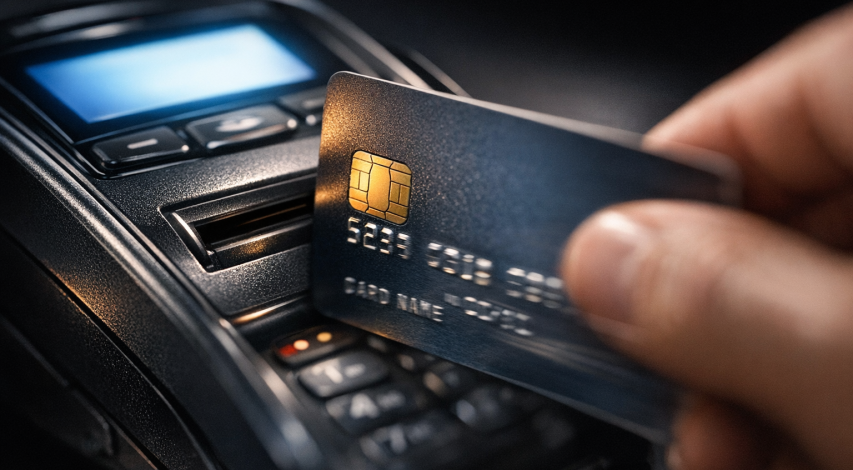
Common triggers include misread chip data, magnetic stripe failures, and encoding problems that cause the transaction to transmit incorrect card data. A device that isn't calibrated can send data that conflicts with what's on file for the card, and the network flags that as an error at the point of interaction.
For cardholders, it can cause a charge that posts even though the transaction seemed to fail or behave strangely at checkout. For merchants, it can mean a chargeback rooted in something well outside the customer's control. The technical origin of the code helps both sides frame a dispute accurately and respond with the right evidence.
The 4834 code itself is part of Mastercard's chargeback reason code framework - it sits under the "Point-of-Interaction Error" category alongside a few related codes that cover different types of payment gateway processing mistakes - but 4834 is the one most directly tied to data capture failures at the terminal level.
Filing Windows and Time Limits for 4834 Disputes
The clock starts ticking from the transaction date- not the date you noticed the problem. For Mastercard reason code 4834, cardholders usually have 120 days from the original transaction date to file a dispute. That window sounds generous, but it goes faster than expected if a statement cycle or two slips by unnoticed.
Issuers have their own internal deadlines on top of that. They need to submit the chargeback to Mastercard within a set timeframe after the cardholder's claim comes in, and any delays on their end can forfeit the right to go after it at all. So the 120-day window is a ceiling- not a guarantee.

Merchants get time to respond too. After a chargeback is filed, merchants usually have around 45 days to submit a rebuttal with supporting documentation. Missing that window means the dispute resolves in the cardholder's favor automatically.
| Party | Action | Time Limit |
|---|---|---|
| Cardholder | File dispute with issuer | 120 days from transaction date |
| Issuer | Submit chargeback to Mastercard | Within the chargeback filing cycle |
| Merchant | Respond with rebuttal documentation | ~45 days from chargeback notice |
| Issuer | File pre-arbitration if needed | 45 days from merchant rebuttal |
If the first round of the dispute doesn't resolve things, the issuer can escalate to pre-arbitration. That step also has its own deadline, so neither side has unlimited time to go back and forth. Mastercard's arbitration process is the last stop, and the fees involved make it a path worth avoiding before it gets that far.
Why These Errors Happen at the Point of Sale
Most 4834 chargebacks come down to a disconnect between what the customer sees and what actually gets processed. That gap can happen in a few different ways, and it's not intentional on either side.
The most common cause is a duplicate transaction - this happens when a payment terminal freezes or gives a timeout error, and either the merchant or the customer runs the card again. Both attempts go through, and the cardholder ends up charged twice for the same purchase. It's a technology problem more than a human one, but the cardholder still has to deal with the result.
Another standard trigger is a currency conversion error. When a card is charged in a foreign currency without an exchange rate being applied, the final amount can look wrong to the cardholder. Even a small discrepancy tends to generate a dispute because the customer has no easy way to verify what happened.
Keyed-in transactions create their own set of problems. When a cashier manually enters a card number instead of swiping or tapping, typos happen. An extra digit or a transposed number can send a charge to the wrong account or produce an amount that doesn't match the sale.

Card-not-present environments are also a common source of these errors. In online or phone-based sales, the system has to depend heavily on the data entered at the time of the transaction. If there's a glitch in the checkout flow or a cart total updates after the customer confirms payment, the charged amount might not match what the buyer agreed to pay.
Hardware and software failures round out the picture. An outdated terminal, a poor network connection, or a misconfigured payment setup can all produce errors that the merchant never notices until a dispute arrives. The transaction looks correct on the surface but carries the wrong amount underneath.
How Merchants Can Fight a 4834 Chargeback
The good news is that 4834 chargebacks are among the more winnable disputes if you have the right documentation ready. The key is to show the card network that the transaction was processed correctly at your end.
Start with your transaction records. A complete receipt showing the correct amount, the card type used, and a matching authorization code goes a long way. If your terminal captured an EMV chip read or a PIN entry, that data strengthens your case considerably.
Matching the authorization and settlement amounts is especially important here. If those two numbers line up and you can prove it, you have a good foundation to build your rebuttal on. A mismatch - even a small one - can undermine an otherwise strong response.

Your response should also include any signed receipts, online transaction logs, or screenshots from your payment gateway. You want to show a clean paper trail from the second the card was presented to the second the funds settled. Gaps in that trail make it harder to win. If you're unsure what happens when you don't respond at all, see what happens if you never reply to a credit card dispute.
If the error came from a technical glitch on your processor's side, pull a statement or report from them confirming what happened. Processors can sometimes give you documentation that explains duplicate charges or processing anomalies, and that third-party confirmation carries weight in a dispute.
| Evidence Type | Why It Helps |
|---|---|
| Authorization and settlement records | Proves the charged amount was approved correctly |
| EMV or PIN data | Shows the card was properly read at the terminal |
| Signed customer receipt | Confirms the cardholder acknowledged the transaction |
| Processor error report | Explains any technical anomalies outside your control |
Submit everything in one organized package and keep your written explanation clear. Card networks review many disputes, so a focused and well-documented response does better than a long one.
Disputes That Are Hard to Win - and When to Let Go
Not every 4834 chargeback is worth fighting. Some disputes have circumstances that make it nearly impossible to build a strong case, and pushing back anyway just costs you time and money.
If the transaction legitimately had an error at the point of interaction - a duplicate charge, an incorrect amount, or a processing glitch - the cardholder is probably right. Fighting that dispute without good evidence to the contrary is a losing position from the start.
Cases where customers you've had no prior contact with are also tough. If a customer reports a problem and you have no record of a support conversation, a refund request, or any interaction at all, it can become hard to show the cardholder acted in bad faith. If you don't have that paper trail, your representment package will feel thin to a card network reviewer.
Older transactions are another category to look at. If the chargeback comes in close to the time limit and your records from that period are incomplete, the effort to compile a response might not justify the possible recovery - especially for smaller transaction amounts.
There's also a helpful math question here. If the disputed amount is lower compared to what it costs you in staff time and fees to fight the chargeback, it may make more sense to absorb the loss and redirect that energy toward fixing whatever caused the error.
Walking away from a dispute is a deliberate choice to protect your resources and focus on the cases you can win. Merchants who track their chargeback patterns get better at finding which disputes are worth the fight and which are better to release.
You want to respond, keep your dispute rate healthy, and cut back on the conditions that cause 4834 chargebacks.
Keeping 4834 Chargebacks From Becoming a Habit
If you see a persistent 4834 error that standard troubleshooting does not resolve, escalate to your payment processor or terminal vendor with the full transaction log and error code details. The more context you give them, the faster the issue can be diagnosed and cleared.

Updated terminal firmware, a reliable network connection, and staff trained to spot these common POI error patterns are the most helpful long-term measures for minimizing disruptions at the point of sale. Merchants dealing with repeated disputes may also want to understand what a rolling reserve means for your cash flow, as processors may impose one if chargeback rates climb.
FAQs
What is Mastercard chargeback reason code 4834?
Code 4834 is Mastercard's "Point-of-Interaction Error" chargeback code, triggered when a technical failure occurs during card data capture or transmission at a terminal or payment gateway.
How long do cardholders have to file a 4834 dispute?
Cardholders have 120 days from the original transaction date to file a dispute under reason code 4834.
What are the most common causes of 4834 chargebacks?
Common causes include duplicate transactions from terminal timeouts, currency conversion errors, manually keyed entry mistakes, and hardware or software failures that transmit incorrect transaction data.
What evidence helps merchants win a 4834 chargeback?
Merchants should submit matching authorization and settlement records, EMV or PIN capture data, signed receipts, and any processor error reports confirming technical anomalies.
When should merchants avoid fighting a 4834 dispute?
If the transaction genuinely had an error, records are incomplete, or the disputed amount is less than the cost of responding, it may be more practical to absorb the loss.