 Call (844) NO-DISPUTES

4860: Credit Not Processed
Reason Code 4860, formally known as Credit Not Processed, gives cardholders a formal path to dispute a transaction when a merchant agreed to issue a refund or credit but never followed through - it's a simple concept, but the facts - what qualifies, what documentation matters, and how merchants should respond - are worth knowing, whether you're the one waiting on a refund or the one being asked to issue one.
It's also worth mentioning upfront that 4860 is a legacy Mastercard reason code. Over time, Mastercard has reorganized and consolidated its chargeback framework, and this code has been folded into a wider category. Even so, it remains relevant - merchants and issuers still see it in older disputes, and the underlying issue it represents hasn't gone away just because the label changed. Understanding 4860 on its own terms still has real practical value.
This guide breaks down what Reason Code 4860 means, the conditions under which it applies, and what cardholders and merchants need to know to get through a dispute. The goal is to make a technical subject feel approachable and helpful - because at its core, this is just about whether a credit that was promised actually gets delivered.
What Mastercard Reason Code 4860 Actually Means
Reason code 4860 is how Mastercard labels a very specific situation: a refund or credit was promised to a cardholder but never seemed to appear on their statement; it's that simple. The merchant said "we'll refund you" and the money never came back.
This can happen in any buying setting - in a store, over the phone, or on a website. The channel doesn't change the core problem, which is that the cardholder has evidence a credit was coming and has nothing to show for it.
The reason code falls under a wider category called "Point-of-Interaction Errors," which is Mastercard's way of grouping mistakes that happen at the transaction level instead of disputes about fraud or authorization. A credit that gets promised but not processed fits that description well.
It's also worth knowing that this type of dispute has roots in the Fair Credit Billing Act of 1974. That federal law gives consumers the right to dispute billing errors on their accounts and sets out the basic process card networks and banks follow. Mastercard's reason code 4860 is the network's formal carrying out of that protection in a card dispute context.
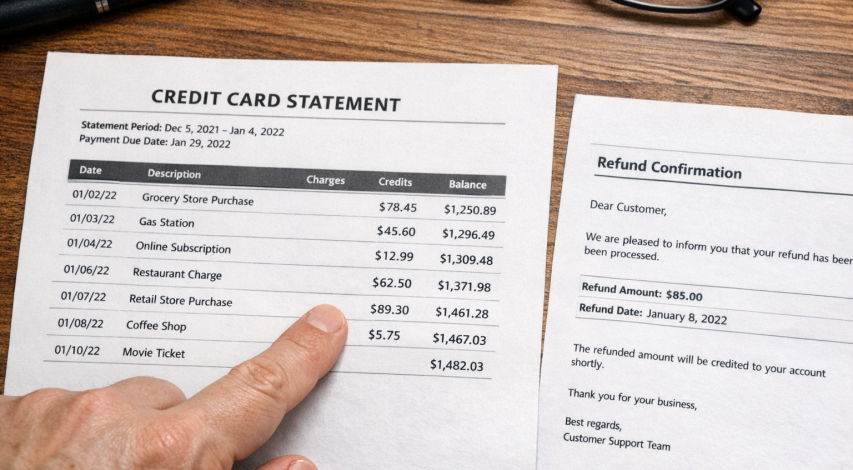
The cardholder doesn't need to prove the merchant acted in bad faith. They just need to show that a credit was expected and didn't arrive. That could be a written confirmation email, a receipt with a refund noted, or a verbal agreement recorded in some way.
One thing to know early on is that 4860 is not a catch-all for general refund dissatisfaction - it applies when there's a representation that a credit would be issued - not just a feeling that one should have been. That distinction matters quite a bit when a bank decides to accept or reject the dispute, and failing to respond at all can have serious consequences for merchants.
The Timeline Every Cardholder and Merchant Should Know
Deadlines matter quite a bit with reason code 4860 disputes. Miss one and you lose your rights - it's that simple.
Cardholders have 120 days to file a dispute after a credit wasn't processed. That window starts from either the date the refund was agreed upon or the date the cardholder expected to receive it - whichever comes later. So if a merchant promised a refund by a date and it never came to be, that date is what starts the clock.

The 120 days gives cardholders a reasonable amount of time to see the problem and take action. That said, waiting too long to check your statement is an actual danger here. The sooner you file, the stronger your case will be.
On the other side, merchants and their acquirers get 45 days to respond once a chargeback is filed. That response window is used to collect and submit evidence - things like proof the refund was issued or documentation of any agreement with the cardholder. Forty-five days is plenty, but it moves fast when records need to be gathered.
| Party | Action | Time Allowed | Starting Point |
|---|---|---|---|
| Cardholder | File a dispute | 120 days | Date refund was expected or agreed upon (whichever is later) |
| Merchant / Acquirer | Respond to chargeback | 45 days | Date the chargeback was filed |
These two windows don't overlap - they run in sequence. The cardholder acts first and the merchant responds after. Knowing where you fall in that sequence helps you understand what to do and how much time you have left to act.
Why 4860 Was Retired and What Replaced It
Reason Code 4860 is now a legacy code. Mastercard retired it and folded it into Reason Code 4853, which covers a wider number of fulfillment-related disputes. Any new filing that would have used 4860 should now go through 4853 instead.
This consolidation happens in payment networks from time to time. As dispute volumes grow and categories multiply, networks like Mastercard periodically clean house to keep things manageable. Merging closely related codes into one cuts back on the chance of a dispute being filed under the wrong category and makes it easier for banks and processors to manage cases.
For cardholders and merchants, the helpful takeaway is simple. If you see 4860 referenced anywhere - on an older chargeback record, a processor statement, or archived documentation - it goes along with a filing that happened before the code was retired; it's not something you would file under today.
The successor code, 4853, covers the "Credit Not Processed" scenario along with a few other fulfillment failures like goods not received and misrepresentation. The dispute logic is largely the same, so switching from 4860 to 4853 did not change how these cases are handled. The underlying rules around timelines, evidence, and response windows carried over.
This distinction is worth knowing about if you are looking over historical records or trying to reconcile old disputes with new ones. A 4860 and a 4853 for credit problems are functionally the same dispute - just filed in different eras. Your payment gateway or your bank can confirm which code applies to any active filing, and they will flag it if something looks out of date.
The retirement of 4860 is a housekeeping move rather than a dramatic change. Payment networks update their code structures to stay organized, and 4853 is the latest home for these disputes.
Common Reasons a Credit Dispute Gets Filed - and What Goes Wrong
Most of these disputes don't come from bad-faith customers. They come from an oversight somewhere in the refund process - and by the time the chargeback lands, the merchant is usually the last to know something went wrong.
A few situations come up again and again. A customer returns an item and the refund never gets processed because a staff member assumed someone else handled it. Or the refund goes through, but to the wrong card or account. Sometimes there's a delay between when the return was accepted and when it was actually submitted, and the customer runs out of patience before it posts.
Miscommunication is a big one. A customer calls in, a team member says "we'll take care of it," and then it falls through the cracks. The customer waits, sees nothing, and files a dispute - an understandable response from their side.
Here are the most common triggers worth watching for:
- Refunds promised verbally but never submitted in the system
- Returns processed in-store but not passed along to the payments team
- Credits applied to an expired or incorrect payment method
- Long processing delays that leave the customer with no confirmation
- No internal record of the refund request at all
If you're seeing multiple disputes with this same pattern, poor refund tracking is usually the root cause. If you don't have a reliable system to log refund requests and confirm they've been processed, things slip through - and disputes follow.
It's worth looking at these disputes together instead of treating each one as a one-off. A cluster of similar cases can point directly to a gap in your process, like a returns workflow that doesn't connect to your payment processor, or a team that has no way to confirm a refund was completed. In some cases, a partial refund had already been issued before the dispute was filed, which adds another layer of complexity.
The dispute itself is the symptom. The oversight usually happened days or weeks earlier.
How Merchants Can Push Back on a Credit Not Processed Chargeback
When a chargeback lands in your queue, the response window matters. You have 45 days to build a case, and the quality of your evidence is what decides the outcome - not the fact that you believe you did the right thing.
The strongest replies come down to documentation. Let's talk about what actually holds weight with card networks and issuing banks.
- Refund confirmation records from your payment processor showing the credit was initiated
- Timestamped transaction logs that show when a refund was processed and to which account
- Email threads between you and the cardholder that show you communicated about the refund
- Signed return receipts or proof that a returned item was received before the refund was issued
One common mistake is assuming a refund went through because you clicked the button. A refund initiated on your end still has to settle on the processor's end, and those two events don't always happen at the same time. If you can't pull a processor-confirmed record showing the credit landed, that's a gap the cardholder's bank will see.
Email communication is more helpful than most merchants realize. If you told the cardholder the refund was coming and gave them a timeline, that conversation shows good faith on your part - it also counters the narrative that you ignored the request. It's also worth knowing whether you can still issue a refund after a chargeback has already started.
Be honest with yourself when you review the evidence. If the refund legitimately wasn't processed - because of a system error or a missed step - the chargeback won't hold up as a dispute and will cost you the dispute fee on top of the original loss. A well-documented response wins disputes. A response built on hope doesn't. If the situation escalates further, understanding what credit card pre-arbitration means can help you prepare for the next stage.
Pull everything together early in those 45 days so you're not scrambling to find records at the last minute.
Don't Let a Missing Refund Turn Into a Bigger Headache
A few important things to keep in mind as you move forward:

- Know your timeline. Refunds have deadlines, and so do disputes. Don't assume a credit is coming if you haven't seen it within a reasonable window.
- Keep your records. Receipts, confirmation emails, and correspondence are your best protection - on both sides of the transaction.
- Don't wait too long to act. The longer a missing credit sits unresolved, the harder it becomes to dispute or recover.
For merchants especially, a smooth and transparent refund process helps avoid chargebacks and shows customers they can trust you when something goes wrong. How a business handles a return or credit leaves a stronger impression than the original sale. Treat it that way and you'll turn a possible dispute into long-term goodwill. If you issue a credit that the customer never receives, you may also need to file an original credit transaction claim to resolve it. And keep in mind that how your business name appears on a statement can affect whether customers recognize a charge - your credit card descriptor plays a bigger role in chargebacks than most merchants realize.
FAQs
What is Mastercard Reason Code 4860?
Reason Code 4860, called "Credit Not Processed," applies when a merchant promised a refund but never delivered it. The cardholder must show evidence a credit was expected, such as a confirmation email or receipt noting a refund.
How long does a cardholder have to file a dispute?
Cardholders have 120 days to file a dispute, starting from the date the refund was expected or agreed upon, whichever is later.
Is Reason Code 4860 still active today?
No. Mastercard retired 4860 and merged it into Reason Code 4853. New disputes involving unprocessed credits should be filed under 4853, though 4860 may still appear on older records.
How can merchants fight a Credit Not Processed chargeback?
Merchants should submit processor-confirmed refund records, timestamped transaction logs, and email correspondence with the cardholder. Strong documentation is the key to a successful dispute response within the 45-day window.
What commonly causes Credit Not Processed disputes?
Common causes include refunds promised verbally but never submitted, credits applied to wrong accounts, and poor internal tracking. Miscommunication between staff and the payments team is a frequent root cause.