 Call (844) NO-DISPUTES

13.6: Credit Not Processed
Reason Code 13.6 falls under Visa's Consumer Disputes category and applies when a cardholder claims they were entitled to a credit - whether from a return, a cancellation, or another agreed-upon refund - but that credit never made it back to their account. It's the formal replacement for legacy Visa reason code 85, carrying forward the same core concept under Visa's updated dispute resolution framework.
For merchants, a 13.6 chargeback can seem like a gut punch, and that's also the case if the return was legitimate and the refund was issued - just not processed in a way the card network recognizes. Understanding what triggers this dispute, what Visa expects from both sides, and what options are available for fighting back is the difference between losing revenue unnecessarily and building a good defense.
I'll walk through everything merchants need to know about Reason Code 13.6: how it works, what the rules are, what evidence to gather, and how to respond when one lands in your queue.
What Visa Reason Code 13.6 Actually Means
Reason code 13.6 applies to a simple situation: a cardholder was promised a refund or credit that never seemed to appear on their account. A merchant may have agreed to reverse a charge after a return, a cancellation, or a billing error - but the credit never came through, so the cardholder contacts their bank to dispute it.
This isn't the same as a cardholder saying they didn't get what they paid for. The 13.6 code is about a credit that was already agreed upon and then not delivered. That distinction matters because it shapes how the dispute gets evaluated and what evidence either side needs to produce.
The legal foundation here is the Fair Credit Billing Act of 1974 - this federal law gives consumers the right to dispute billing errors on their credit accounts, and a missing refund qualifies as that error. Visa's chargeback framework is built to line up with this consumer protection, which is part of why this code has a narrow definition.
Visa organizes its chargeback rules into five large categories, covering things like fraud, authorization problems, and processing errors. Across those five categories there are 46 reason codes in total, and 13.6 lives in the "Consumer Disputes" category alongside codes that deal with merchandise not received or not as described. The Consumer Disputes category is reserved for situations where the transaction itself processed correctly but something went wrong between the merchant and the cardholder afterward.

The reason this code exists at all comes down to accountability. If it didn't, merchants could agree to issue refunds and then quietly not follow through, leaving cardholders with no actual recourse. The chargeback process gives cardholders a formal path to recover money that a merchant already acknowledged was owed to them - similar to how a credit not processed dispute works in practice.
It's worth mentioning that 13.6 doesn't come into play the second a refund is a little slow. Visa's rules give merchants a window to process credits before a cardholder can escalate to a dispute. That timing window is part of what makes this code work the way it does, and it's the part that trips up both sides of a transaction most frequently.
How the 13.6 Dispute Timeline Works
There are hard deadlines built into this process and they apply to everyone involved. Missing one - on either side - changes the outcome entirely.
An issuing bank has up to 120 calendar days to file a 13.6 chargeback. That window starts from the original transaction date or the date on the credit slip, whichever comes later. There's also a built-in waiting period: the issuer has to wait at least 15 days after the return date before they can file - this gives merchants a basic window to process the credit on their own.

Once a chargeback is filed, the merchant has 30 days to respond with a rebuttal - 30 days to collect evidence, write a response, and submit everything through their bank. It's not a long window, so having records organized ahead of time makes an actual difference.
| Who | Action | Deadline |
|---|---|---|
| Issuing Bank | File the chargeback | 120 calendar days from the transaction or credit slip date (whichever is later) |
| Issuing Bank | Wait before filing | At least 15 days after the return date |
| Merchant | Respond to the chargeback | 30 days from the chargeback filing date |
If a merchant misses that 30-day response window, the chargeback is automatically decided in the cardholder's favor. There's no appeal after that point and the funds are returned to the customer without any review of the merchant's side.
The 15-day waiting rule on the issuer's side is worth noting - it exists to avoid chargebacks being filed before a merchant has a chance to post the credit. Refunds don't always process instantly, and this buffer accounts for that lag. It's a small detail but it matters when you're trying to understand why a dispute arrived when it did.
Common Situations That Trigger This Chargeback
Most 13.6 chargebacks don't happen because a merchant tried to cheat. They happen because a refund got stuck between the choice to issue it and the second it reaches the cardholder's account.
One of the most common scenarios is a refund that was approved at the point of sale but never submitted to the card network. A staff member might hand a customer a receipt, tell them the credit is on its way, and believe the job is done. But if the transaction was never processed on the back end, the cardholder waits and waits and eventually files a dispute.
Keying errors are another common culprit. A refund processed to the wrong card number or for the wrong amount can leave a cardholder with nothing to show for it - this mistake is easy to make and hard to catch without a good reconciliation process.
Timing is its own problem. Even a correctly processed refund can take a few business days to appear, and cardholders don't always know that. When a cardholder expects to see a credit within 24 hours and it hasn't shown up after a week, filing a dispute is the logical next step to them.
There are also miscommunications between staff and customers that set the whole thing in motion. A customer leaves a store believing a return was completely handled, but the employee only initiated part of the process. Nobody catches it until the dispute arrives.
Here are the scenarios that come up most frequently in 13.6 disputes.
- Refund approved in person but never submitted to the payment processor
- Credit entered with an incorrect card number or transaction amount
- Refund processed correctly but the cardholder expected it sooner
- Staff member started a return but didn't complete it in the system
- Customer contacted support, was told a credit was coming, and it never was
- Refund issued to an expired or replaced card the cardholder no longer uses
It's worth taking a close look at where your own refund process could break down. The difference between telling a customer their money is coming back and actually getting it back to them is where most of these disputes are born.
What Merchants Need to Fight a 13.6 Chargeback
Winning a 13.6 dispute can depend on one thing: showing that the credit was processed. A strong rebuttal gives the card network concrete proof - not just an explanation of what happened.
The most important part of evidence is a credit receipt with a timestamp - this shows that the refund was issued and when it happened. Transaction records from your payment gateway can support this further by confirming the credit moved through the system. If you had any written communication with the cardholder about the refund - emails, chat logs, or texts - include those too.
Here is a quick look at what separates a strong response from a weak one.

| Strong Evidence | Weak Evidence |
|---|---|
| Timestamped credit receipt | A verbal promise to refund |
| Processor transaction records showing the credit | Internal notes without supporting documents |
| Written cardholder communication confirming the refund | A refund policy screenshot with no proof of action |
| Bank confirmation of the credit posting | A general transaction history without the specific credit |
One mistake merchants make is submitting documentation with the wrong transaction date. If your records reference a different date than the original charge, it creates uncertainty and weakens your case. Double-check that everything lines up before you submit.
The other big mistake is missing the response window altogether. Visa gives merchants a limited time to respond to a chargeback, and 13.6 disputes are no exception. Missing that window means an automatic loss, regardless of how valid your case could be.
It also helps to keep your rebuttal letter short and direct. Card network rules are not looking for a long story - they want to see the evidence match the claim. State that the credit was processed, attach your proof, and reference the relevant dates. That is the format that works.
Weak replies use explanations instead of documentation. Saying the refund "should have posted" or referencing a credit card reversal that was approved but never actually processed will not hold up. The evidence has to show what happened - not what was intended.
Keeping Credits Clean Before They Become Chargebacks
The better investment is making sure you don't have to. A few simple habits go a long way:
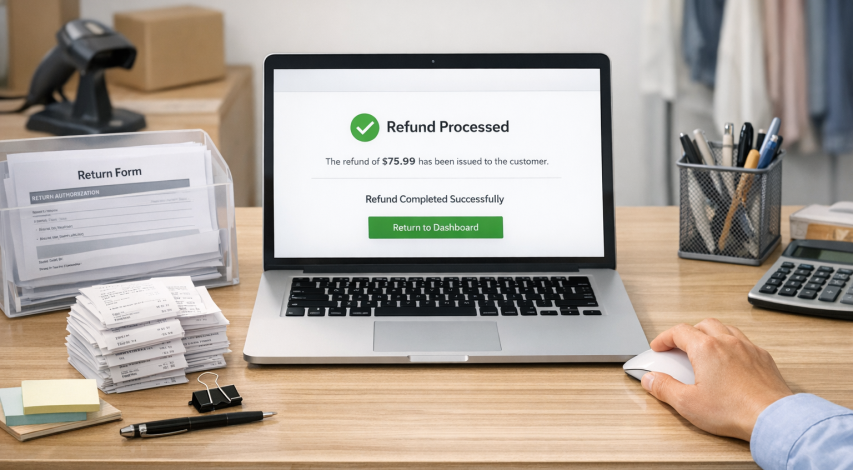
- Process credits promptly. Don't let approved refunds sit in a queue. The longer the delay, the more likely a cardholder is to dispute - and the harder it becomes to argue the timing was reasonable.
- Train staff on refund procedures. Miscommunication between a customer-facing employee and the back office is one of the most common reasons a credit gets lost in the shuffle. A clear internal process closes that gap.
- Keep solid records. Refund confirmations, return receipts, and customer correspondence cost nothing to save and are worth a great deal if a dispute lands on your desk.
Most 13.6 disputes are avoidable - not with expensive software or elaborate systems, but with steady process hygiene. Tighten up how refunds are handled on the back end and this is one chargeback reason code you'll never need to remember. If a customer files a chargeback after a partial refund, that's a sign your credit process needs a closer look before it becomes a pattern.
FAQs
What is Visa Reason Code 13.6?
Visa Reason Code 13.6 applies when a cardholder was promised a refund or credit but it never appeared on their account. It falls under Visa's Consumer Disputes category and replaced the legacy reason code 85.
How long does a merchant have to respond?
Merchants have 30 days to respond to a 13.6 chargeback. Missing this deadline results in an automatic loss, with funds returned to the cardholder regardless of the merchant's case.
What evidence best supports a 13.6 rebuttal?
A timestamped credit receipt, processor transaction records confirming the refund, and written cardholder communication are the strongest evidence. Verbal promises or internal notes without documentation are unlikely to win a dispute.
What commonly triggers a 13.6 chargeback?
Common triggers include refunds approved but never submitted to the processor, credits entered with incorrect card numbers, refunds issued to expired cards, or staff completing only part of the return process.
How can merchants prevent 13.6 chargebacks?
Processing credits promptly, training staff on proper refund procedures, and maintaining thorough records of all refund activity are the most effective ways to prevent 13.6 disputes before they occur.