 Call (844) NO-DISPUTES

4863: Cardholder Does Not Recognize - Potential Fraud
Mastercard reason code 4863 applies specifically to card-not-present transactions - think online purchases, phone orders, or any sale where the physical card isn't swiped or tapped. When a cardholder looks at their statement and sees a charge they don't remember making, they can dispute it under this code. The important phrase here is "does not recognize." The cardholder isn't necessarily claiming outright fraud - they're saying the transaction looks unfamiliar to them, which opens the door to a possible fraud investigation.
It's worth mentioning that Mastercard has since retired reason code 4863 as part of a standard effort to simplify and consolidate their chargeback framework. That said, the code still surfaces in older disputes, legacy records, and historical chargeback data, so it remains relevant - especially if you're reconciling past transactions or a dispute that was filed before the code was phased out.
I'll talk about what reason code 4863 actually means, why it gets triggered, what your options are for responding, and how to cut back on your exposure to this type of dispute going forward.
What Mastercard Reason Code 4863 Actually Means
Reason code 4863 sits in an interesting middle ground. A cardholder isn't saying "I was definitely defrauded" - they're saying "I don't recognize this charge at all." That distinction matters more than it might feel.
In practice, this plays out when a cardholder reviews their statement and sees a transaction they have no memory of making. They don't recognize the merchant name, the amount, or the date. So they contact their bank and flag it as unrecognizable, and the bank files a chargeback under code 4863. The cardholder isn't required to prove fraud happened - they just have to say they can't account for the charge.
This reason code applies exclusively to card-not-present transactions. That means online purchases, phone orders, and any sale where the physical card wasn't used at a terminal. In-person transactions are handled under different rules, so 4863 is a CNP problem.

The legal foundation for this goes back to the Fair Credit Billing Act of 1974. That federal law gives cardholders the right to dispute charges they don't recognize on their billing statements and puts the burden on the merchant to prove the transaction was legitimate. Card networks like Mastercard built their dispute processes around those consumer protections, which is why a cardholder doesn't need much to initiate a claim like this.
A 4863 dispute can come from a few different places - it could be genuine fraud, where someone used stolen card details to make a purchase. It could also be a case where the cardholder didn't recognize a vague or unfamiliar business name on their statement. And yes, sometimes it's friendly fraud; the cardholder made the purchase themselves but disputes it anyway.
The reason code doesn't tell you which of those situations you're dealing with - it's part of what makes it tough to respond to, and it's also why Mastercard treats it as a possible fraud signal instead of a confirmed one. The word "potential" in the label is doing work there.
The Timelines and Numbers Merchants Need to Know
When a 4863 dispute is filed, the clock starts instantly. Issuers have as long as 120 days from the transaction date to submit the chargeback, and once it lands on your plate, you have 45 days to respond with a rebuttal.
Missing that 45-day window means the chargeback stands, no matter how strong your case could be. Knowing these numbers is what keeps you in the game.
| Party | Action | Time Allowed |
|---|---|---|
| Issuer | File the chargeback | 120 days from transaction date |
| Merchant | Submit rebuttal/representment | 45 days from chargeback date |
These timelines apply to card-not-present transactions, which is where 4863 disputes concentrate. CNP fraud losses reached $8.75 billion in 2022 and were expected to climb to $10.16 billion the following year. Those figures cover the full CNP fraud landscape, and 4863 sits right in the middle of it.

The scale of that number helps explain why issuers move faster on these disputes. From their perspective, a cardholder not recognizing a charge is a legitimate red flag and worth acting on fast.
For merchants, the helpful takeaway is to build a process around these deadlines before you need it. Waiting until a dispute arrives to figure out your documentation workflow puts you at a disadvantage from day one. Transaction records, device fingerprints, IP addresses, and delivery confirmations all need to be accessible and organized so you can pull them together without scrambling.
The 45-day response window feels generous until you factor in the time it takes to collect evidence, write a rebuttal letter, and push everything through your payment processor. In practice, a lot of merchants treat it as closer to a 30-day window to give themselves room for it.
The 120-day filing window on the issuer side also means a dispute can arrive well after you've moved on from a transaction. A charge from nearly four months ago might not feel fresh, but you'll still need to defend it as if it were recent.
How 4863 Affects Your Fraud Ratio and Monitoring Status
Every 4863 dispute gets counted as a fraud chargeback, and that matters more than most merchants know. Mastercard tracks the ratio of fraud chargebacks to your total transactions, and 4863 feeds directly into that number alongside other fraud-related reason codes like 4837, 4870, and 4871.
| Reason Code | Description |
|---|---|
| 4837 | No Cardholder Authorization |
| 4863 | Cardholder Does Not Recognize - Potential Fraud |
| 4870 | Chip Liability Shift |
| 4871 | Chip and PIN Liability Shift |
These codes are all treated as fraud in Mastercard's calculations. So even if a 4863 dispute feels less definitive than an outright fraud claim, it carries the same weight in your numbers.
Mastercard's fraud monitoring programs are there to flag merchants whose fraud ratios cross thresholds. The two main programs are the Excessive Chargeback Program (ECP) and the Excessive Fraud Merchant (EFM) program. Placement in one of these programs means you'll run into higher fees and closer oversight from your acquirer.

Many merchants don't check their fraud ratio until they get a notice from their acquirer - and by then, the ratio has already climbed.
The longer a merchant stays in a monitoring program, the more pressure builds. Acquirers have their own thresholds to manage, and if a merchant's numbers don't improve within the program's timeframe, account termination can become an actual possibility; it's how the program is structured.
What makes 4863 especially worth watching is that it can inflate your fraud ratio even when no fraud occurred. A confused cardholder, a vague billing descriptor, or a forgotten subscription can all produce a 4863 dispute that gets counted the same way a stolen card transaction would. Monitoring this code - not just your chargeback count - gives you a clearer picture of what's driving your numbers.
Why Cardholders File 4863 Disputes (And When It's Not Actual Fraud)
Not every 4863 dispute comes from a stolen card or a criminal transaction. A big portion of these cases fall into a gray area where the cardholder legitimately doesn't recognize a charge - not because fraud happened, but because the purchase just didn't look familiar on their statement.
The most common trigger is a confusing billing descriptor. When a customer buys from your store but your payment gateway registers the charge under a parent company name or a truncated code, that customer may have no idea what the charge is. They see something unfamiliar, assume the worst, and file a dispute.
This is sometimes called friendly fraud, though the name is a bit misleading. There's nothing hostile about it - the cardholder usually isn't trying to steal from you. They just forgot about the purchase, didn't connect the name on their statement to your business, or let a family member use their card without telling them.
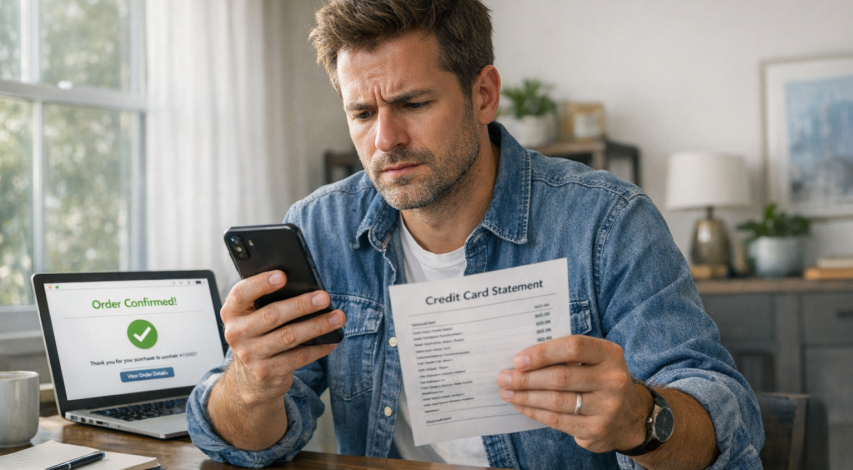
The tough part for merchants is that 4863 doesn't distinguish between actual fraud and an honest mistake. The dispute code just says the cardholder doesn't recognize the transaction. That puts you in a position where you're trying to prove a legitimate sale to a person who may legitimately have no memory of making it.
What You Can Actually Argue
Your strongest position is evidence that links the cardholder to the transaction. That means things like a confirmed delivery address, a device fingerprint, login records, or an IP address that matches the cardholder's location. You want to show that whoever had access to that account made the purchase.
A mismatch between your billing descriptor and your brand name can undercut that argument even when your evidence is good. If the cardholder's bank sees a vague merchant name alongside a "didn't recognize" claim, your documentation has to work harder to fill that gap.
Not every 4863 is worth fighting. If the transaction is small and your evidence is thin, the cost to respond may exceed what you'd recover. But if you have records that tie the cardholder to the purchase, understanding what happens if you don't reply is just as important as knowing when to fight back.
What to Do Now That 4863 Is Retired - And What Still Applies
A few helpful steps can go a long way toward keeping these disputes manageable:

- Audit your billing descriptor. Make sure the name appearing on customer statements clearly matches your business. Vague or truncated descriptors are one of the most common triggers for "I don't recognize this" disputes.
- Keep transaction records clean and accessible. Authorization records, delivery confirmations, and customer communications should be easy to retrieve so you can respond well within your chargeback window.
- Monitor your fraud ratio consistently. A pattern of unrecognized-charge disputes can attract scrutiny from your acquirer before you realize there is a problem.
- Act quickly on dispute notices. Response deadlines are firm, and missing them removes your ability to fight back regardless of how strong your evidence is.
None of this needs to feel overwhelming. Once you understand why these disputes happen and what documentation stands up in a rebuttal, the process can become predictable and far less stressful. Clearer descriptors, tighter recordkeeping, and scheduled fraud monitoring remove the majority of these problems before they ever reach your inbox.
FAQs
What is Mastercard reason code 4863?
Reason code 4863 applies to card-not-present transactions where a cardholder doesn't recognize a charge on their statement. It signals potential fraud but doesn't confirm it - the cardholder is simply saying the transaction looks unfamiliar.
Is reason code 4863 still active?
No, Mastercard has retired reason code 4863 as part of consolidating their chargeback framework. However, it still appears in older disputes, legacy records, and historical chargeback data, making it relevant for merchants reconciling past transactions.
How long do merchants have to respond to a 4863 dispute?
Merchants have 45 days from the chargeback date to submit a rebuttal. Missing this deadline means the chargeback stands automatically, regardless of how strong your evidence might be.
Does 4863 always mean actual fraud occurred?
Not necessarily. Many 4863 disputes stem from confusing billing descriptors, forgotten purchases, or family members using a card without the account holder's knowledge - situations that look like fraud but aren't.
How does 4863 affect a merchant's fraud ratio?
Every 4863 dispute counts as a fraud chargeback in Mastercard's calculations, even if no actual fraud occurred. A rising fraud ratio can trigger placement in Mastercard's monitoring programs, leading to higher fees and potential account termination.