 Call (844) NO-DISPUTES

13.7: Cancelled Merchandise/Services
This section walks through the procedures for processing cancelled merchandise and services, covering everything from reversing charges to documenting the transaction correctly. Whether you're handling a one-time purchase or a standard service agreement, doing the accounting right protects your organization and keeps your records clean.
These steps help you avoid common errors, ensure quick refunds or credits, and maintain compliance with your organization's financial policies.
What Visa Reason Code 13.7 Actually Covers
Reason code 13.7 applies when a cardholder cancels an order or service and then still gets charged - either because the merchant never processed the cancellation or because a refund was expected and never came through. Those are the two core conditions that drive this dispute type and come down to the same basic problem: the transaction continued when it should have stopped.
The "merchandise" side covers physical goods a buyer cancelled before shipment or returned under an agreed policy. The "services" side covers subscriptions, memberships, and any recurring billing arrangement that a cardholder terminated but the merchant kept billing anyway.
It's worth noting that 13.7 didn't always exist under that name - it traces back to legacy reason code 85, condition 2, which Visa retired when it launched the Visa Claims Resolution framework in 2018. The underlying dispute logic stayed the same - it just got reorganized into the cleaner 13.x numbering system used.
What makes this code distinct is that it doesn't depend on the merchant doing something fraudulent. The cardholder isn't claiming the charge was unauthorized in the traditional sense. They're saying a legitimate charge became invalid after they followed the correct steps to cancel and the merchant failed to act on that.

That distinction matters because it shapes how disputes get evaluated. Visa looks at whether a valid cancellation took place and whether the merchant responded to it correctly. If a cardholder cancelled within the posted policy terms and the merchant still billed them, the dispute is usually going to hold up.
The foundation here is simple. A cardholder cancels something and the merchant keeps the money. That difference between what the cardholder expected to happen and what actually happened is what 13.7 was built to help with. The timelines, the evidence, and the replies all build on that core scenario. Merchants dealing with this situation may also find it useful to review a recurring transaction not cancelled response template when preparing their rebuttal.
The Filing Windows That Catch Merchants Off Guard
Timing is everything with 13.7 disputes. Cardholders have as long as 120 days to file a chargeback. That dispute window starts from the transaction date or the date they were supposed to receive the merchandise or service - whichever comes later.
That second part is what trips merchants up. If a service was meant to run for a few months, the 120-day clock doesn't start at purchase - it starts when the service period ends. That means a chargeback can land on your desk much later than expected based on the original sale date.
There is a hard ceiling, though. No chargeback under this reason code can be filed more than 540 days after the original transaction date; it's the absolute outer limit regardless of when the service was scheduled to end.

| Timeframe | Duration | Starting Point |
|---|---|---|
| Cardholder filing window | 120 days | Transaction date or expected delivery/service date (whichever is later) |
| Absolute filing limit | 540 days | Original transaction date |
| Merchant response window | 30 days | Date the chargeback is received |
Once a dispute comes in, merchants get 30 days to respond with evidence. That window moves fast, and that's also the case if the chargeback arrives during a busy period or gets buried in a notifications inbox.
The 30-day response window is not flexible. Miss it and you lose the dispute automatically, no matter how strong your case may have been. A close watch on chargeback notifications is part of running a tight operation.
These dates shape how you store records and for how long. A transaction from well over a year ago can still generate a valid dispute under this reason code.
Cancellation Policies and the Rules Merchants Must Follow
Merchants are not free to set whatever cancellation terms they like and then hold cardholders to them. The Fair Credit Billing Act of 1974 gives cardholders the right to dispute charges that don't match what was agreed to or that cover services never delivered. That federal protection is part of why card networks take cancellation disputes seriously.
For a cancellation policy to hold up during a dispute, it needs to be something the cardholder agreed to at the time of purchase. Vague language buried in a terms-of-service page usually won't cut it. The merchant needs to show that the policy was presented in a way the customer could see and acknowledge before completing the transaction.
Timeshare cancellations have their own laws on top of all this. Most U.S. states give buyers a rescission window - typically 14 days - during which they can cancel a timeshare purchase and get a full refund. If a merchant tries to enforce a no-refund policy within that window, the cardholder has a strong basis to dispute the charge and the merchant has very little ground to stand on.

Where merchants go wrong is in the difference between having a policy and following it. A merchant may have a written cancellation policy but then fail to process the refund on time, or communicate a cancellation confirmation that never triggered a refund. That disconnect is what turns an easy cancellation into a chargeback.
Card networks expect merchants to process cancellations promptly and to communicate with the cardholder when they do. A cancellation that sits unresolved for weeks is not just bad service - it can become documentation that supports the cardholder's dispute. Merchants who manage cancellations cleanly and quickly are in a much stronger position if a dispute does get filed.
How the April 2021 Visa Update Changed the Dispute Process
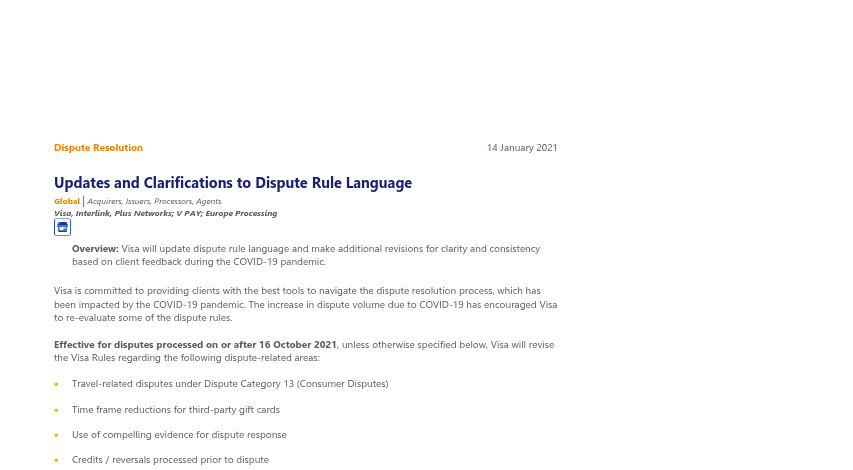
On April 17, 2021, Visa updated its dispute rules to add a new requirement for card issuers. When a merchant has already refused a return or an RMA, the issuer now has to document the disposition of the merchandise before they can file a dispute on the cardholder's behalf.
Before this change, issuers had more room to move. A cardholder could claim they tried to return something, a merchant could deny that return, and the issuer could still push a dispute through without much scrutiny on where the merchandise actually ended up. That created an uneven playing field.
The update adds accountability to the issuer's side of the process. The issuer now has to show what happened to the goods in question - not just the merchant proving the cancellation policy was communicated; it's a real change in how evidence gets assembled on both sides.
In practice, a merchant refuses a return request and documents it. The cardholder goes to their bank anyway and files a dispute. Under the new rules, the issuer can't basically take the cardholder's word for it. They have to establish where the merchandise went - returned, retained, or otherwise.
For merchants, this changes what a strong evidence package looks like. Your denial of the return request still matters, but now that denial gives you a paper trail the issuer has to reckon with. If you have written records of the refusal and the reason behind it, that documentation can become part of a bigger evidentiary picture that the issuer has to address instead of sidestep.
This doesn't make disputes disappear, but it does mean the process is more balanced than it used to be. Merchants who keep complete records of return denials are better positioned to have that documentation carry actual weight in the dispute workflow.
Building a Chargeback Response That Actually Works
A strong rebuttal starts with the right documents. You want to pull together your cancellation confirmation, any communication logs with the customer, refund records, and a copy of your terms of service - specifically the section that covers cancellations.
The terms of service piece is worth paying attention to. If you can show that the customer agreed to your cancellation policy at checkout, that single document can carry weight in your response. If you don't have it, you're left trying to prove intent instead of policy.
Vague replies tend to fail for a predictable reason: they leave the card network's reviewer to fill in the gaps, and they usually won't fill them in your favor. A rebuttal that says "the customer was informed of our policy" needs to be backed up by something concrete - a screenshot, a timestamp, an email thread.
One of the more common mistakes merchants make is sending documents that don't directly address the dispute reason code. Irrelevant paperwork fails to help and can make your response look disorganized, weakening an otherwise good case.

Timing also matters more than most merchants know. Missing the response window - which is usually around 30 days depending on the card network - means the chargeback is decided without your input at all. Having your documents together fast matters as much as having them right.
A rebuttal tells a short story - it shows that the customer was made aware of the policy, that the cancellation was handled according to that policy, and that any refund you issued aligns with what was promised, and each document you include should connect directly to one of those three points. If you're unsure whether issuing a refund after a chargeback starts could affect your response, that's worth understanding before you submit.
Think of it less as a defense and more as a simple record. You want to give the reviewer what they need to decide in your favor, with nothing missing and nothing extra to wade through.
Staying Ahead of 13.7 Disputes Before They Happen
If a cancellation dispute does come in, knowing your timelines and having documentation ready to go makes the difference. Merchants who respond faster with clean evidence see better results than the ones scrambling to piece together records after the fact. Preparation on the front end saves a lot of time, money, and frustration on the back end.

It is worth remembering that a chargeback is not the outcome anyone wanted. Customers who cancel a service or return merchandise are usually just looking for a simple resolution. When that resolution takes too long or feels vague, a dispute can become the path of least resistance. Tightening up your cancellation and refund workflow is one of the most helpful steps you can take to win disputes and avoid them from starting at all.
FAQs
What is Visa reason code 13.7?
Visa reason code 13.7 applies when a cardholder cancels an order or service but is still charged, either because the merchant never processed the cancellation or because an expected refund never came through.
How long do cardholders have to file a 13.7 dispute?
Cardholders have 120 days to file a dispute, starting from the transaction date or the expected delivery or service date, whichever is later. The absolute maximum limit is 540 days from the original transaction date.
How long do merchants have to respond to disputes?
Merchants have 30 days to respond with evidence once a chargeback is received. Missing this window results in an automatic loss, regardless of how strong the merchant's case may be.
What did Visa's April 2021 update change?
Visa now requires card issuers to document the disposition of merchandise before filing a dispute when a merchant has already refused a return, making the process more balanced and evidence-driven for both sides.
What documents should merchants include in a rebuttal?
Merchants should include cancellation confirmations, customer communication logs, refund records, and the relevant section of their terms of service showing the cardholder agreed to the cancellation policy at checkout.