 Call (844) NO-DISPUTES
What is Stand-In Processing?
When a card issuer's authorization system goes offline - whether because of scheduled maintenance, an unexpected outage, or a technical failure - STIP (Stand-In Processing) comes in as a temporary choice-maker. Rather than automatically declining every transaction that can't reach the issuer, the card network itself evaluates the transaction against pre-established rules and approves or declines it on the issuer's behalf.
It's a behind-the-scenes protection that most cardholders never know exists, but it quietly protects the payment experience millions of times each year. For issuers, it's an important part of keeping customer trust intact even when their own infrastructure isn't cooperating. For merchants, it means fewer lost sales during those unpredictable windows of downtime.
In this post, we'll break down how Stand-In Processing actually works, why it matters to everyone involved in a transaction, and what issuers need to keep in mind when relying on it. Whether you're new to payments or just looking to sharpen your knowledge, consider this your helpful guide to one of the industry's most important - and most ignored - safety nets.
How Stand-In Processing Actually Works
Under normal conditions, a card transaction moves fast. When you tap your card at a register, the request travels from the merchant's terminal to the card network, then to your bank's system - which checks your account and sends back an approval or decline - all in a matter of seconds.
The bank's system is the decision-maker in that chain - it knows your balance, your account status, and any rules attached to your card. But when that system goes down and can't respond?
That's where stand-in processing comes in. The card network - Visa, just to give you an example - comes in to make the authorization decision itself, on behalf of your bank. It uses pre-set rules and the last known account data it has on file to approve or decline the transaction without ever reaching your bank.
The network can basically become a temporary substitute for your issuer, and it's not making wild guesses. The rules that govern these decisions are agreed upon in advance, so the network has a defined framework to work within while your bank's system is unavailable.
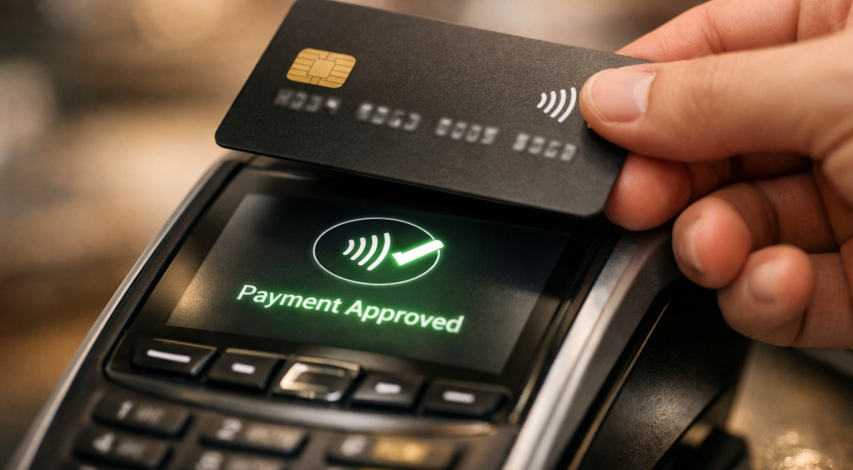
From a cardholder's perspective, nothing looks different. The transaction goes through, the terminal responds, and life moves on. The difficulty is happening very silently.
This matters beyond keeping purchases going at a checkout. For CU*Answers, stand-in processing is what keeps ATM and debit card access, audio response systems, and online banking functional when a credit union's core system experiences downtime. Those are the touchpoints members reach for first, so keeping them alive during an outage is a critical priority.
It's worth noting what STIP is not doing - it's not a full replica of your bank's system. It can't see everything your bank can see, and it works within tighter limits - so some transactions that would normally sail through might get declined as a precaution. The network is working with a snapshot, not a live feed.
That difference between what the network knows and what your bank knows is the core tension in stand-in processing - it's a helpful answer that keeps things moving, but it comes with real trade-offs that affect cardholders and the institutions serving them.
Why Issuer Outages Are a Bigger Deal Than You'd Think
Issuer systems go down more than you'd think. Visa alone processes around 101 million transactions per year that hit an unavailable issuer - meaning the bank or credit union on the other end basically can't respond. That is not a rare edge case. That is a structural, standard reality of how payment networks work.
To see what that looks like in practice, consider a 2019 outage at a Canada-based card processor. Over an 8-hour window, roughly 600,000 transactions were declined at a 0% approval rate. Not a low approval rate - zero. Every single cardholder who tried to pay was turned away.
Those are actual people at grocery checkouts, gas stations and pharmacies. Some had no other payment method on hand. Others were traveling. The purchases were not fraudulent and the accounts were not empty - the bank just could not be reached to say yes.
The downstream effect goes beyond one declined transaction. A cardholder who gets declined twice in a row may call their bank, dispute a charge, or stop using that card entirely. Merchants lose sales they had no part in preventing. The reputational damage lands on the issuer even if the outage was a third-party processor's fault.

The table below shows how differently an outage plays out depending on whether stand-in processing is in place.
| Scenario | Without Stand-In Processing | With Stand-In Processing |
|---|---|---|
| Cardholder attempts a purchase | Transaction is declined immediately | Network steps in to approve or decline on the issuer's behalf |
| Approval rate during outage | Drops to 0% in a full outage | Maintained based on pre-set issuer rules |
| Cardholder experience | Card appears to not work | Transaction proceeds normally in most cases |
| Merchant impact | Lost sales with no recourse | Sale is completed as usual |
| Issuer reputation | Takes the blame regardless of fault | Protected by continuity of service |
The difference between those two columns is not small. An 8-hour outage without any fallback mechanism is hundreds of thousands of failed moments that cardholders will remember.
Who Controls Stand-In Processing - and Who Doesn't
Stand-in processing has traditionally lived within the card programs themselves - Visa and Mastercard built it into their networks so authorization decisions could still happen when an issuer went dark. That structure made sense at the time, but it also meant control stayed centralized at the scheme level.
The gap this creates is worth noting. Issuer processors - the businesses that sit between banks and the card programs - have not necessarily been able to run stand-in processing on their own. They've had to use the scheme to manage it, which limits how much control an issuer actually has during an outage.
For bigger banks, that arrangement can work reasonably well. But for smaller issuers and credit unions, it's a different picture. They may have tighter risk tolerances or cardholder agreements that a generic scheme-level rule set doesn't align well with. When the scheme makes stand-in decisions on their behalf, those nuances tend to get lost.
There are three main groups involved in how stand-in processing works in practice.

| Player | Role in Stand-In Processing |
|---|---|
| Card Schemes | Historically the primary operators of STIP, using their own rule sets to approve or decline transactions on behalf of issuers |
| Issuer Banks | The institution whose cardholders are affected - they carry the financial exposure for every stand-in decision made in their name |
| Issuer Processors | The technical layer between banks and schemes - traditionally limited in their ability to run independent stand-in processing |
The issuer bank carries the financial exposure for every transaction approved during an outage; it's a real responsibility to hand off to a rule set the issuer didn't configure and can't adjust in real time.
That is slowly changing. Some processors have started to build stand-in capabilities of their own, which gives issuers more room to set the parameters that align with their risk appetite. That capability isn't universal yet, and the difference between what large and small issuers can access remains significant. Understanding how payment gateways fit into this ecosystem can help clarify where responsibility sits when authorization decisions fall outside the issuer's direct control.
The Rules Behind Stand-In Authorization Decisions
When your bank is unreachable, the card scheme doesn't just guess - it follows a set of pre-defined parameters to decide if a transaction should go through. These rules are built around spending limits, card status, and risk signals - and they apply the same way every time.
Spending limits are probably the simplest piece. Each scheme sets a ceiling on how much a single stand-in transaction can be worth, and if a purchase goes over that amount, it gets declined automatically - this keeps the exposure manageable when no one from the issuer is available.
Card status matters just as much. If a card has already been flagged as lost, stolen, or restricted before the issuer went offline, that information is already stored at the scheme level. Stand-in processing will pick that up and decline the transaction accordingly - the issuer doesn't need to be present for that call to be made.
Risk signals add another layer. Unusual transaction location, atypical purchase amounts, or repeated attempts in a short window can all push a transaction toward decline. The scheme is making a judgment call with limited information, and it errs on the side of caution when something looks off.
| Transaction Type | Likely STIP Outcome | Reason |
|---|---|---|
| Small in-store grocery purchase | Approved | Low value, low risk, within typical limits |
| Large electronics purchase | Declined | Exceeds stand-in spending threshold |
| Transaction on a blocked card | Declined | Card status already flagged at scheme level |
| Repeated attempts in quick succession | Declined | Triggers risk-based rules |
| Standard contactless transport fare | Approved | Pre-approved category, low value |
The system works pretty well in simple cases, but it isn't perfect. Stand-in processing can approve a fraudulent transaction that a human reviewer may have caught, or it can decline a legitimate purchase because it tripped a risk threshold. Neither outcome is ideal.
For issuers, a wrongful approval means possible fraud liability - situations that can sometimes lead to a declined authorization dispute. For cardholders, a wrongful decline means a refused payment at an inconvenient moment. Both are real consequences that come from handing decisions to an automated fallback with no live context to draw from.
What Stand-In Processing Means for You at the Checkout Line
Payment infrastructure is one of those things that only gets noticed when something goes wrong. STIP is a big part of the reason those moments are rarer. Every time you buy groceries, split a dinner bill, or grab a last-minute gift, there's a whole system quietly making sure it goes smoothly- even on its worst day.

Knowing how that system works- even at a high level, helps make sense of the occasional hiccup and builds a little appreciation for the engineering behind modern merchant processing that keeps life moving.
FAQs
What is Stand-In Processing (STIP)?
Stand-In Processing is a fallback system where card networks like Visa temporarily make authorization decisions on behalf of issuers when their systems go offline, preventing automatic transaction declines during outages.
How does STIP decide to approve or decline transactions?
STIP uses pre-set rules including spending limits, card status, and risk signals to evaluate transactions. Low-value, low-risk purchases are typically approved, while large amounts or flagged cards are declined.
Who controls Stand-In Processing during an outage?
Card schemes like Visa and Mastercard have historically controlled STIP, though some issuer processors are developing their own stand-in capabilities to give issuers more control over authorization decisions.
What happens without Stand-In Processing during an outage?
Without STIP, every transaction attempted during an outage is declined. A real-world example saw 600,000 transactions hit a 0% approval rate over eight hours during a processor outage.
Can STIP make incorrect authorization decisions?
Yes. STIP can approve fraudulent transactions or wrongfully decline legitimate ones, since it works from a snapshot of account data rather than a live feed, creating real consequences for both issuers and cardholders.