 Call (844) NO-DISPUTES
What is a Credit Card Hard Descriptor?
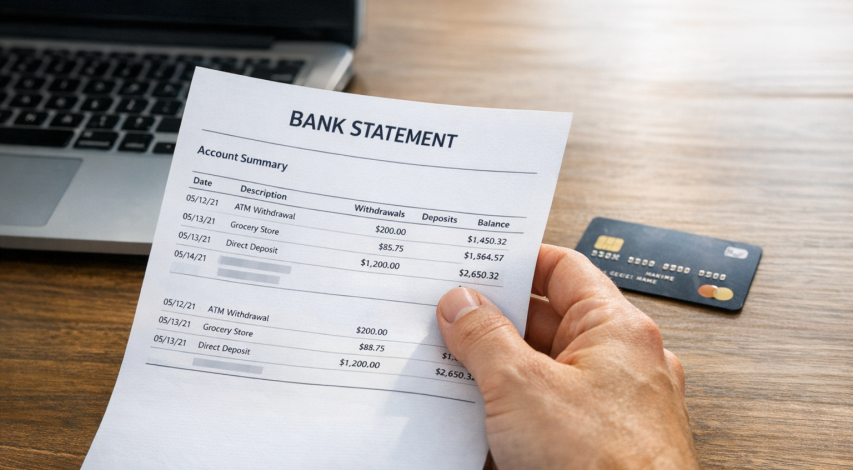
A hard descriptor is the text displayed on a customer's bank statement once a credit card transaction settles. It's called a "hard descriptor" because it's permanent - once it's settled and the ink has dried, it can't be changed.
Despite how much impact they have on customer trust and dispute rates, hard descriptors are one of the behind-the-scenes elements that a lot of business owners set up once and never revisit; it's worth changing.
I'll break down what a credit card hard descriptor is, how it works, what it should include, and why it matters more than most merchants know.
How a Hard Descriptor Actually Shows Up on a Statement
When a transaction completely settles, your card network replaces the temporary charge label with a permanent one. That permanent label is the hard descriptor, and it's what a cardholder sees when they open their statement or check their banking app. Understanding the difference between soft and hard descriptors can help clarify why this matters.
Most U.S. processors cap hard descriptors at 20 to 25 characters. Stripe enforces a limit of 5 to 22 Latin characters; it's not a lot of space, so what gets displayed has to be condensed.
A hard descriptor usually contains a few important pieces of information. The business name takes up most of the space. That's the primary identifier. A phone number or website URL is sometimes added after it, separated by a symbol like an asterisk or a forward slash. So a full descriptor might read something like ACME STORE*8005550100 - all crammed into that tight character window.
That character limit is worth understanding because it explains quite a bit. A legal business name that's readable on a website can become a truncated string of letters on a card statement. The processor doesn't adjust for readability; it just cuts the text at the limit. A poorly truncated name is one reason your descriptor can directly affect your chargeback rate.
Here is an easy overview of what a hard descriptor can have.
| Element | Example | Notes |
|---|---|---|
| Business name | ACME STORE | Primary identifier; always present |
| Phone number | 8005550100 | Helps cardholders to reach support |
| URL | ACMESTORE.COM | Used in place of a phone number sometimes |
The business name is the absolute must-have part. The phone number or URL is optional but helpful for cardholders who want to verify a charge before taking action.
It's also worth mentioning that hard descriptors are set at the merchant account level - that means every transaction processed under that account carries the same label, regardless of what was purchased or from which product line.
Soft Descriptor vs. Hard Descriptor: What Changes After Settlement
When a charge first appears on your account, it's technically in a pending state. During that window, your card network shows a soft descriptor - a temporary label that holds the place until the transaction is completely processed.
Soft descriptors are placeholders and they can change. A merchant might submit an updated name or amount before the charge settles and what you see on day one isn't always what sticks. That flexibility disappears once settlement happens.
Settlement is the point where the money actually moves from the cardholder's bank to the merchant. Once that happens, the hard descriptor locks in and becomes the permanent record on your statement. There's no editing it after that point.
This matters more than it sounds. If a soft descriptor shows something recognizable - like a store's popular brand name - but the hard descriptor settles under a parent company's legal name, that's a different label on your permanent statement. Cardholders who only check their statements after the fact never see the soft descriptor at all.

| Feature | Soft Descriptor | Hard Descriptor |
|---|---|---|
| When it appears | While the charge is pending | After the transaction settles |
| How long it lasts | Temporary - usually a few days | Permanent on the statement |
| Can it change? | Yes, before settlement | No, it's fixed once posted |
| Set by | The card network or payment processor | The merchant's payment setup |
For merchants, the hard descriptor is what gets scrutinized when a cardholder questions a charge. Whatever name and details are registered with the payment gateway are what the customer sees - so if that information is outdated or tied to an obscure legal entity, it can create actual uncertainty.
For cardholders, the important thing to know is that the pending label and the posted label can look different. Checking your statement after the charge settles is the only way to see the name that's actually on the record. If what's posted doesn't match what you authorized, that may fall within your credit card dispute window. Cardholders have federally protected rights under the Fair Credit Billing Act to dispute charges that don't match what they authorized.
Why Customers File Chargebacks Over Unrecognized Descriptors
Around 45% of chargebacks happen because a customer does not recognize a charge on their statement. That is not fraud - that's uncertainty. A vague hard descriptor is one of the most common causes.
When a customer sees an unfamiliar name on their bank statement, their first instinct is not to dig through their email receipts. Most go straight to their bank and dispute the charge. Over 70% of customers prefer to file a chargeback instead of contacting the merchant directly for a refund. That is an expensive path for any business to be on the receiving end of.
Unclear descriptors can raise chargeback rates by as much as 25%. For merchants already operating close to the chargeback thresholds set by card networks, that increase can put their processing privileges at risk.
There are a few common ways a descriptor ends up confusing customers. A business might bill under a parent company name that the customer has never heard of. Abbreviations can strip out the most recognizable parts of a business name. Some descriptors include foreign characters that don't display correctly on all banking platforms. Others use a generic product line name instead of the brand the customer actually purchased from.
Any one of these can be enough to make a customer second-guess a legitimate charge. The descriptor could be technically accurate, but if it doesn't match what the customer remembers, it creates doubt.
This is especially worth thinking about for businesses that work under a holding company or sell through multiple storefronts. The legal entity name registered with a payment processor could be different from the name used in marketing and at checkout. The customer never sees the legal name until it shows up on their statement - and by then, the disconnect is already there.
Chargebacks cost merchants more than just the transaction amount. There are fees attached, and a high chargeback rate can trigger reviews or restrictions from payment processors. When a confusing descriptor is the root cause, those costs are largely preventable.
What Makes a Hard Descriptor Clear and Effective
The name your customers see on their statement needs to connect back to their purchase without any extra effort on their part. That sounds simple, but a lot of merchants get it wrong because they use a legal business name, a parent company name, or an internal brand code that customers have never seen.
The most helpful thing you can do is use the name customers already know. If you buy from your website under one brand name but your descriptor shows a holding company name, that disconnect is enough to trigger a dispute. Match what's on the receipt, the website, or the packaging.
The Basics of a Useful Descriptor
Most card networks allow as many as 22 characters for a hard descriptor, and that space goes fast. Abbreviations are sometimes unavoidable, but vague ones cause actual problems. "GLBL ENT LLC 7" means nothing to a customer who bought a yoga mat from your online shop last Tuesday.
Including a support phone number gives customers a direct path that bypasses the bank entirely. Many processors allow a phone number or URL to appear alongside the business name in the descriptor field. A customer who can call you directly has no reason to call their bank instead. A customer who can call you directly has no reason to call their bank instead.
| Do This | Skip This |
|---|---|
| Use the brand name customers recognize | Use a parent company or holding name |
| Include a phone number or URL | Leave the contact field blank |
| Abbreviate only words that are still readable | Use internal codes or product SKUs |
| Test how the descriptor looks on a real statement | Assume your processor set it up correctly |
When Naming Gets Complicated
Some businesses have a harder time with this than others. A parent company running a few businesses under one merchant account has to make an actual tradeoff - the descriptor can only say one thing, so merchants in that situation sometimes create separate merchant accounts for each brand to keep the billing name accurate.
Long business names create a similar problem because truncation can make a recognizable name look like gibberish - it's worth requesting a test transaction from your processor so you can see what a customer will see before any actual purchases go through.
Getting Your Descriptor Right Is Worth the Extra Five Minutes
Getting your descriptor right isn't tough, but it does need intention. Keep it recognizable, keep it accurate, and make sure it goes well with how customers actually know your business. If you accept payments across multiple businesses or product lines, you should think about how each one appears and if a soft descriptor might add helpful context at the transaction level.

An easy next step: pull up a recent bank or credit card statement - your own, or ask a trusted customer to check theirs - and look for your business name. Does it make immediate sense? Would a stranger recognize it? If the answer is anything less than a confident yes, it's worth logging into your payment processor's dashboard and making the change - it takes minutes and it's one of the easiest ways to protect your customers and your bottom line. A credit not processed dispute or an incorrect transaction amount claim can often be avoided when customers clearly recognize what they were charged for.
FAQs
What is a credit card hard descriptor?
A hard descriptor is the permanent business name and contact information that appears on a cardholder's statement after a transaction fully settles. It replaces the temporary soft descriptor and cannot be changed once posted.
How does a hard descriptor differ from a soft descriptor?
A soft descriptor is a temporary label shown while a charge is pending, while a hard descriptor is the permanent label that appears after settlement. The two can look different, which sometimes confuses cardholders.
Why do unclear hard descriptors cause chargebacks?
Around 45% of chargebacks occur because customers don't recognize a charge. When a descriptor shows an unfamiliar parent company or truncated name, customers often dispute the charge with their bank instead of contacting the merchant.
What should a good hard descriptor include?
It should include the brand name customers already recognize, and ideally a support phone number or URL. Avoid using legal entity names, internal codes, or abbreviations that don't clearly identify your business.
How can merchants update or verify their hard descriptor?
Merchants can log into their payment processor's dashboard to update their descriptor. Requesting a test transaction first lets you see exactly what customers will see on their statement before real purchases go through.